
SilicaPro
Fire Blanket
Fire Blanket, Manufactured From Our Own Fabric
A fire blanket puts out a fire by taking away its oxygen. No pressure gauge, no service interval, no chemical residue, and nothing to go wrong between the day it is installed and the day somebody needs it.
Ours are cut and sewn in our own workshops from flame retardant glass fibre fabric that we weave ourselves, using our own high temperature sewing thread in the seams. Six standard sizes from 1000 by 1000 mm up to 1800 by 1200 mm, with custom sizes, packaging and branding available under OEM and ODM arrangements.
Specified for commercial kitchens, restaurants, homes, gas stations, vehicles, boats and commercial premises. Wherever a fire is most likely to start small and where stopping it in the first thirty seconds decides everything that follows.

How Smothering Actually Works
Fire needs three things at once. Remove any one of them and the fire stops. A fire blanket is the simplest device ever built for removing one of them.
The material that is burning. Removing it means moving the fire away from what feeds it, which is rarely possible once a fire has started.
Enough energy to sustain combustion. Water extinguishers work by removing this, which is why they are useless and dangerous on burning oil.
The air feeding the flame. This is what a fire blanket removes, by sealing the burning surface off from the atmosphere completely.
That is the entire mechanism, and its simplicity is the point. There is no propellant to lose pressure, no chemical to expire, no nozzle to block and no gauge to misread. A blanket that was correctly made works exactly as well after ten years in a cupboard as it did on the day it was installed.
The oxygen route is also why a fire blanket handles cooking oil fires that water makes catastrophically worse. Water hitting burning oil flashes instantly to steam and throws burning oil across the room. It is the single most common way a small kitchen fire becomes a serious one.
A blanket laid over the same pan simply cuts off the air. No spread, no splash, no escalation. In a commercial kitchen this is the reason the blanket belongs on the wall next to the range rather than in a store cupboard.
The soft, flexible construction matters more than it appears to. A blanket that drapes properly seals against irregular surfaces and can be wrapped around an object or a person. A stiff sheet bridges gaps, leaves air paths open, and does not do the job it was bought to do.
Fire Blanket or Fire Extinguisher
They are complements rather than alternatives, and most premises should have both. But for the specific case of a small fire caught early, the blanket has advantages that are easy to overlook when comparing purchase prices.
| Consideration | Fire Blanket | Dry Powder Extinguisher |
|---|---|---|
| Servicing | None required. Visual inspection only | Periodic inspection, pressure checks and recharging |
| Shelf life | Material does not degrade in storage | Limited. Requires eventual replacement |
| Residue after use | None. No chemical contamination | Powder coats every surface in the room |
| Cooking oil fires | Suitable. Seals the surface | Depends on type. Some can spread burning oil |
| Ease of use under stress | Pull, hold, place. Little to remember | Requires correct technique and aim |
| Can protect a person | Yes. Wraps a body for evacuation | No |
| Larger fires | Limited to what it can cover | Greater reach and capacity |
The residue point deserves more weight than it usually gets. Discharging a dry powder extinguisher in a commercial kitchen contaminates every food contact surface in the room, and the cleanup and lost trading time frequently cost more than the fire damage would have. A blanket leaves nothing behind at all.
A fire blanket is first response equipment for a small fire, not a substitute for a fire safety system. It works on a fire that is still contained to its point of origin and small enough to be completely covered.
If a fire has spread beyond what the blanket can cover, or if there is any doubt, evacuate and call the fire service. No product on this page is worth staying in a burning building for.
Do Fire Blankets Expire
This question comes up constantly, and it deserves a more careful answer than a simple yes or no, because the honest answer has two parts.
The material does not expire. Glass fibre is inorganic. There is nothing in it that oxidises, breaks down, dries out or loses potency over time. A blanket stored properly is materially the same object after fifteen years that it was on day one. That is a genuine advantage over any pressurised or chemical device.
The product may still need replacing. Two situations apply. Packaging, pull tabs and the case can deteriorate even when the fabric does not, so inspect them. And in many markets, regulation or the responsible person's own policy sets a replacement interval regardless of material condition.
Replace the blanket after it has been used on an actual fire. Even where it looks undamaged, it may have taken localised heat or contamination that is not visible, and emergency equipment is not the place to take that risk.
Follow your local fire safety regulations, which in many jurisdictions require this explicitly. If you operate premises under a fire safety regime, check what your regulator requires rather than relying on a manufacturer's general statement.
Where the no expiry property genuinely pays is in total cost of ownership across a portfolio of sites. An extinguisher requires an annual service visit for each unit, every year, indefinitely. A blanket requires somebody to look at it. Across fifty sites over ten years, that difference is substantial and it is entirely a labour cost rather than a product cost.
How to Use a Fire Blanket
The device is simple, but there are a few things people get wrong under stress, and the most common mistakes cause burns to the hands. Worth reading before you need it rather than during.
- Turn off the heat source if you can do so safely. On a hob fire, switching off the burner removes the energy feeding the fire. If reaching the control means putting your hand over the flame, skip this step and go straight to covering.
- Pull the tabs and hold the blanket by the top corners. Roll the top edge over your hands so the fabric shields them. This is the step most often skipped, and it is why hand burns are the most common fire blanket injury.
- Hold the blanket up as a shield between you and the fire. Approach with the blanket in front of your body and face, not held out to one side. It protects you while you get close enough to place it.
- Place it over the fire, do not throw it. Lay it down from the near edge across to the far edge so it settles flat and seals. A thrown blanket lands unevenly, leaves air gaps and can fan the flames on the way.
- Cover the fire completely and leave it in place. Every exposed edge is an air path. If the blanket does not fully cover the fire, it will not smother it.
- Do not lift it to check. Lifting the blanket reintroduces oxygen to fuel that is still above its ignition temperature, and the fire relights immediately. Leave it undisturbed until everything beneath is fully cool, which takes far longer than most people expect.
- Evacuate and call the fire service if it does not work. If the fire is not out within moments, or if it is larger than the blanket can cover, leave. This is a first response tool, not a reason to stay.
If you supply blankets to commercial premises, the sixth step is the one worth putting on the training material. Lifting the blanket to see whether it worked is the most common reason a smothered fire reignites, and it usually happens within a minute of a successful deployment.
Standard Sizes
Six standard sizes, with custom dimensions produced to order. The rule for choosing is simple: the blanket must comfortably cover what it is meant to smother, with margin to spare.
| Size | Typical use |
|---|---|
| 1000 x 1000 mm | Domestic kitchens, small appliances, single pan fires |
| 1200 x 1000 mm | Larger domestic kitchens, small commercial premises, offices |
| 1200 x 1200 mm | Commercial kitchens, restaurants, laboratories |
| 1500 x 1200 mm | Commercial ranges, workshops, larger equipment |
| 1500 x 1300 mm | Industrial premises, larger commercial cooking equipment |
| 1800 x 1200 mm | Industrial use, vehicle applications, wrapping a person for evacuation |
Buy larger than you think you need. A blanket that does not fully cover a fire does not partially smother it. It fails, because every exposed edge is an air path feeding the flame.
The cost difference between sizes is small relative to the consequence of specifying too small, and the larger sizes are also the ones that can be wrapped around a person during evacuation. If you are unsure, go up a size.
A Blanket Against a Vehicle Fire
Filmed on our own product. A full vehicle fire smothered with a single blanket, which is a considerably more demanding test than a pan on a hob.
Fire Blanket Vehicle Fire Demonstration
Note how the blanket is laid across rather than thrown, and how it is left in place afterwards rather than lifted to check. Both are the correct technique.
Product Features
Six characteristics that determine whether the blanket works when it is finally needed.
Flame Retardant and Non-Flammable
Built on glass fibre fabric that resists ignition even under sustained high heat. The base material is inorganic, so there is nothing present that can burn.
No Expiration in Storage
The material does not degrade over time. No pressure to lose, no chemical to break down, no annual service visit required to keep it functional.
Zero Secondary Pollution
Leaves no chemical residue behind. In a kitchen or food premises this avoids the contamination and cleanup that follows a powder discharge.
Corrosion and Insect Resistant
Survives storage in garages, workshops, boats and vehicles where organic materials would deteriorate over years of neglect.
Soft and Flexible
Drapes to seal against irregular surfaces, and can be wrapped around an object or a person. A stiff sheet bridges gaps and leaves air paths open.
Escape Aid
The larger sizes can be wrapped around a body to shield from heat and flame during evacuation from a hazardous area.
One feature that never appears on a specification sheet: every seam on our blankets is sewn with our own high temperature sewing thread, rated for continuous service at 900 degrees Celsius. A blanket stitched with polyester is a 250 degree product regardless of what the fabric is rated to, because the thread softens and the seam opens while the fabric itself is untouched.
Where Fire Blankets Are Used
The common thread across these settings is that a fire is likely to start small, and somebody untrained is likely to be the first person to reach it.
Commercial Kitchens
The highest value application. Cooking oil fires are frequent, water makes them worse, and powder contaminates every food surface in the room.
Restaurants and Hospitality
Front and back of house, where a fire near customers must be stopped quickly and without filling the room with chemical powder.
Homes
Domestic kitchens above all, where most household fires start and where the person responding has no training whatsoever.
Gas Stations
Forecourt safety equipment where the consequence of a small fire spreading is disproportionate to its size.
Vehicles and Boats
Engine bay and cabin fires, where the fire service may be a long way off and the blanket stores in a space an extinguisher would not fit.
Commercial Premises
Offices, workshops, laboratories and retail, as first response equipment alongside extinguishers rather than instead of them.
Fire Blankets From Our Workshops
Product as supplied, photographed from our own output rather than from a stock library.
-
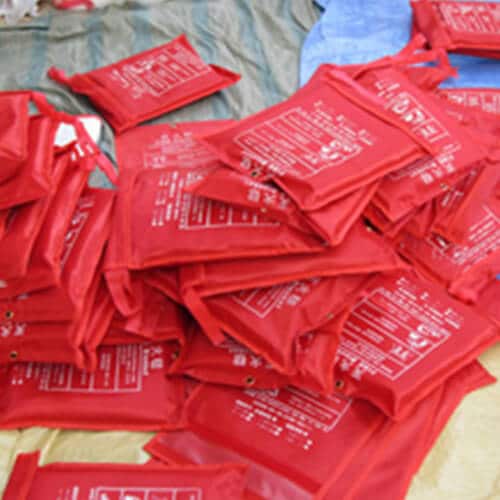
OEM productionCut and sewn in our own workshops from fabric we weave ourselves. -
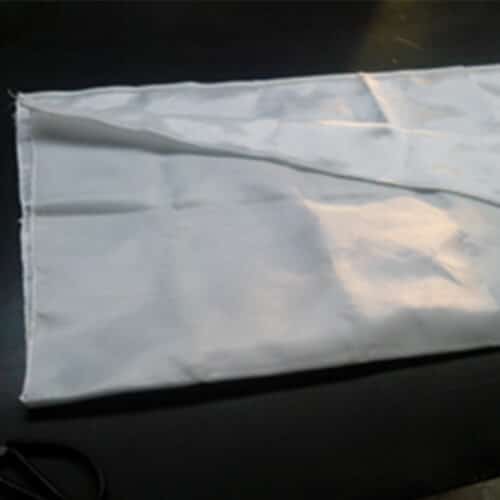
Wholesale supplyBulk volumes for distributors, with private label options available. -
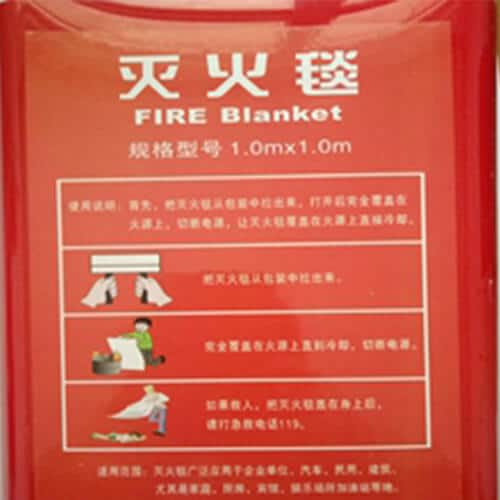
Packaged unitRetail and industrial packaging produced to your market requirement. -
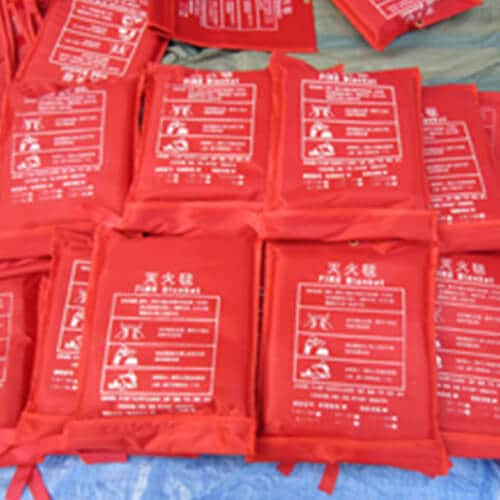
Export productionAround 70 to 80 percent of our output ships to export markets. -
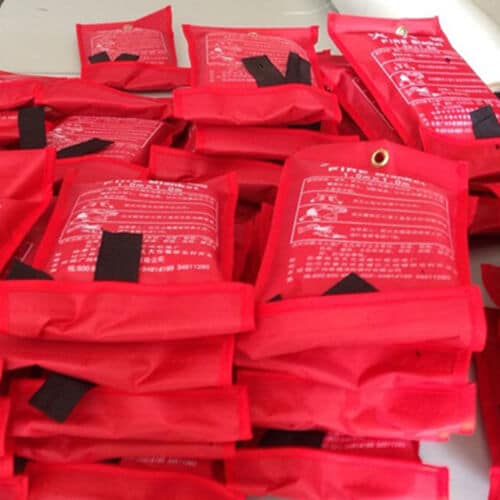
Soft constructionFlexible enough to drape and seal rather than bridge and leave gaps.


OEM and ODM Supply
SilicaPro supplies fire blankets wholesale and under OEM and ODM arrangements for distributors, safety brands and retailers worldwide. Custom sizes, packaging, presentation and branding are all available.
The advantage we offer that most fire blanket suppliers cannot is fabric level customisation. Because we weave the cloth ourselves rather than buying it, an OEM programme can specify the base fabric and its treatment as well as the finished blanket. Most suppliers in this category are converters working with whatever their cloth mill stocks, which is why so much of the market looks identical on a shelf.
Packaging is worth thinking about carefully if you are building a retail line. A fire blanket is bought once, stored for years, and used under stress by somebody who has never opened one. Clear pull tabs, obvious orientation and legible instructions on the case are not cosmetic decisions.
Tell us which market you are selling into at inquiry stage. Fire safety products are regulated differently in different jurisdictions, and the standard your market requires affects specification, testing documentation and labelling.
We would rather establish that at the beginning than deliver product that meets one market's requirements and not yours. If your regulator or your buyer requires a specific certification, tell us what it is and we will confirm what we can support before you place an order.
Fire Blanket Questions
The questions distributors, safety managers and buyers ask us most often.
Do fire blankets expire?
The material does not. Glass fibre is inorganic, so there is nothing in it that oxidises, dries out or loses potency. A blanket stored properly is materially the same after fifteen years as it was on day one.
The product may still need replacing, for two reasons. Packaging and pull tabs can deteriorate even when the fabric does not, and many jurisdictions set a replacement interval regardless of material condition. Always replace a blanket after it has been used on an actual fire.
Can I reuse a blanket after a fire?
Replace it. Even where a blanket looks undamaged after use, it may have taken localised heat or contamination that is not visible, and emergency equipment is not where you take that risk.
Many fire safety regulations require replacement after use explicitly. Check what applies at your premises rather than relying on a general statement from a manufacturer.
Which size should I order?
Large enough to completely cover what it is meant to smother, with margin. A blanket that does not fully cover a fire does not partially work, it fails, because every exposed edge is an air path feeding the flame.
Domestic kitchens are usually served by 1000 by 1000 mm. Commercial kitchens want 1200 by 1200 mm or larger. Industrial and vehicle use, and anything where a blanket might be wrapped around a person, wants 1800 by 1200 mm. If you are unsure, go up a size.
Why should I not lift the blanket to check?
Because lifting it reintroduces oxygen to fuel that is still above its ignition temperature, and the fire relights immediately.
This is the most common reason a successfully smothered fire reignites, and it usually happens within a minute of a correct deployment. Leave the blanket undisturbed until everything beneath it is fully cool, which takes considerably longer than most people expect.
Is a fire blanket better than an extinguisher?
They are complements rather than alternatives, and most premises should have both. For a small fire caught early, the blanket has real advantages: no servicing, no shelf life concern, no residue, and very little to remember under stress.
An extinguisher has greater reach and capacity for a fire that has grown beyond what a blanket can cover. In a commercial kitchen specifically, the no residue property is decisive, since a powder discharge contaminates every food contact surface in the room.
Can it be used on a cooking oil fire?
Yes, and this is one of its most valuable applications. A blanket laid over a burning pan cuts off the air supply without introducing anything that can react with the oil.
Never use water on burning oil. Water flashing to steam throws burning oil across the room, and it is the most common way a small kitchen fire becomes a serious one. Turn off the heat if you can reach it safely, then cover.
Can it be wrapped around a person?
The larger sizes can, to shield from heat and flame during evacuation from a hazardous area. The soft flexible construction is what makes this possible.
If this is part of your intended use, specify one of the larger sizes. A blanket sized for a pan will not wrap an adult.
What certification do your blankets carry?
Fire safety products face different regulatory requirements depending on where they are sold, and the standard your market expects affects specification, testing documentation and labelling.
Tell us which market you are selling into and which standard your regulator or your buyer requires, and we will confirm what we can support before you place an order. We would rather establish that at the start than deliver product that meets one market's expectations and not yours.
What thread do you use in the seams?
Our own high silica sewing thread, rated for continuous service at 900 degrees Celsius, as standard.
Worth asking any supplier, because a blanket stitched with polyester is a 250 degree product regardless of the fabric rating. Polyester softens around that temperature, the seam opens, and the blanket comes apart while the fabric itself is undamaged.
Can you produce private label blankets?
Yes. Custom sizes, packaging, presentation and branding are all available under OEM and ODM arrangements.
We can also customise at fabric level, because we weave the cloth rather than buying it. Most suppliers in this category are converters working with whatever their cloth mill stocks, which is why so much of the market looks identical on a shelf.
What is your minimum order quantity?
Standard sizes in standard packaging carry a lower minimum. Custom sizes, private label packaging or bespoke fabric each need their own production run, which raises both the minimum and the lead time.
Tell us the specification and your rough volume and we will confirm the exact figure with your quotation.
What are your payment terms and shipping options?
Payment is normally by T/T, structured as a deposit with the balance settled before shipment. We confirm the exact split with your quotation.
EXW, FOB, CIF and DAP terms are all available, so you can pick whichever fits how your freight is already arranged. If you have a nominated forwarder we will work with them directly.
Related Products
Our other finished safety products, and the materials these blankets are made from.
Tell Us Your Market and Volume
Send the sizes you need, the market you are selling into, any certification your buyer requires and your volume. We reply with a specification, pricing and a lead time we can hold to.
Request a QuotePhone
+8613758326701
Bright Sky New Material Co Ltd.
Room 1101-11, 11/F,Youbang Building. Jiaxing Headquarters Business Garden, Nanhu District, Jiaxing, Zhejiang, 314000 - China
sales@silicapro.com
lucyhhyy@gmail.com
© 2021 SILICAPRO.COM
All Rights Reserved