
SilicaPro
Removable Glass Fiber Insulation Cover
Removable Glass Fiber Insulation Covers
A removable insulation cover is a jacket built to the exact shape of one specific component, that comes off in minutes for maintenance and goes back on afterwards without being destroyed in the process.
That last point is the entire reason the product exists. Permanent insulation on a valve, a flange or an instrument gets cut away the first time anybody needs access, and in most plants it is never properly reinstated. The component then runs uninsulated for the rest of its service life, leaking heat every hour of every day.
Every cover we produce is surveyed, mapped and manufactured for the item it will fit. There is no catalogue to order from, because a jacket that does not match the geometry it wraps leaves gaps, and a gap in an insulation jacket is a direct heat path that bypasses the material entirely.

Why Permanent Insulation Fails on Serviceable Equipment
Anyone who has walked a process plant recognises this pattern. It is not a failure of the insulation material. It is a failure of the format, and it repeats in every facility that runs hot equipment needing periodic access.
Installed correctly
Pipework and valves are insulated and clad to specification during construction. Everything performs as designed.
Cut away
A valve needs servicing or a flange needs inspection. The insulation is cut off to reach it, and destroyed in the process.
Not reinstated
Replacing it means a separate trade, a separate budget line and a separate schedule. It is deferred, then forgotten.
Still bare
The component runs uninsulated indefinitely, wasting energy every hour and presenting a burn hazard to anybody working nearby.
A removable cover breaks that cycle at the second step. It lifts off, the work is done, and it goes back on by the same technician in the same visit. No cutting, no separate trade, no deferred reinstatement.
The insulation is still there in year ten, which is the only way insulation on serviceable equipment ever delivers the savings it was specified to deliver.
This Is an Energy Product
Insulation covers are usually catalogued under safety, and they do improve safety. But the argument that gets them approved is almost always financial, and it is worth putting that argument properly rather than leaving a buyer to make it themselves.
A bare valve or flange on a hot line is a continuous heat leak. It loses energy through convection and radiation every hour the plant runs, and unlike most inefficiencies it never announces itself. There is no alarm, no trip and no obvious symptom. The energy simply leaves.
Because the loss is continuous rather than occasional, it compounds in a way that intermittent losses do not. A component running hot for eight thousand hours a year is losing energy for all eight thousand of them, and across a plant with dozens or hundreds of uninsulated fittings the aggregate is rarely small.
The comparison worth making is against the alternative that actually happens, not against the specification on paper. Permanent insulation looks cheaper per item at the point of purchase. Removable covers look expensive by comparison.
But permanent insulation on a serviceable component is usually gone within a few years, at which point its real performance is zero. A removable cover is still working. Comparing purchase prices compares a product that survives against one that does not, and gets the answer backwards.
If your organisation runs an energy management programme, this is worth raising with whoever owns it. Insulating previously bare fittings is one of the few efficiency measures that requires no process change, no downtime beyond the fitting itself, and no operator retraining.
Personnel Protection and Inspection Access
Two further arguments that frequently matter more to the people approving the purchase than the energy saving does.
Hot Surface Burn Protection
An uninsulated hot surface within reach of people working nearby is a contact burn hazard, and in many jurisdictions guarding or insulating accessible hot surfaces is a workplace safety requirement rather than a discretionary improvement. A removable cover reduces the surface temperature people can touch without blocking access to the component underneath, which rigid guarding usually does.
Inspection Access
Insulation covering a metal surface can trap moisture against it, and corrosion developing beneath insulation is difficult to detect precisely because the insulation hides it. The corrosion progresses out of sight, and it is frequently found only when something fails.
A removable cover does not prevent this, but it makes inspection possible. Lifting a jacket to look at the metal underneath takes minutes. Cutting off permanent insulation and reinstating it afterwards is a job that gets scheduled, deferred and eventually skipped.
For any asset where the surface beneath insulation needs periodic visual inspection, the removable format is the one that lets the inspection actually happen at the interval it was specified for.
How Each Cover Is Made
There is no standard size, because there is no standard valve. Each cover follows the same four stage process, and skipping the first stage is why generic wraps perform poorly.
- Survey. The component is measured in position, including the fittings, brackets, stems, actuators and pipework around it. A valve is not a cylinder, and a jacket designed as though it were will not close properly around the parts that stick out.
- Mapping. The three dimensional geometry is translated into a flat pattern, with allowance for the insulation thickness and for the closures. This is the stage that decides whether the finished jacket sits tight or leaves gaps at the seams.
- Manufacture. Outer fabric, insulation core and inner liner are cut, assembled and stitched with high temperature thread, then fitted with the closures and any hardware the installation needs.
- Fit check and marking. Each jacket is identified so it returns to the component it was made for. On a plant with dozens of similar looking valves, an unmarked jacket ends up on the wrong one and never fits properly again.
That fourth step matters more than it sounds. Removable covers are removed, which means they are handled, moved and stored, and on a large installation they get mixed up. Consistent marking is the difference between a set of jackets that keeps working for a decade and a pile of jackets that nobody can match to anything.
We produce the fabric, the high temperature sewing thread and the insulation ourselves. That matters here more than in a simple flat product, because a jacket has many seams, and every seam is a potential failure point.
A jacket stitched with polyester thread comes apart at the seams while the fabric and insulation are entirely undamaged. Everything we sew uses our own high silica thread, rated for continuous service at 900 degrees Celsius.
Product Features
Eight characteristics that define the covers in service.
Asbestos-Free
Built from modern fireproof insulation materials with no asbestos content, which matters both for worker safety and for regulatory acceptance in most markets.
Fire Resistant
Hard to burn and able to withstand extreme temperatures, so the jacket is not itself a fire risk on hot equipment.
Heat Reduction
Lowers the temperature in the surrounding area, improving working conditions as well as protecting people from direct contact burns.
Maintenance Friendly
Designed around access rather than in spite of it. The component underneath stays reachable throughout its service life.
Quick Installation
Fits and removes in minutes without tools, cutting or a specialist insulation contractor attending site.
No Specialist Skill Needed
The technician already working on the valve can take the jacket off and put it back. No separate trade, no separate visit, no separate budget approval.
Reusable
Survives many maintenance cycles rather than being consumed by the first one. This is the property that determines the return on the purchase.
Fully Customisable
Made to the exact shape and specification of your equipment, including irregular and awkward geometry that standard insulation cannot address.
What We Cover
Anything hot that has to be reached again. The more irregular the shape, the greater the advantage over conventional insulation, because irregular geometry is exactly what rigid systems handle worst.
Valves and flanges are the highest value targets on most sites, for a simple reason. They are the components most often left bare after maintenance, they are numerous, and they have a large surface area relative to the pipe run they sit in. A plant that insulates nothing else should start there.
Some components are deliberately left uninsulated. Certain instruments need ambient exposure to read correctly, some equipment relies on surface cooling, and a few designs use surface temperature as an operational indicator.
Confirm with your process engineer before jacketing anything that is currently bare by design rather than by neglect. We would rather ask the question at survey stage than deliver a cover that has to come off permanently.
Industries We Supply
Any sector running hot process equipment that needs periodic access, which is most of heavy industry.
Petrochemical and Chemical
Reactors, exchangers, valve stations and steam services, where hot equipment is dense, access is frequent and energy costs are watched closely.
Metallurgy and Steel Plants
High temperature environments where surrounding heat is a working condition problem as well as an energy one.
Electric Power
Thermal and nuclear generation, including turbine covers and steam line fittings where thermal efficiency is directly measured.
Kilns and Construction Materials
Continuous operation makes every percentage point of heat loss a permanent running cost rather than an occasional one.
Papermaking and Spinning
Extensive steam distribution with numerous valves and fittings, which is exactly the profile where removable jackets deliver most.
Pharmaceuticals
Clean environments where cutting and reinstating insulation creates contamination risk that a lift off jacket avoids entirely.
Shipbuilding and Marine
Engine exhausts and machinery spaces, where confined access makes maintenance friendly insulation formats considerably more valuable.
Tyres, HVAC and Refrigeration
Process heating and air conditioning systems across both high and low temperature applications.
Covers From Our Workshops
Product as supplied, photographed from our own output rather than from a stock library.
-
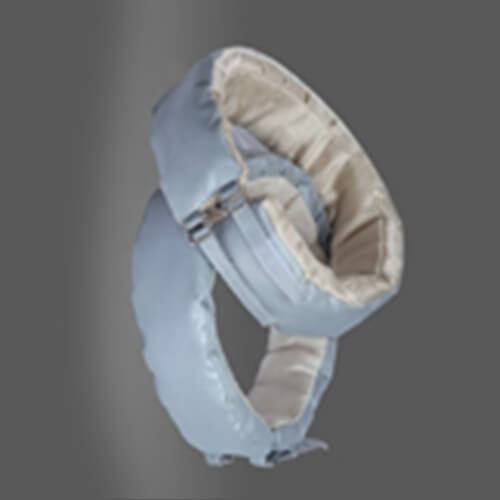
Made to shapeEach cover is surveyed and mapped to the component it will fit. -
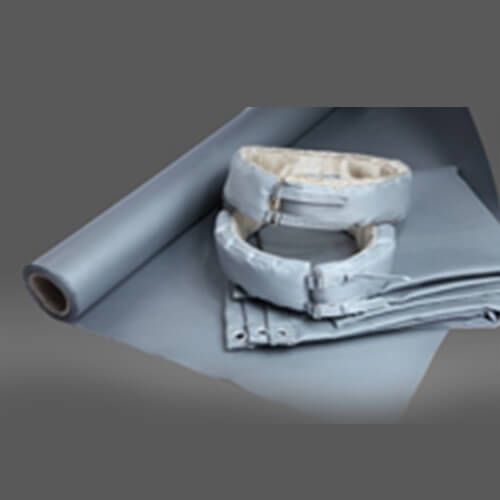
Closures and seamsEvery seam is stitched with our own thread rated to 900 degrees continuous. -
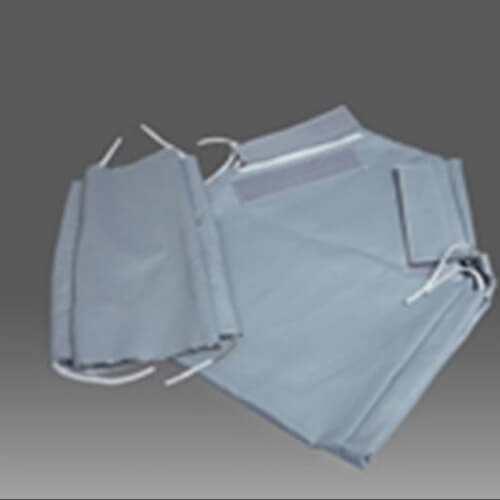
OEM productionFabric, thread and insulation all produced at our own plant in Jiaxing.


What We Need to Quote
Because every cover is bespoke, a quotation needs information about the components rather than a part number. The more of this you can send at the start, the faster and more accurate the quotation.
- Photographs of each component in position. The single most useful thing you can send. A photograph shows us the actuator, the stem, the brackets and the pipework clearances that a written description almost always leaves out.
- Dimensions or the component specification. Valve type and size, flange rating, pipe diameter, or overall measurements. If you have datasheets or drawings, those are ideal.
- Operating temperature, normal and maximum. This determines the insulation and the fabric specification. Include upset conditions rather than only the steady state figure.
- The environment the cover sits in. Indoor or outdoor, chemical exposure, washdown, vibration, and whether the surface is walked on or handled. Each affects the outer fabric choice.
- Quantity and how many are identical. Ten identical valves cost far less per cover than ten different ones, because the pattern is developed once. Tell us which items repeat.
If you are insulating a whole plant area rather than a handful of items, send a valve list or line schedule if you have one. Working from a list is considerably faster than working from photographs alone, and it lets us group identical items to bring the unit cost down.
Removable Insulation Cover Questions
The questions engineers, maintenance managers and procurement teams ask us most often.
Why not just use conventional insulation?
On pipe runs that nobody needs to open, conventional insulation is the right answer and it costs less. The problem is specific to components requiring periodic access.
Permanent insulation on a valve or flange gets cut away the first time somebody services it, and in most plants it is never reinstated. Replacing it means a separate trade, budget and schedule, so it is deferred and then forgotten. The component runs bare for the rest of its life. A removable cover breaks that cycle because the same technician lifts it off and puts it back in the same visit.
Are they more expensive than permanent insulation?
Per item at the point of purchase, yes. Over the life of the asset, usually not, and the comparison most buyers make is the wrong one.
Permanent insulation on a serviceable component is typically gone within a few maintenance cycles, at which point its real performance is zero. Comparing purchase prices compares a product that survives against one that does not. Compare instead against the alternative that actually happens on your site.
Can they really be removed and refitted without tools?
Yes. The closures are designed so that the technician already working on the component can take the jacket off and put it back, in minutes, with no specialist skill and no separate contractor visit.
That property is what makes the format work. A removable cover that is awkward to refit gets left off, and then it is no better than the permanent insulation it replaced.
How many times can a cover be reused?
Many maintenance cycles. The base materials are non-combustible and do not degrade with time or thermal cycling. What eventually wears is the closures and the outer fabric where it is handled.
How long depends on the environment and how often the cover is removed. Inspect the closures, the seams and the outer surface at each removal, since those are what fail first rather than the insulation inside.
What information do you need to quote?
Photographs of each component in position are the most useful single thing, because they show the actuator, stem, brackets and clearances that written descriptions leave out. Add dimensions or component specifications, the operating temperature including upsets, and the environment the cover sits in.
Also tell us how many items are identical. Ten identical valves cost far less per cover than ten different ones, because the pattern is developed once and reused.
Do they help with corrosion under insulation?
They do not prevent it, and any supplier claiming otherwise is overselling. Insulation over metal can trap moisture regardless of format.
What they change is whether inspection can actually happen. Lifting a jacket to look at the surface underneath takes minutes. Cutting off permanent insulation and reinstating it is a job that gets scheduled, deferred and eventually skipped. For assets requiring periodic visual inspection beneath insulation, the removable format is what makes the specified interval realistic.
Can you cover irregular and awkward shapes?
Yes, and that is where the format has the greatest advantage. Irregular geometry is exactly what rigid insulation systems handle worst, because they have to be cut and fitted around every protrusion on site.
A surveyed and mapped jacket is made to the actual shape including the awkward parts. Turbines, pumps, instrument boxes and special shaped components are all routine work for us.
Is there a component I should not jacket?
Some equipment is deliberately left uninsulated. Certain instruments need ambient exposure to read correctly, some designs rely on surface cooling, and a few use surface temperature as an operational indicator.
Confirm with your process engineer before jacketing anything currently bare by design rather than by neglect. We would rather raise the question at survey stage than deliver a cover that has to come off permanently.
What thread is used in the seams?
Our own high silica sewing thread, rated for continuous service at 900 degrees Celsius. This matters more on a jacket than on a flat product, because a jacket has many seams and every seam is a potential failure point.
A cover stitched with polyester comes apart at the seams while the fabric and insulation are entirely undamaged. It is the most common failure mode in this category and it is avoidable.
How should covers be identified and stored?
Each jacket should be marked so it returns to the component it was made for. On a plant with dozens of similar looking valves, an unmarked jacket ends up on the wrong one and never fits properly again.
We can mark covers to your tag numbering or asset register at production stage. Tell us your numbering convention when you order and it will be built in rather than added by somebody with a marker pen afterwards.
What is your minimum order quantity?
Because every cover is bespoke, minimums work differently here than for catalogue products. The cost driver is the number of distinct patterns rather than the total number of pieces.
Send the component list and we will quote it. If most of your items repeat, the unit cost falls considerably, and we will tell you where grouping similar items would save money.
What are your payment terms and shipping options?
Payment is normally by T/T, structured as a deposit with the balance settled before shipment. We confirm the exact split with your quotation.
EXW, FOB, CIF and DAP terms are all available, so you can pick whichever fits how your freight is already arranged. If you have a nominated forwarder we will work with them directly.
Related Products
Our other finished products, and the materials these covers are built from.
Send Photographs and We Will Quote From Them
Photographs of the components in position, their operating temperature, the environment they sit in and how many are identical. That is enough for us to come back with a specification, pricing and a lead time we can hold to.
Request a QuotePhone
+8613758326701
Bright Sky New Material Co Ltd.
Room 1101-11, 11/F,Youbang Building. Jiaxing Headquarters Business Garden, Nanhu District, Jiaxing, Zhejiang, 314000 - China
sales@silicapro.com
lucyhhyy@gmail.com
© 2021 SILICAPRO.COM
All Rights Reserved