


High Silica Fabric Manufacturer in China
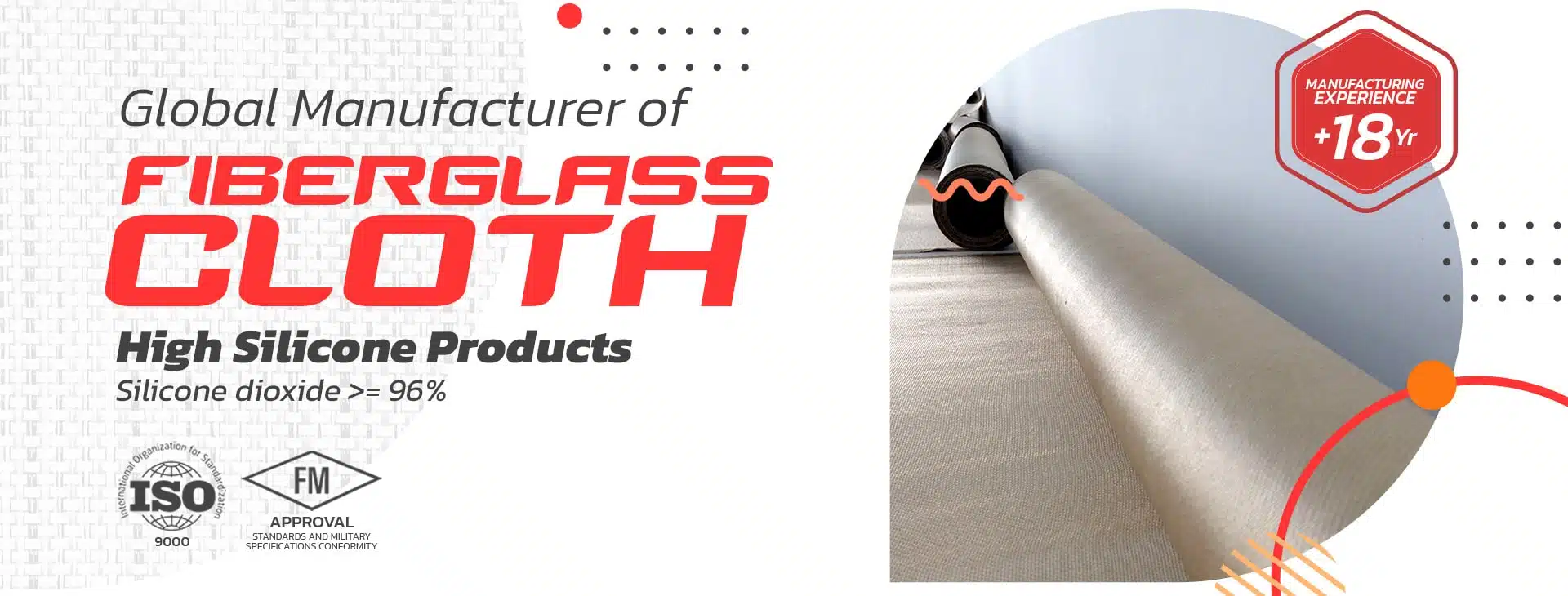
SilicaPro produces high silica cloth, coated fabrics and high temperature resistant materials from our own plant in Jiaxing, Zhejiang. Woven from more than 96 percent amorphous silica fibre and rated for continuous service where ordinary E-glass fails.
Bright Sky New Material Co Ltd
We are a high silica fabric manufacturer based in Jiaxing City, Zhejiang Province, at the centre of the Yangtze River Delta and just north of the Hangzhou Bay Bridge. Our plant covers the full route from treated silica yarn through weaving, heat treatment and coating to finished goods.
Buyers usually come to us after ordinary fiberglass has failed them. E-glass cloth holds up to around 550 degrees Celsius, which is fine for many jobs and completely inadequate for others. High silica fabric sits in a different class: woven from fibre leached to above 96 percent amorphous silica, it holds shape and strength at 1000 degrees Celsius continuous, with a softening point around 1700 degrees.
Alongside high silica cloth we produce quartz fibre, chopped yarn, high temperature sewing thread, fireproof cloth, silicone coated fabric, nano microporous insulation board and para-aramid materials. We also work with several universities and research institutes on aerogels, microporous nano boards and high silica needle felt.
As a silica fabric factory in China supplying export markets directly, we handle OEM and private label programmes as well as standard roll goods.
High Temperature Resistant Materials We Manufacture
Industrial ultra high temperature special fibre technology, centred on high silica fiberglass series products and the coating processing of fiberglass cloth.
-

High Silica Fiberglass Cloth
Our core product. Above 96 percent SiO2, supplied from 0.6 mm to 1.35 mm thick, uncoated or with silicone, graphite, PTFE or vermiculite surface treatment.
View Detail -
Quartz Fiber
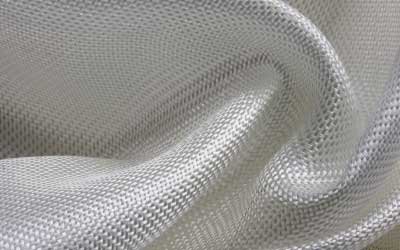
For applications where even high silica is not enough. Very low dielectric loss makes it the choice for aerospace radomes and precision electrical insulation.
View Detail -

High Silica Chopped Yarn
Chopped silica strand for refractory castables, friction materials and composite reinforcement where thermal stability matters more than tensile strength.
View Detail -
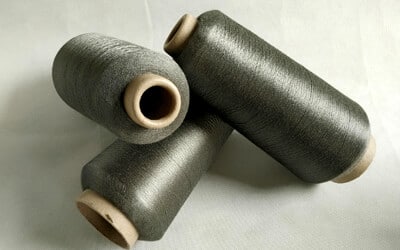
High Temp Sewing Thread
The detail most buyers forget. A 1000 degree blanket stitched with ordinary thread fails at the seam first. Our thread matches the fabric it joins.
View Detail -
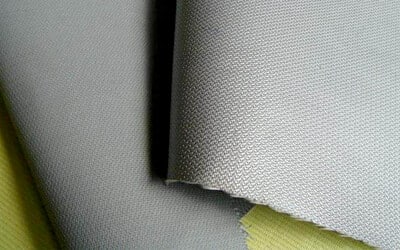
Fireproof Cloth
Coated fabrics for welding blankets, fire curtains, shields and protective covers. Specified by the hazard you are protecting against rather than by material alone.
View Detail -
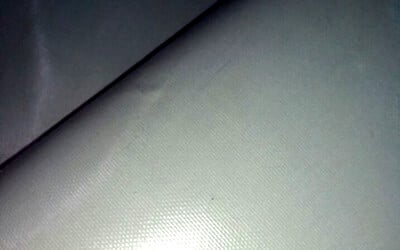
Silicone Cloth
Silicone coating adds abrasion resistance, water repellency and easier handling. The usual choice for removable insulation jackets and expansion joints.
View Detail -
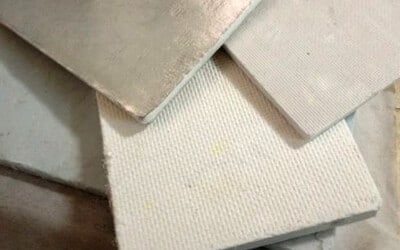
Nano-Microporous Insulation Board
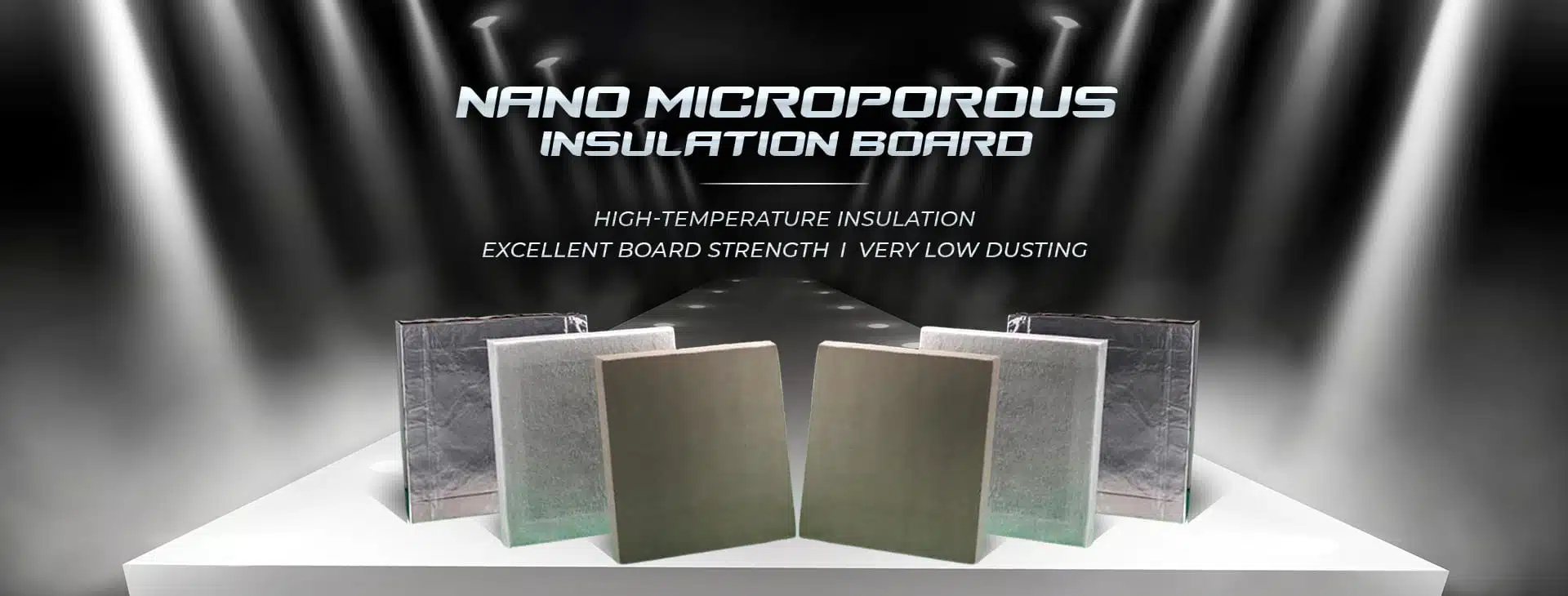
Extremely low thermal conductivity in a thin section. Used where space is tight and heat loss is expensive, including furnace linings and battery pack barriers.
View Detail -
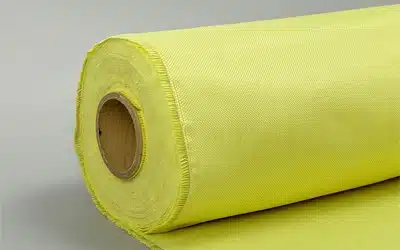
Para-Aramid Fabric
Where cut resistance and mechanical strength matter alongside heat. Common in protective clothing, gloves and reinforcement fabrics.
View Detail -
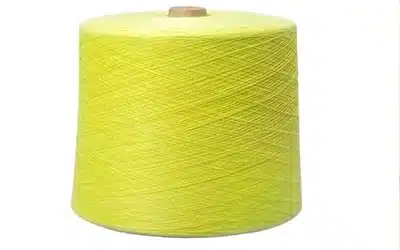
Para-Aramid Yarn Fire-Proof
Continuous filament yarn for weaving, knitting and sewing applications that need flame resistance and tensile strength in the same fibre.
View Detail -
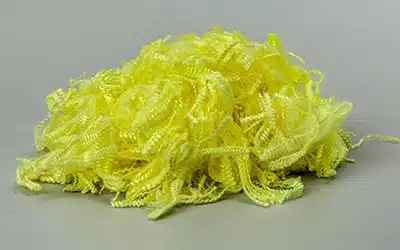
Para-Aramid Short Staple Fiber
Short cut fibre for friction materials, gaskets, sealing products and reinforcement compounds where dispersion matters more than filament length.
View Detail -
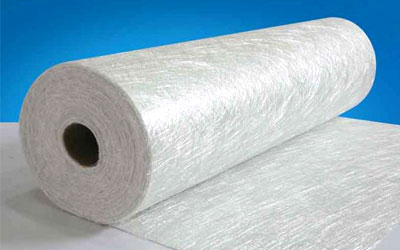
Fiberglass Needle Mat
Needled felt in fiberglass and high silica grades, for insulation blankets, filtration and applications needing bulk rather than a woven surface.
View Detail -
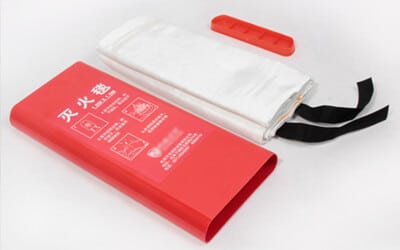
Finished Products
Fire blankets, welding blankets, curtains, sleeves and covers, cut and sewn in house from fabric we wove ourselves. Full OEM and private label available.
View Detail


How High Silica Fabric Is Actually Made
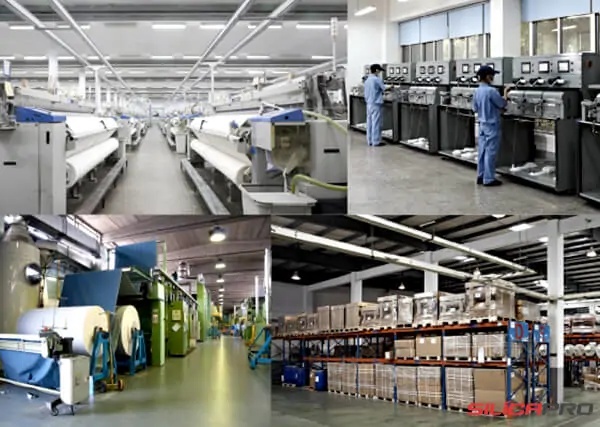
High silica is not simply a grade of fiberglass. It is glass fibre chemically leached until almost everything but silica is gone, then rewoven and heat stabilised. These photographs are from our own plant, not a stock library.
-
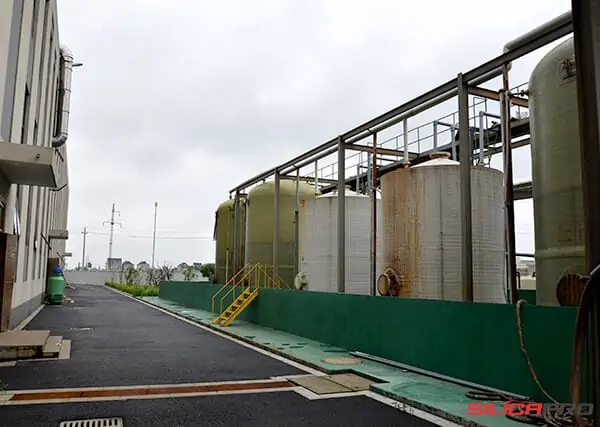
1. Chemical storageBulk acid and process chemicals stored in bunded outdoor tanks, feeding the leaching line directly. -
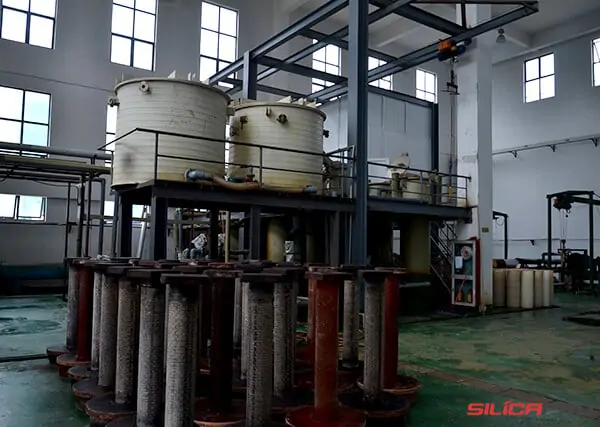
2. Acid leachingYarn bobbins are treated in these tanks until non silica oxides are stripped out and SiO2 content passes 96 percent. -
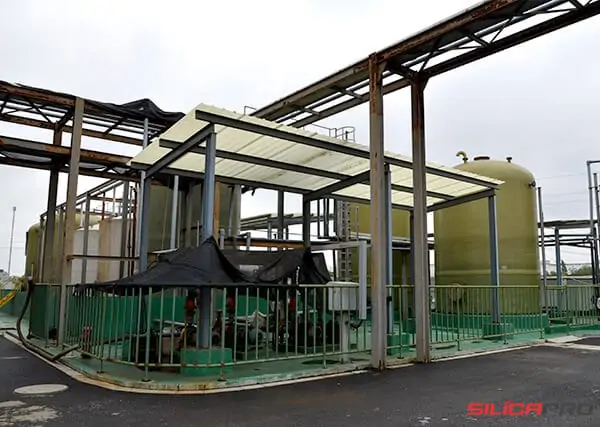
3. Process chemistryFRP tanks and pipework handling treatment liquor and effluent, sized for continuous rather than batch running. -
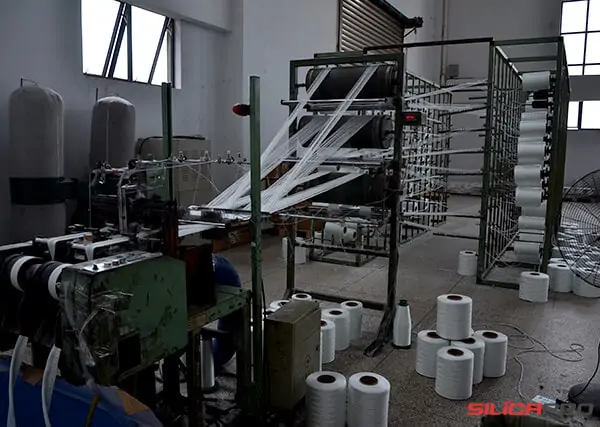
4. WarpingTreated yarn is drawn from the creel and beamed at controlled tension. Uneven tension here shows up as width variation later. -
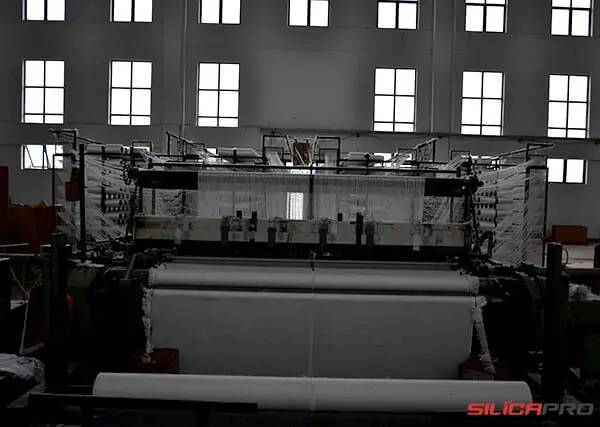
5. WeavingPlain and satin weave produced on wide looms. Weave style changes drape and handling as much as it changes strength. -
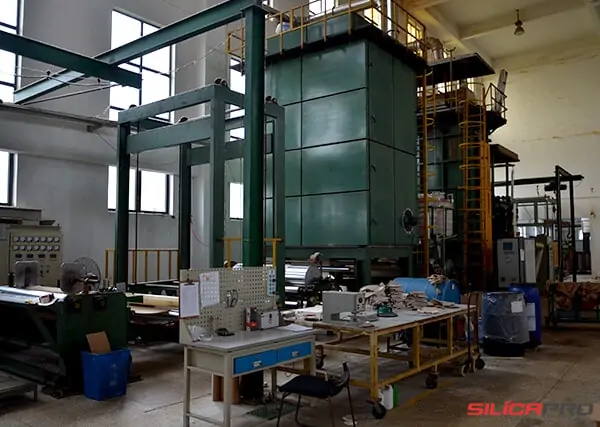
6. Heat treatmentVertical furnace removing residual sizing and stabilising the cloth, so it does not shrink or smoke on first use. -
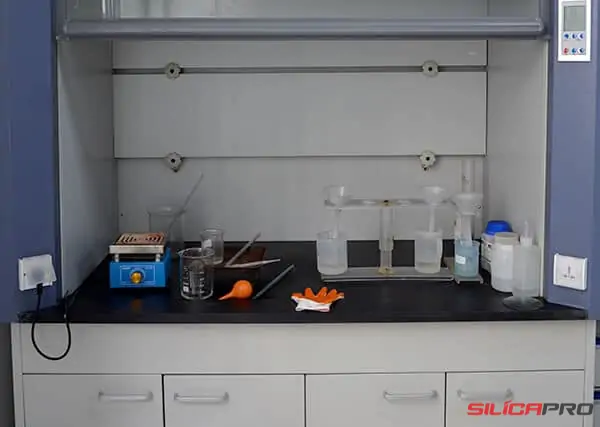
7. Chemical testingSilica content and chemical resistance verified in house rather than assumed from the supplier certificate. -
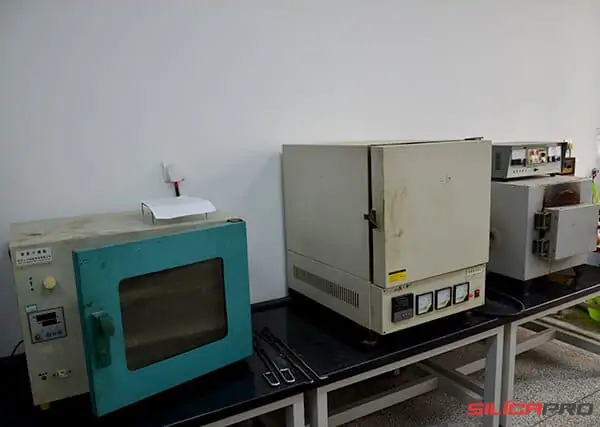
8. Loss on ignitionMuffle furnace and drying oven measuring how much a sample loses when fired. The number that tells you whether the leaching worked. -
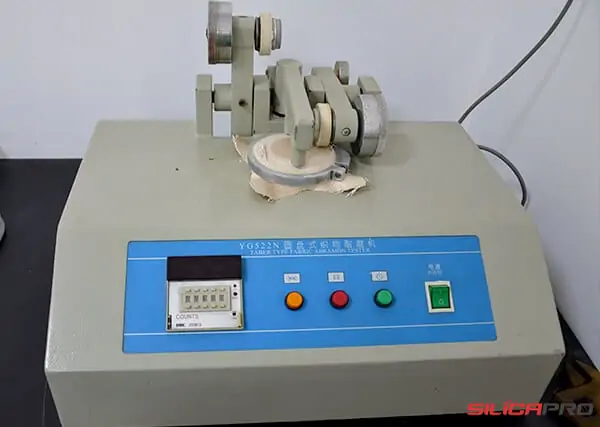
9. Abrasion testingTaber tester counting cycles to failure. Matters most on coated goods, where the coating fails long before the fibre does. -
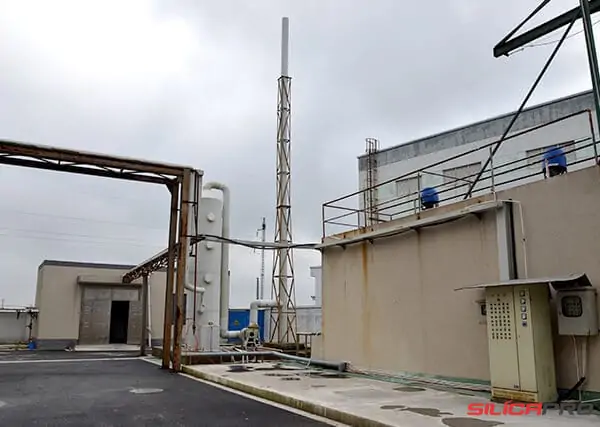
10. Emission treatmentScrubber and stack handling process exhaust. Acid leaching produces fumes, and treating them is not optional.
See Our Materials Under Actual Flame
Datasheets state a temperature rating. These clips show what that rating means in practice, filmed on our own products rather than modelled.
Fire Blanket Demonstration on a Car
A vehicle fire smothered with a single blanket, the application that sells most of our finished goods.
Welding Blanket Fire Test
Direct flame against a welding blanket. The seam and the coating usually fail before the base fabric does.
Fiberglass Cloth Fire Test
Woven glass fabric under open flame, useful as a baseline against which high silica performance can be judged.
High Temperature Fabric Flame Test
Sustained flame against high temperature fabric, showing behaviour over time rather than at first contact.
Warehouse, Packing and Shipment
Holding stock is what separates a manufacturer from a trader who quotes and then goes looking. Standard widths and weights ship from stock, and custom specifications run to the schedule we quote you.
-
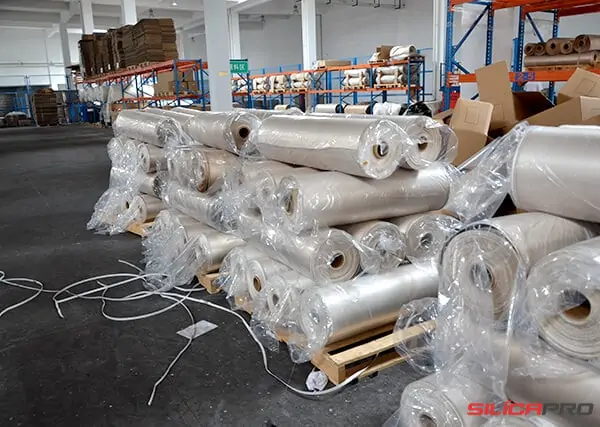
Uncoated roll stockPlain woven silica cloth held in standard widths, individually wrapped against moisture and handling damage. -
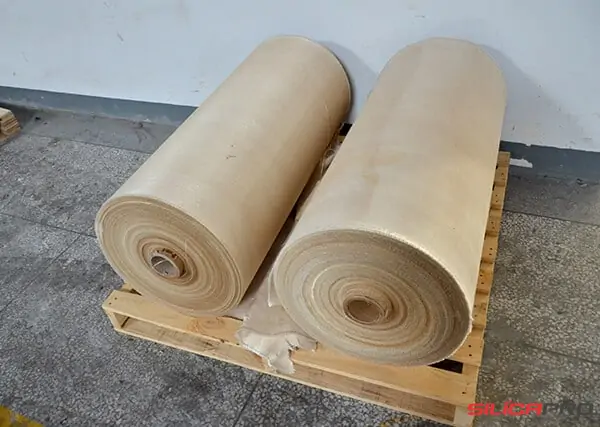
Coated stockSurface treated cloth for molten splash resistance. Recognisable by the tan finish and noticeably stiffer handle. -
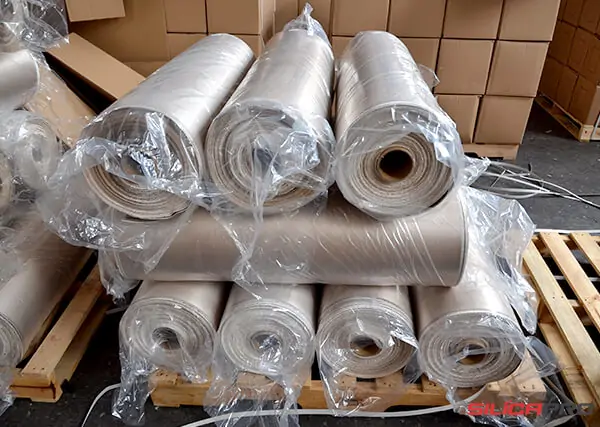
Palletised rollsCoated stock palletised for container loading, with cartons behind for finished goods travelling in the same shipment. -
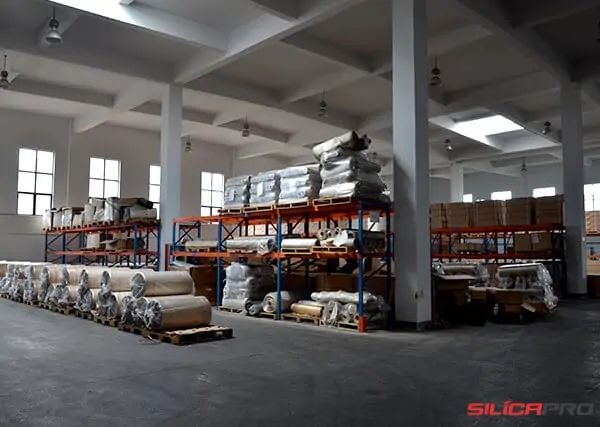
Roll storageRacked by specification so a standard width order can be pulled and shipped without waiting on a production slot. -
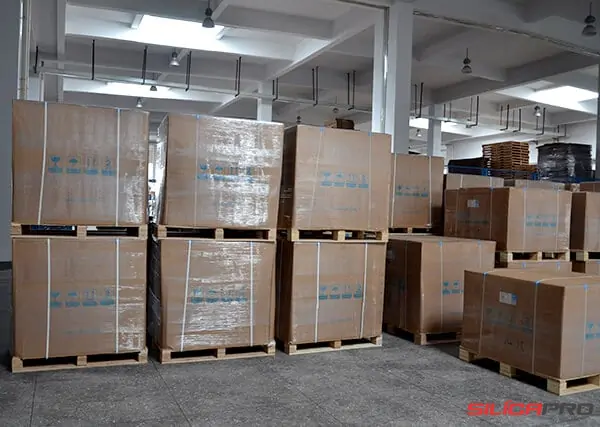
Export packingShrink wrapped and strapped to survive the container, with carton marking to your specification. -
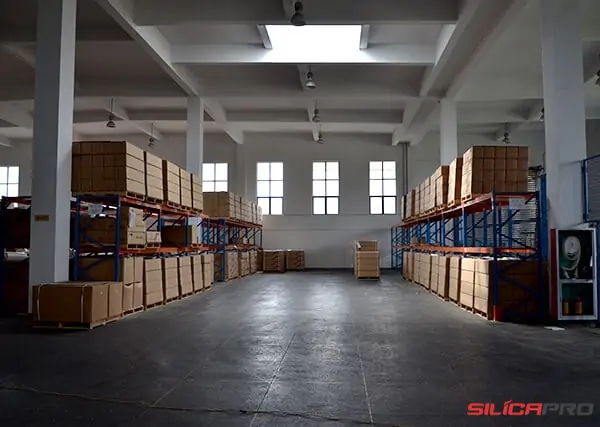
Finished goodsStaged by order rather than by product, so a mixed shipment leaves complete instead of in instalments.
High Silica Fabric Technical Specifications
Typical values for our standard high silica cloth. Non standard widths, weights and coatings are produced to order, so ask rather than assume something is unavailable.
| Property | Typical Value |
|---|---|
| SiO2 content | 96 percent minimum, amorphous silica |
| Continuous working temperature | Up to 1000 degrees Celsius |
| Softening point | Around 1700 degrees Celsius |
| Thickness | 0.6 mm to 1.35 mm |
| Weave | Plain and satin, other constructions to order |
| Surface treatment | Uncoated, silicone, graphite, PTFE, vermiculite, aluminium foil |
| Key properties | Low thermal conductivity, high electrical insulation, chemical and corrosion resistant, non asbestos and non toxic |
| Related products | Chopped yarn, sewing thread, needle mat, quartz fibre, microporous board |
| Finished goods | Fire blankets, welding blankets, curtains, sleeves, insulation covers |
| OEM and private label | Available, including custom packaging and carton marking |
| Export markets | North America, Europe, Middle East, Southeast Asia |
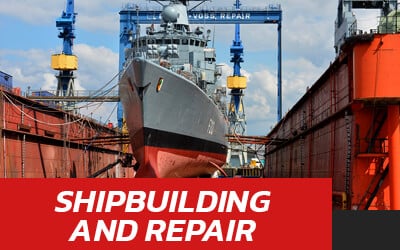
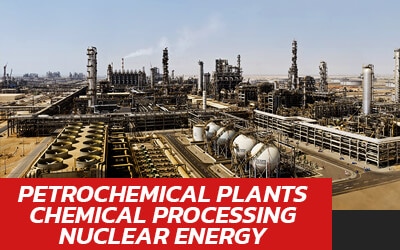
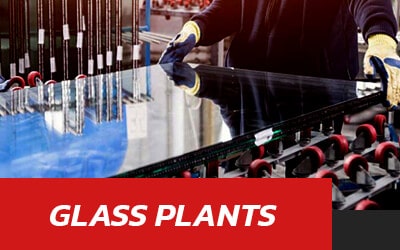
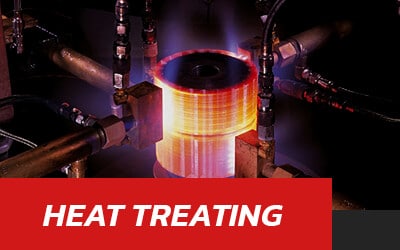
Where High Silica Fabric Is Used
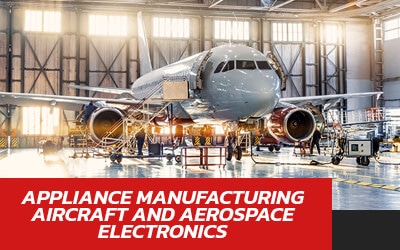
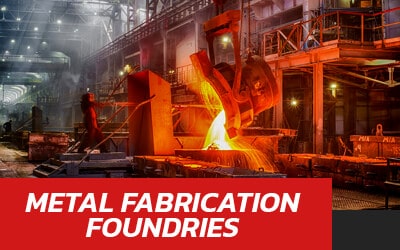
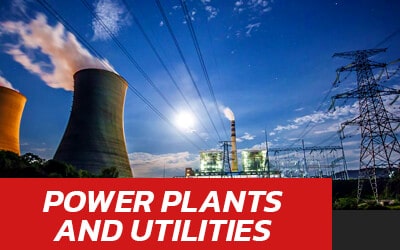
Anywhere ordinary fiberglass runs out of temperature headroom. These are the sectors that order from us most often.
-
-
-
-
-
-

-

-
-


Buying High Silica Fabric From China
The questions specifiers, importers and procurement teams ask us most often, answered properly rather than in one line.
What is high silica fabric, and how does it differ from ordinary fiberglass cloth?
Both start as glass fibre, but high silica fabric is chemically leached until almost every oxide other than silicon dioxide has been removed. What remains is above 96 percent amorphous SiO2, which is why it behaves so differently under heat.
Ordinary E-glass cloth softens and loses strength somewhere around 550 degrees Celsius. High silica holds structure at 1000 degrees continuous with a softening point around 1700. If your application sits below 500 degrees, standard fiberglass is cheaper and perfectly adequate. Above that, it is the wrong material and no coating will fix it.
What temperature can your high silica cloth actually withstand?
Continuous use up to 1000 degrees Celsius, with a softening point around 1700 degrees.
Two things worth understanding about those numbers. The continuous rating assumes the fabric stays intact and functional over long service, while the softening point describes where the material itself begins to lose structure. And coatings almost always have a lower rating than the base cloth, so a silicone or PTFE treated product is limited by its coating rather than by the silica underneath.
How do I verify the silica content is really above 96 percent?
Ask for the loss on ignition figure and a chemical analysis, and expect a supplier to provide both without hesitation. We run these in our own laboratory rather than relying on an upstream certificate.
If you want independent confirmation, request a sample and have it tested at your own laboratory or a third party. Any manufacturer confident in the material will encourage that. A supplier who cannot produce batch level data is usually trading rather than manufacturing.
Which surface treatment should I choose?
It depends on the hazard rather than the temperature alone. Silicone adds abrasion resistance, water repellency and easier handling, and is the usual choice for removable insulation jackets and expansion joints. Graphite improves lubricity and release, useful where the fabric moves against metal. PTFE gives chemical resistance and a low friction surface. Vermiculite handles molten metal splash, which is why welding and foundry products use it.
Tell us what the fabric will actually face, including whether it is contact heat, radiant heat, splash, chemical exposure or abrasion, and we will recommend a treatment rather than sell you the most expensive option.
What thicknesses, widths and weights do you supply?
Standard cloth runs from 0.6 mm to 1.35 mm thick. Standard widths and weights are held in stock and can ship without waiting for a production slot, while non standard specifications are woven to order.
Send the thickness, width and weave you need along with the intended application. Occasionally a requested specification is heavier than the job requires, and telling you that costs us margin but saves you money, which tends to be the better trade over a working relationship.
Can I get a sample before ordering?
Yes. Samples of standard specifications are normally available immediately, and we would rather you test the material than take our datasheet on trust.
Tell us the application when you request the sample. Handling and drape differ noticeably between weaves, thicknesses and treatments, and sending you a piece that matches your actual use is more useful than sending whatever is nearest the door.
Are you a manufacturer or a trading company?
We are a manufacturer. Chemical treatment, warping, weaving, heat treatment, coating, testing and finished goods sewing all happen at our own plant in Jiaxing, Zhejiang.
The practical difference shows on repeat orders and on problems. A manufacturer can trace a batch back to the treatment tank it came from. A trader can only pass your complaint upstream and wait.
Do you accept OEM and private label orders?
Yes. We produce fire blankets, welding blankets, curtains, sleeves and insulation covers under customer brands, including custom packaging, labels and carton marking.
Because we weave the base fabric ourselves, an OEM programme can specify the cloth as well as the finished article. That is harder to arrange when the fabric and the sewing sit at two different companies.
What is your minimum order quantity?
MOQ depends on whether the specification is standard or custom. Stock widths and thicknesses carry a low minimum because the material already exists. A custom weave, width or surface treatment needs its own production run, which raises the minimum.
Tell us the specification and rough volume and we will confirm the exact figure with your quotation.
How does high silica fabric compare with ceramic fibre?
Ceramic fibre reaches higher temperatures, so for pure heat resistance it wins. High silica is more flexible, easier to cut and sew, and does not shed in the same way, which matters for anything handled by people rather than installed once.
There is also a regulatory dimension. Some refractory ceramic fibres face classification and handling restrictions in certain markets, which has moved a number of buyers toward high silica for personnel protection applications. Check the rules for your destination market before specifying either.
What are the main applications for your materials?
Welding and fire blankets, expansion joints, removable insulation covers, furnace, kiln and turbine insulation, aerospace and automotive heat shields, and thermal protection or ablation resistant components.
Shipbuilding thermal protection also comes up regularly, along with removable insulation jackets for valves and flanges in refineries and power plants, and protective clothing for firefighters and foundry workers.
What are your payment terms and shipping options?
Payment is normally by T/T, structured as a deposit with the balance settled before shipment. We confirm the exact split with your quotation.
EXW, FOB, CIF and DAP terms are all available, so you can pick whichever fits how your freight is already arranged. If you have a nominated forwarder we will work with them directly.
Which countries do you export to?
We ship regularly to North America, Europe, the Middle East and Southeast Asia, and we are familiar with the documentation each of those regions expects.
If your destination is elsewhere we can still supply. Tell us the country at inquiry stage so we can confirm whether any additional certification or documentation is required before goods leave.
Can you help me choose the right material if I am not sure?
Yes, and it is worth asking. Buyers frequently arrive asking for high silica when a coated fiberglass would do the job at a fraction of the cost, and occasionally the reverse.
Send the operating temperature, whether the heat is contact or radiant, whether there is splash or abrasion, how long the material must last, and any standard you have to meet. That is enough for our technical team to recommend something specific rather than generic.
Tell Us the Temperature and We Will Recommend the Material
Send your operating conditions, required thickness and width, and destination market. We reply with a specification, pricing and a lead time we can hold to.
Request a QuotePhone
+8613758326701
Bright Sky New Material Co Ltd.
Room 1101-11, 11/F,Youbang Building. Jiaxing Headquarters Business Garden, Nanhu District, Jiaxing, Zhejiang, 314000 - China
sales@silicapro.com
lucyhhyy@gmail.com
© 2021 SILICAPRO.COM
All Rights Reserved