
SilicaPro
Para-Aramid Short Staple Fiber
100 Percent Para-Aramid Short Staple Fiber
Para-aramid short staple fibre is cut fibre supplied as a raw material for spinning, non-woven production and composite reinforcement. Inherently flame resistant with no chemical coating, and like all para-aramid, it does not melt.
Available in three cut lengths, 38 mm, 51 mm and 76 mm, at 1.5 denier fineness, in the natural undyed yellow of the fibre itself. The length you need depends on your spinning system rather than on the end product, and choosing it correctly matters more than most buyers expect.
Worth being clear at the outset about what this product is not. It is not yarn and it is not sewing thread. It cannot be sewn or woven as supplied, because it is loose cut fibre. It becomes those things only after you process it.

This Is Not Yarn
Most product pages avoid saying what a product cannot do. We would rather say it in the first section, because this is the single most common source of a wrong order in our para-aramid range.
This product is raw staple fibre and requires further processing before use. It arrives as loose cut fibre, not as a continuous strand on a spool.
It is not suitable for direct sewing or weaving. You cannot thread it through a needle, you cannot load it onto a loom, and you cannot use it as a substitute for yarn in any process that expects a continuous strand.
If what you need is a ready to use continuous strand, our para-aramid filament yarn is the correct product. If you need finished woven material, our para-aramid fabric is. Both are made from the same fibre chemistry.
The customers who buy this correctly are spinning mills, non-woven manufacturers and composite producers who have their own processing capability. They are buying an input, and what matters to them is how the fibre behaves on their line rather than how it performs in a finished garment.
If you are buying for the first time and are not certain which form you need, describe what you are making and how. We will tell you which of the three para-aramid products fits, including when the answer is not this one.
Staple Fibre or Filament Yarn
Both are para-aramid, both are inherently flame resistant, and both come from us. They produce noticeably different fabrics, and the choice is a design decision rather than a cost one.
Short Staple Fibre
Cut fibre, spun into yarn by twisting many short lengths together. The resulting spun yarn has a slightly hairy surface where fibre ends protrude, which is exactly what makes it feel like a textile rather than like a plastic strand.
That surface gives better grip, better air entrapment for thermal insulation, and considerably more comfort against skin. It is why protective clothing is usually made from spun aramid rather than filament.
Fabrics worn on the bodyFilament Yarn
Continuous strand, smooth and uniform along its length with no fibre ends. Higher strength for a given weight because every filament runs the full length under load.
The smooth surface is an advantage in cable reinforcement and composites, and a disadvantage next to skin, where it feels slick and traps less air.
Cables, composites, reinforcementThe short version: filament is stronger, spun is more comfortable and more insulating. A firefighter's outer shell is spun aramid for a reason, and a fibre optic cable strength member is filament for the opposite reason.
If you are producing protective garments and currently buying filament yarn, it is worth trialling spun. The difference in hand feel is large enough that wearers notice it, and wearer acceptance decides whether protective equipment gets worn properly or not at all.
Choosing the Cut Length
The three lengths are not arbitrary and they are not a quality ladder. Each suits a different spinning system, and the correct answer is determined by your machinery rather than by your end product.
The shortest option, suiting short staple spinning systems. Produces a finer, more uniform spun yarn with a smoother surface than the longer cuts.
The middle option and the most widely requested. Sits comfortably in medium staple systems and offers a balance of yarn strength and processing ease.
The longest cut, suiting long staple systems. Gives a stronger spun yarn with fewer fibre ends per length, and works well in needled non-woven felts.
Match the length to your equipment, not to your ambition. Spinning machinery is set up around a staple length range, with roller spacing and drafting settings built for it. Feeding fibre that is too long for the system causes breakage and neps. Feeding fibre that is too short produces a weak, uneven yarn with poor fibre control.
If you are unsure which length your line is set for, tell us the machinery you run and we will suggest a starting point. If you are running a non-woven line rather than spinning, the considerations are different again and the longer cuts usually perform better in needling.
One further point on fineness. All three lengths are supplied at 1.5 denier, which is a fine fibre. Finer fibre gives a softer hand and a more uniform yarn, but it also demands better fibre control during processing. If your equipment is set up for coarser material, raise it at inquiry stage rather than discovering it on the first run.
Key Features
Five characteristics define the fibre as a raw material and as a component of whatever you build from it.
- 100 percent para-aramid. Not a blend and not a coated substitute. Whatever you produce from it inherits the full properties of the fibre rather than a diluted version.
- Inherently flame resistant with no chemical coating. The flame resistance is in the polymer molecule. Nothing was applied, so nothing washes out, wears off or has to be reapplied during the life of the finished product.
- High heat resistance and tensile strength. The fibre does not melt. Under sufficient heat it chars rather than flowing, which is the property that makes para-aramid the standard for protective clothing.
- Lightweight with excellent thermal stability. Strength at low weight, and dimensional stability through thermal cycling rather than progressive degradation.
- Raw material for technical and protective textiles. Designed as an input to your process rather than as a finished item, which is what allows you to control the specification of the end product yourself.
That first point carries more weight than it appears to. Aramid staple is frequently sold as a blend, with a proportion of cheaper fibre included to reduce cost. A blend performs to its weakest component under fire, and a garment made from blended stock may behave very differently from one made at 100 percent. If you are comparing quotations, confirm the aramid content of each rather than the price alone.
Three Processing Routes
The same fibre goes down three quite different manufacturing paths, and the cut length that suits one may not suit another.
Spinning into Yarn
Carded, drawn and spun into para-aramid spun yarn, then woven or knitted into fabric. The largest single use for this material and the route most of our customers take.
Staple length must match your spinning system here, since this is where the length setting matters most. The resulting yarn has the hairy surface and comfortable hand that filament cannot provide.
Non-Woven and Felt
Needled or bonded directly into non-woven fabric and industrial felt without any spinning stage at all. Faster and cheaper than the spun route, and suited to insulation and filtration rather than to worn garments.
Longer cuts generally perform better in needling, because there is more fibre length for the needles to entangle and lock together.
Composite Reinforcement
Dispersed through a matrix as reinforcement in composites, friction materials, gaskets and sealing compounds where the fibre must distribute evenly rather than run continuously.
Here dispersion behaviour matters more than spun yarn strength, and the shorter cuts usually disperse more readily through a viscous matrix.
If you are running more than one of these routes, you may need more than one cut length rather than compromising on a single specification for both. Tell us the processes and volumes and we will quote them separately rather than pushing you toward one figure that suits neither.
Technical Specifications
Standard supply specification. Cut lengths and packaging are produced to order, so ask rather than assume something is unavailable.
| Specification | Details |
|---|---|
| Product name | Para-Aramid Short Staple Fiber |
| Product type | Aramid fibre |
| Material | 100 percent para-aramid |
| Fibre form | Staple fibre, cut length |
| Fibre length | 38 mm, 51 mm or 76 mm |
| Fineness | 1.5 denier |
| Colour | Natural yellow, undyed |
| Flame resistance | Inherent, no chemical coating applied |
| Melting behaviour | Does not melt. Chars under sufficient heat |
| Application | Spinning, non-woven production, composite reinforcement |
| End use | Spun yarn, non-woven fabrics, industrial felts, protective textiles |
| Processing required | Yes. Not suitable for direct sewing or weaving as supplied |
| OEM and wholesale | Available, including custom cut lengths and packaging |
Undyed is the standard because it is the natural colour of the fibre and carries no dyeing cost. For most customers this is the right choice regardless of the finished product colour, since colouring is usually applied at fabric stage rather than at fibre stage.
Applications
Four application families, all downstream of a processing step you carry out.
Para-Aramid Spun Yarn Production
The primary route. Spinning mills convert the staple into spun yarn for their own weaving or for onward sale, controlling the count and construction themselves.
Fire Resistant and Protective Fabrics
Woven or knitted from the spun yarn, for firefighter gear, industrial workwear, welding garments and safety equipment where the fabric must not melt onto the wearer.
Non-Woven Textiles and Industrial Felts
Needled directly into felt without spinning, for insulation, filtration and applications needing bulk and loft rather than a woven surface.
Composite and Reinforcement Materials
Dispersed through friction materials, gaskets, sealing compounds and composite matrices where reinforcement must distribute in all directions rather than run continuously.
Notice that every one of these requires equipment you already have. That is the defining characteristic of this product. It is bought by manufacturers with processing capability, and the useful conversation is always about your line rather than about the fibre in isolation.
Staple Fibre From Our Supply
Material as supplied, in the natural undyed yellow that is the colour of the fibre itself.
-
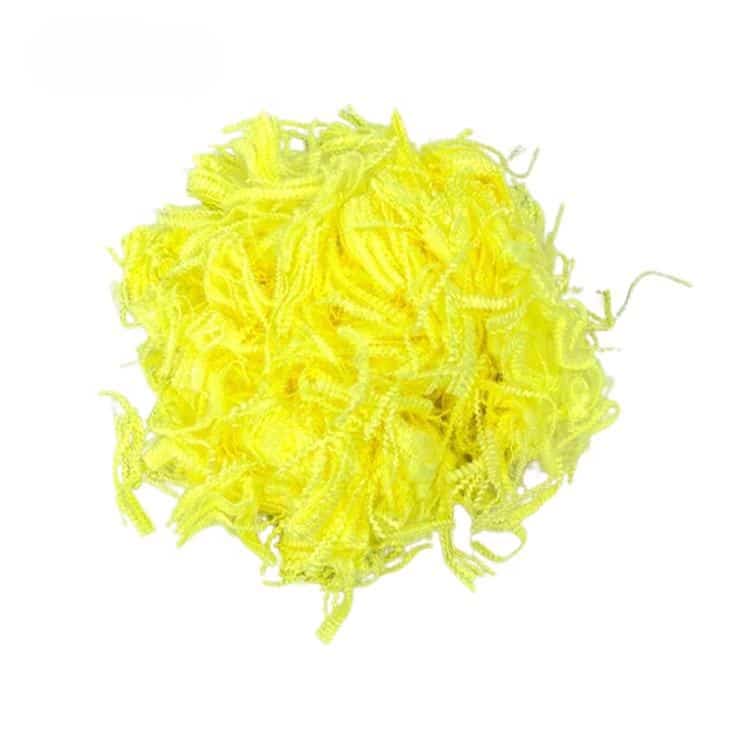
Loose cut fibreSupplied as bulk staple, not as a continuous strand on a spool. -
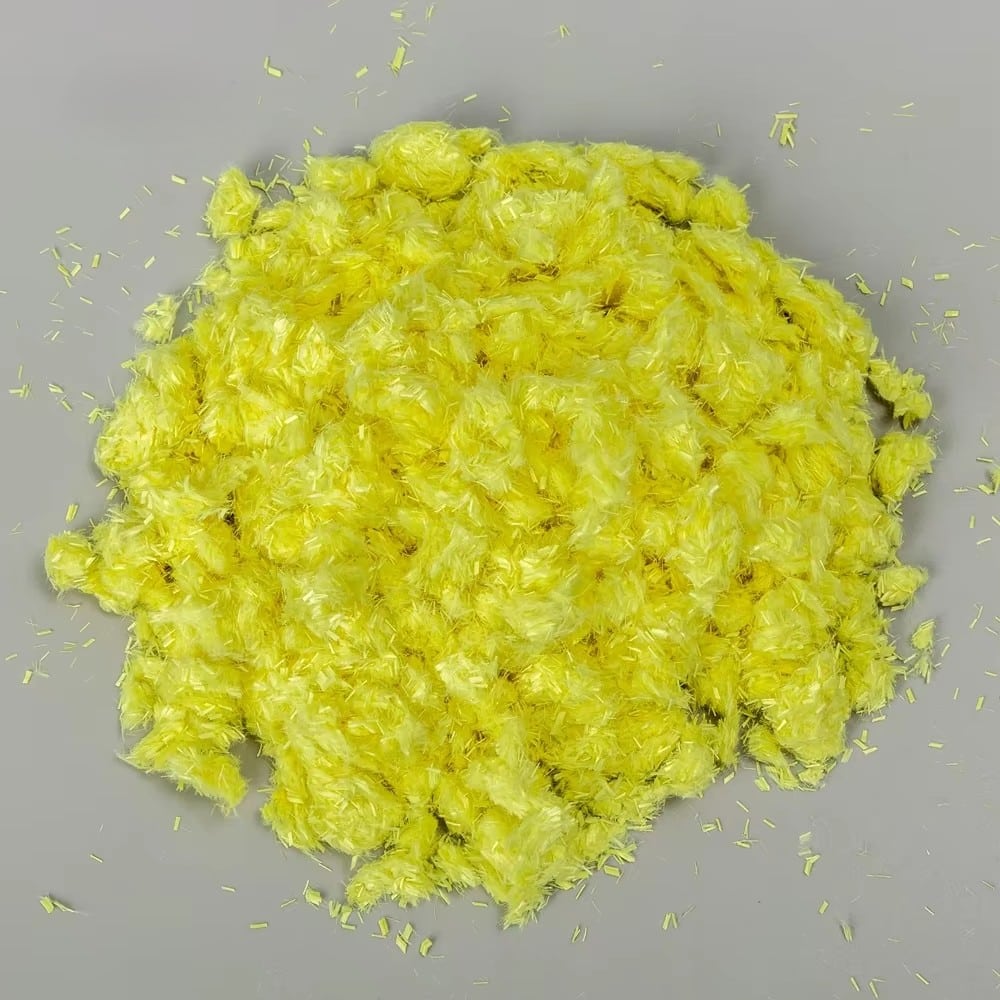
Cut lengthSupplied at 38, 51 or 76 mm to suit your spinning or needling system. -
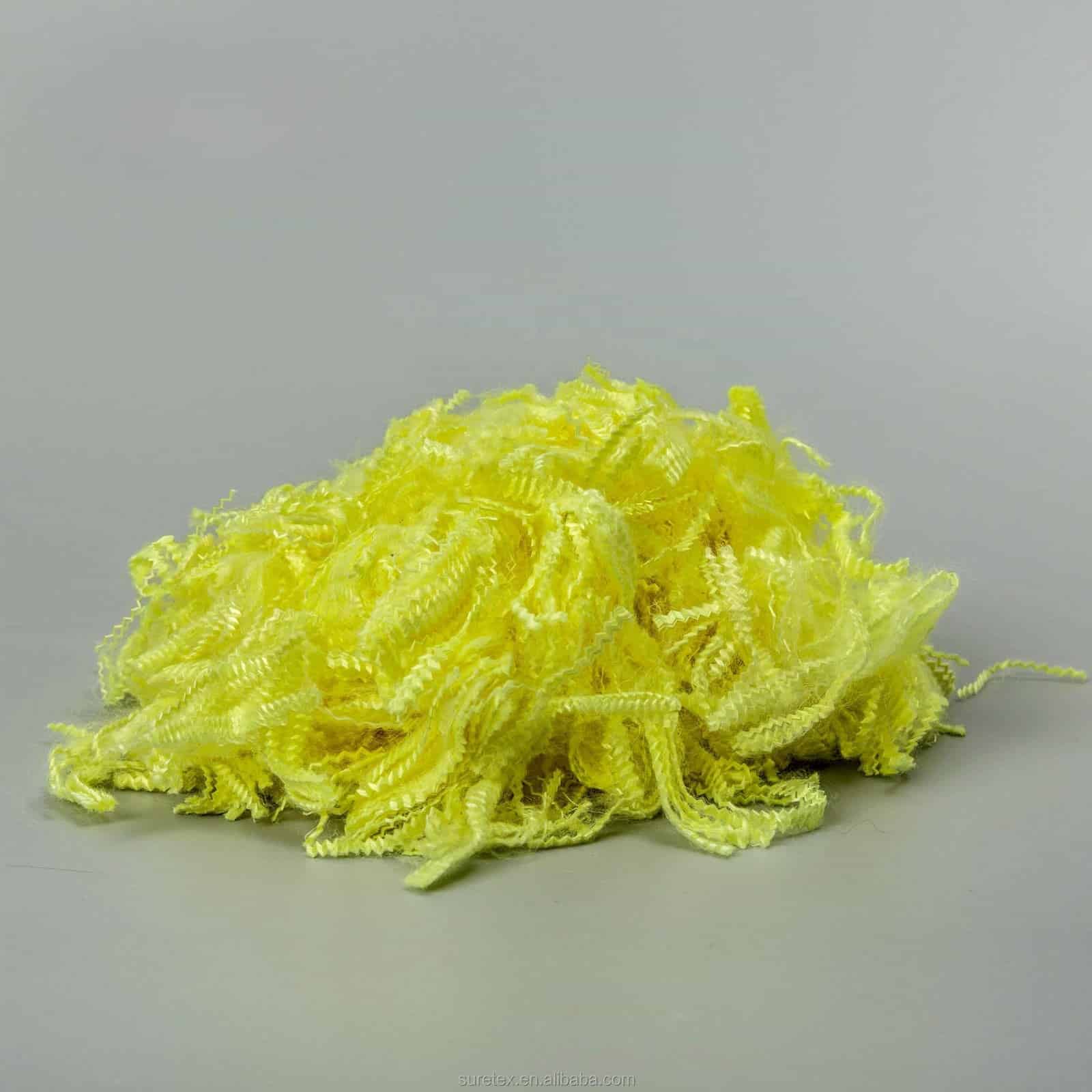
1.5 denierA fine fibre, giving a softer hand and a more uniform spun yarn. -
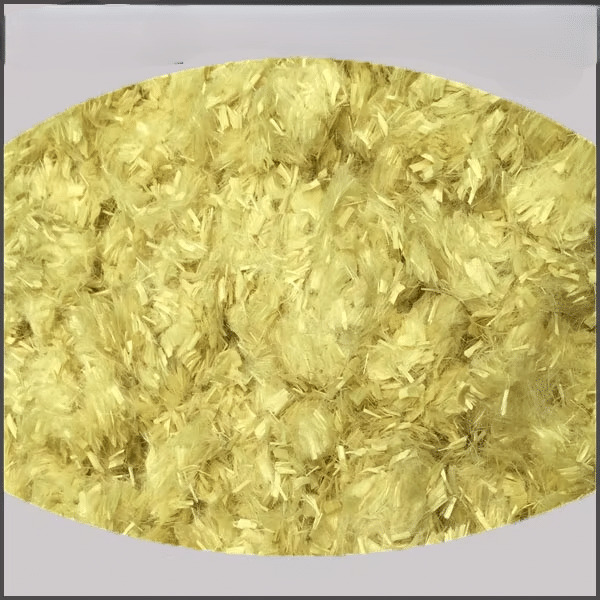
Bulk supplyWholesale volumes for spinning mills, non-woven and composite producers.


How to Specify Staple Fibre
Five answers let us confirm the cut length and packaging rather than shipping standard and hoping it runs.
- What processing route are you running? Spinning, needling into non-woven, or dispersion into a composite. Each favours a different cut length, and this answer comes before everything else.
- If spinning, what system is your line set up for? Roller spacing and drafting settings are built around a staple length range. Tell us the machinery and we will suggest a length rather than leave you to guess.
- What is the end product? Protective garment, industrial felt, friction material or something else. This does not decide the cut length directly, but it tells us whether the specification we are about to recommend actually makes sense.
- Are you trialling or already in production? A trial quantity in the most likely length is a better first order than a container of something that turns out to need different settings. We treat trial and production volumes separately.
- What packaging suits your handling? Bale, bag or carton, depending on how the fibre is fed into your line and how much floor space you have for staging.
If you are switching from another supplier, tell us the specification you have been running. Matching a known material is far more reliable than starting from a written specification, and it lets us tell you honestly whether our fibre will drop into your existing settings or need the line retuned.
Wholesale and OEM Supply
SilicaPro supplies para-aramid short staple fibre in wholesale volumes to spinning mills, non-woven manufacturers, felt producers and composite companies worldwide, with custom cut lengths and packaging available.
Batch consistency matters more here than in a finished product, because our customers are feeding the fibre into continuous processing. A batch that behaves differently from the last one does not merely underperform, it requires the line to be retuned and can waste an entire run before the cause is identified. We hold cut length and fineness consistent across batches for that reason.
If you are building a product line that needs more than one para-aramid form, we also supply filament yarn and woven fabric from the same fibre chemistry. Sourcing them together keeps the specification consistent across your range rather than mixing material from several origins with different properties.
Around 70 to 80 percent of our total output is exported, so the documentation, packing and inspection routines that international orders require are routine here rather than exceptional.
Para-Aramid Staple Fibre Questions
The questions spinning mills, manufacturers and procurement teams ask us most often.
Can I sew or weave with this fibre directly?
No. This is loose cut fibre, not a continuous strand. It cannot be threaded, loaded onto a loom or used anywhere that expects yarn.
It has to be spun into yarn first, or needled into non-woven fabric, or dispersed into a matrix. If you need a ready to use continuous strand, our para-aramid filament yarn is the correct product. If you need finished woven material, our para-aramid fabric is.
Which cut length should I order?
It depends on your equipment rather than on your end product. Spinning machinery is set up around a staple length range, with roller spacing and drafting settings built for it.
Fibre too long for the system causes breakage and neps. Fibre too short produces a weak, uneven yarn with poor fibre control. Tell us the machinery you run and we will suggest a starting length. If you are needling rather than spinning, the longer cuts generally perform better.
What is the difference between spun yarn and filament yarn?
Spun yarn is made by twisting short fibres together, giving a slightly hairy surface where fibre ends protrude. Filament yarn is a continuous smooth strand with no fibre ends.
Filament is stronger for a given weight. Spun is more comfortable against skin, grips better and traps more air for thermal insulation. This is why protective clothing is usually spun aramid while cable reinforcement is filament.
Is this a blend or 100 percent aramid?
100 percent para-aramid. Not a blend and not a coated substitute.
This is worth confirming with any supplier, because aramid staple is frequently sold blended with cheaper fibre to reduce cost, and a blend performs to its weakest component under fire. If you are comparing quotations, compare the aramid content rather than the price alone. A cheaper quotation for blended stock is not the same product.
Does the flame resistance wash out?
No, because nothing was added. The flame resistance is a property of the polymer molecule rather than a chemical coating applied to the fibre surface.
A chemically treated flame retardant fibre loses performance as the treatment wears and washes out, which is why treated FR garments carry wash count limits. Inherent fibre performs identically on its first day and after hundreds of cycles.
Why is 1.5 denier the standard fineness?
It is a fine fibre, which gives a softer hand and a more uniform spun yarn. For protective textiles worn against skin, that matters as much as the flame performance does, because uncomfortable protective clothing gets worn badly or not at all.
Finer fibre does demand better fibre control during processing. If your equipment is set up for coarser material, raise it at inquiry stage rather than discovering it on the first production run.
Can it be used in non-woven felt without spinning?
Yes, and it is a common route. The fibre is needled or bonded directly into non-woven fabric and industrial felt with no spinning stage at all, which is faster and cheaper than the spun route.
Longer cuts generally perform better in needling, since there is more fibre length for the needles to entangle and lock together. If felt is your main product, the 76 mm option is usually the place to start.
Why is it yellow, and can I get it dyed?
Natural yellow is the undyed colour of the para-aramid fibre itself, which is why so much aramid product in the market is that colour and why undyed carries no additional cost.
For most customers undyed is the right choice regardless of the finished product colour, because colouring is normally applied at fabric stage rather than at fibre stage. If you have a reason to need coloured fibre specifically, raise it at inquiry stage.
How consistent is the fibre between batches?
Consistency matters more in this product than in a finished item, because our customers feed it into continuous processing. A batch that behaves differently requires the line to be retuned, and can waste a full run before the cause is identified.
We hold cut length and fineness consistent across batches for that reason. If your quality process requires batch level documentation, request it at the quotation stage and we will supply it with the goods.
Can I get a sample before ordering?
Yes, and for this product we strongly recommend it. Processing behaviour is difficult to predict from a specification, and the only reliable test is running the fibre on your own line.
Tell us the process and the machinery when you request a sample so we send the cut length most likely to suit it. A sample in the wrong length tells you very little except that the wrong length does not run well.
What is your minimum order quantity?
Standard cut lengths in natural undyed carry a lower minimum because the material already exists in that form. A custom cut length needs its own production run, which raises both the minimum and the lead time.
Tell us the specification and your rough annual volume and we will confirm the exact figure with your quotation. If you are trialling first, we treat the trial quantity separately from the production requirement.
What are your payment terms and shipping options?
Payment is normally by T/T, structured as a deposit with the balance settled before shipment. We confirm the exact split with your quotation.
EXW, FOB, CIF and DAP terms are all available, so you can pick whichever fits how your freight is already arranged. If you have a nominated forwarder we will work with them directly.
Related Products
The other para-aramid forms we supply, and the inorganic materials that take over above the organic fibre range.
Tell Us Your Process and We Will Match the Cut Length
Send the processing route, the machinery you run, the end product and your volume. We reply with a recommended cut length, pricing and a lead time we can hold to.
Request a QuotePhone
+8613758326701
Bright Sky New Material Co Ltd.
Room 1101-11, 11/F,Youbang Building. Jiaxing Headquarters Business Garden, Nanhu District, Jiaxing, Zhejiang, 314000 - China
sales@silicapro.com
lucyhhyy@gmail.com
© 2021 SILICAPRO.COM
All Rights Reserved