
SilicaPro
Welding Blanket
Welding Blanket, 550 to 1100 Degrees Celsius
A welding blanket exists to stop a fire starting. It sits between a cutting or welding operation and everything nearby that should not catch, taking spark splash, molten spatter and falling slag so that the floor, the machinery and the stock underneath do not.
Ours are made from flame retardant glass fibre fabric processed to give a compact structure, available in three temperature grades, three coating types and eight thicknesses from 0.4 mm up to 3 mm. Supplied as sheets in four standard sizes or as 100 cm by 50 m rolls for converters and large custom work.
Used in shipbuilding, petrochemical plants and fabrication workshops, and equally in shopping malls, supermarkets and hotels where maintenance hot work has to happen in an occupied building.

A Welding Blanket Is Not a Fire Blanket
They look similar, they are sold side by side, and they do opposite jobs. This is the most common confusion in our finished product range, and getting it wrong has consequences in both directions.
| Welding Blanket | Fire Blanket | |
|---|---|---|
| Purpose | Prevent ignition | Extinguish an existing fire |
| When used | During planned hot work | During an emergency |
| Duty | Repeated spark and spatter contact over months | One deployment, then replaced |
| Position | Laid over or hung around the work area | Stored ready, deployed onto the fire |
A fire blanket used to catch welding slag gets destroyed by repeated spatter contact, and then is not available when a real fire happens. Emergency equipment consumed by routine work is emergency equipment you no longer have.
A welding blanket kept as emergency equipment may not be sized, folded or positioned for the rapid one handed deployment that smothering a fire requires. Buy each for its own purpose and store them separately.
The duty cycle is the underlying reason they are built differently. A fire blanket is designed for a single severe event. A welding blanket is designed to take spark contact several times a day for months, which puts far more emphasis on coating durability and abrasion resistance than on peak survival.
Three Temperature Grades
550, 800 and 1100 degrees Celsius. The grade is set by the fabric treatment and the coating rather than by how much material is present, which is the point most buyers miss.
The entry grade, suited to light duty work where sparks are incidental rather than constant and molten metal is not involved.
Adequate for grinding protection, light fabrication and general workshop screening. Not the grade to specify where cutting throws sustained slag.
Light duty and general screeningThe middle grade and the most widely specified. Handles routine arc welding and cutting where spark and spatter contact is regular but not extreme.
The sensible default for a fabrication workshop covering a mixed range of daily hot work.
Routine welding and cuttingThe heavy duty grade, for sustained exposure, heavy cutting, and work producing significant molten metal and slag.
Specify this where the blanket takes direct spatter repeatedly rather than occasionally, or where the consequence of burn through is severe.
Heavy cutting and molten metalThe coating is what sets the rating. We produce three basic types: heat treatment type, silicone coated type and PVC coated type. Each has a different thermal tolerance, and each also behaves differently against abrasion, moisture and chemicals.
PVC has the lowest thermal tolerance of the three and is the wrong choice near sustained heat, though it offers good handling and moisture resistance. Silicone tolerates considerably more and adds flexibility. Heat treated fabric, without a polymer coating to limit it, reaches the highest temperatures.
Rather than selecting a coating yourself, describe the exposure. Tell us what is being cut, whether molten metal is involved, and how often the blanket takes contact. We will match the type and grade to that rather than to a temperature figure quoted out of context.
Thickness Is Not Temperature
With eight thickness options available, this misunderstanding costs buyers real money. A thicker blanket does not withstand higher temperatures. Heat resistance comes from the fabric chemistry and the coating, not from how much material is present.
What thickness actually governs is durability and drape, and those two pull in opposite directions.
Thinner blankets drape better. They conform around irregular equipment, hang cleanly as curtains, fold into a small space and are easier for one person to deploy. A blanket that will not sit around a valve body or a motor housing tends to get left in the store.
Thicker blankets survive more handling. They tolerate being dragged across concrete, resist puncture from sharp edges, and last longer in a workshop where equipment is treated roughly. On a site where blankets are moved several times a day, the heavier options pay for themselves.
Choose thickness against handling, choose grade against heat. They are separate decisions and combining them into one produces the wrong answer.
A common mistake is buying 3 mm at the 550 degree grade because it feels substantial, when the job actually needed 0.8 mm at 1100 degrees. The heavy blanket feels reassuring in the hand and burns through anyway, because the exposure exceeded what its coating tolerates.
Technical Specifications
Standard supply specification. Sizes, thicknesses, types and packaging are all produced to order, so ask rather than assume something is unavailable.
| Property | Specification |
|---|---|
| Base material | Flame retardant glass fibre fabric, specially processed for compact structure |
| Temperature grades | 550 degrees, 800 degrees or 1100 degrees Celsius |
| Basic types | Heat treatment type, silicone coated type, PVC coated type |
| Thickness options | 0.4, 0.6, 0.8, 1.0, 1.2, 1.5, 2.0 and 3.0 mm |
| Sheet sizes | 100 x 100 cm, 120 x 120 cm, 180 x 180 cm, 240 x 240 cm |
| Roll size | 100 cm wide by 50 m long |
| Construction options | Single layer, double layer or roll type |
| Resistance | Spark, molten metal spatter and welding slag |
| Seam thread | High silica sewing thread rated to 900 degrees Celsius continuous |
| Packaging | Transparent plastic bag or red PVC bag, or custom to requirement |
| Custom sizes | Available, including profiled shapes, eyelets and edge reinforcement |
| OEM and private label | Available, including custom fabric, packaging and branding |
Sheets or Rolls
Cut Sheets
Four standard sizes, hemmed and finished, ready to deploy straight out of the packaging. Eyelets and edge reinforcement available where the blanket is hung rather than laid.
The right choice for end users and for distributors selling to workshops and facilities teams who want a working product rather than material.
End users and distributorsRolls, 100 cm by 50 m
Continuous roll goods for cutting to your own sizes, for large one off coverage, or for converting into your own finished products.
Cheaper per square metre than cut sheets, but you take on the cutting and finishing. If you sew, use a matching high temperature thread rather than polyester.
Converters and large coverageApplications
Two quite different buyer groups, one working in dedicated industrial environments and one doing maintenance inside buildings full of people.
Shipbuilding
Confined spaces, extensive cutting and welding, and combustible material and coatings in close proximity. One of the most demanding hot work environments there is.
Petrochemical Plants
Maintenance hot work where the surrounding atmosphere may contain flammable vapour and the consequence of a stray spark is disproportionate to its size.
Fabrication Workshops
Daily cutting and welding, work area separation and equipment protection. The highest volume application and the one where durability matters most.
Shopping Malls and Retail
Maintenance work in trading hours, where stock, fittings and customers are all present and shutting the premises is not an option.
Hotels and Hospitality
Plant room and services work in occupied buildings, where fire risk management is both a regulatory and a reputational requirement.
Metalworking and Heat Treatment
Any spark prone process requiring high temperature isolation, work zone separation or protection of adjacent equipment.
Hot work in occupied buildings is where the compliance dimension appears. In most jurisdictions, cutting or welding in a building that is not a dedicated hot work area requires a permit, and spark containment is normally a stated condition of that permit rather than an optional precaution.
If you supply contractors working in malls, hotels and commercial premises, this is worth knowing. The blanket is frequently not a discretionary purchase but a documented requirement of the permit that allows the job to proceed at all.
The Blanket Under Direct Flame
Filmed on our own product. Watch the seam as well as the fabric, because on a badly made blanket the stitching is what gives way first.
Welding Blanket Fire Test
Every blanket we ship is sewn with our own high silica thread rated to 900 degrees continuous. A blanket stitched with polyester opens at the seam long before the fabric is troubled.
What These Blankets Are Made From
We weave the cloth and apply the coating at our own plant rather than buying it in, which is what allows fabric level customisation on OEM programmes.
-
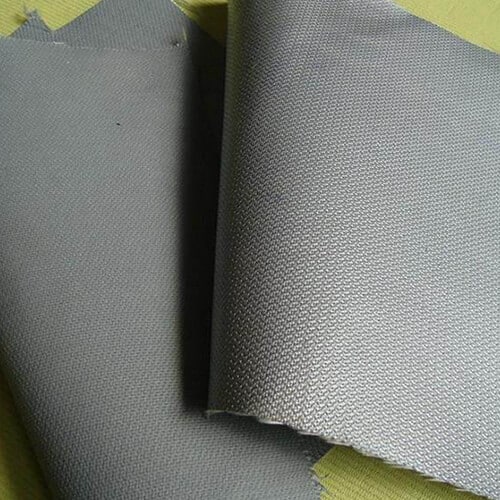
Welding grade clothThe base fabric, woven and coated for repeated spark and slag contact. -
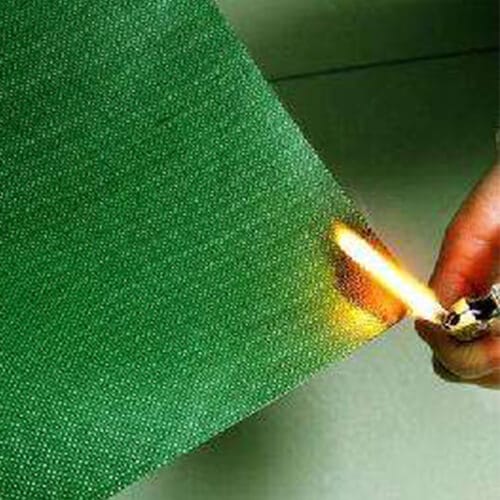
Coated surfaceThe coating determines the temperature grade and the resistance to spatter. -
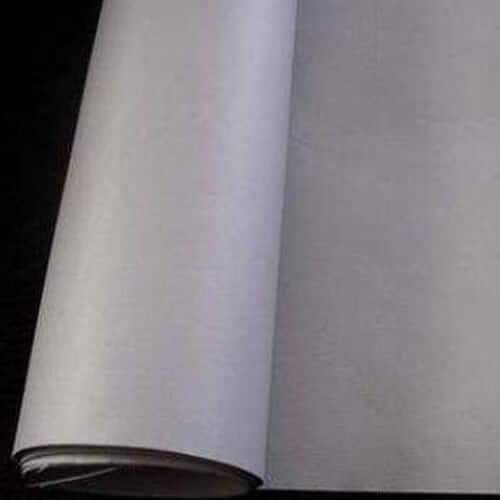
Compact weaveTight construction stops spatter finding a path between the yarns.


How to Specify a Welding Blanket
Five answers let us match a grade, type and thickness rather than sending you the middle of the range.
- What process generates the heat? Arc welding, gas cutting, plasma, grinding or heat treatment. Each produces a different combination of temperature, spatter and duration, and the grade is chosen against that combination rather than against a number alone.
- Is molten metal involved, and how often? Spatter and slag are far more destructive than radiant heat at the same temperature, because they arrive as physical particles carrying their own energy. Occasional contact and constant contact are different specifications.
- Is the blanket laid flat or hung vertically? A blanket laid over equipment catches falling slag and needs to drape. A hanging curtain needs eyelets, edge reinforcement and enough weight to hang straight rather than billow.
- How often is it moved? A blanket fitted once and left can be thin and light. One dragged into position several times a day across a workshop floor needs the heavier thicknesses to survive the handling rather than the heat.
- Sheets or roll? Cut sheets arrive ready to use. Rolls cost less per square metre but you take on cutting and finishing, and if you sew, you need a matching high temperature thread.
If you are replacing blankets that failed, tell us how they failed. Burn through in the middle, coating loss, seam separation and torn eyelets each point to a different inadequate property, and that diagnosis is far more useful than the specification they were originally bought against.
Wholesale and OEM Supply
SilicaPro supplies welding blankets wholesale and under OEM arrangements for distributors, safety brands and industrial suppliers worldwide. Custom sizes, thicknesses, coatings, packaging and branding are all available.
The difference we offer over most suppliers in this category is that we weave the cloth and apply the coating ourselves rather than buying finished fabric. An OEM programme here can specify the base material and its treatment as well as the finished blanket, which is not possible when your supplier is a converter working with whatever their cloth mill stocks.
That extends to colour. Our fabrics are produced in multiple colours rather than grey alone, which matters both for distributors differentiating a product line and for sites that colour code protective equipment by temperature grade so that the wrong blanket cannot be grabbed for the wrong job.
Around 70 to 80 percent of our total output is exported, so the documentation, packing and inspection routines that international orders require are routine here rather than exceptional.
Welding Blanket Questions
The questions safety managers, contractors and distributors ask us most often.
Which temperature grade do I need?
550 degrees suits light duty work where sparks are incidental and molten metal is not involved. 800 degrees is the most widely specified grade and handles routine arc welding and cutting. 1100 degrees is for sustained exposure, heavy cutting and significant molten metal.
Rather than picking a number, describe the process. Tell us what is being cut, whether molten spatter is involved and how frequently the blanket takes contact, and we will match the grade and coating type to that.
Does a thicker blanket withstand higher temperatures?
No, and this is the most expensive misunderstanding in the category. Heat resistance comes from the fabric chemistry and the coating, not from how much material is present.
Thickness governs durability and drape. Thin drapes better and folds smaller. Thick survives more handling and abrasion. Choose thickness against how the blanket is handled, and choose grade against the heat. Buying 3 mm at the 550 degree grade when the job needed 0.8 mm at 1100 degrees produces a blanket that feels substantial and burns through anyway.
What is the difference between the three coating types?
PVC coated has the lowest thermal tolerance of the three but offers good handling and moisture resistance. Silicone coated tolerates considerably more heat and adds flexibility. Heat treatment type, without a polymer coating limiting it, reaches the highest temperatures.
Coating also affects abrasion, moisture and chemical resistance, so the choice is not purely thermal. Describe your exposure and handling and we will recommend a type rather than leaving you to work it out from a temperature figure.
Can I use a fire blanket instead?
No, and it causes problems in both directions. A fire blanket is designed for a single severe deployment, then replacement. Using one to catch welding slag destroys it through repeated spatter contact, and then it is not available when a real fire happens.
Emergency equipment consumed by routine work is emergency equipment you no longer have. Buy each for its own purpose and store them separately.
Should I buy sheets or rolls?
Cut sheets in four standard sizes arrive hemmed, finished and ready to deploy. Rolls at 100 cm by 50 m cost less per square metre but you take on cutting and finishing.
Rolls make sense if you need non standard sizes, large one off coverage, or you are converting into your own products. If you sew, use a matching high temperature thread, because a seam stitched with polyester becomes the temperature limit of the whole blanket.
How long does a welding blanket last?
The base fabric is non-combustible by composition and does not degrade with time. What wears is the coating, and how quickly depends entirely on exposure.
A blanket used as a screen away from direct contact lasts a very long time. One taking direct molten spatter several times a day shows coating damage within months. Inspect for coating loss, stiffening, burn through and seam damage at the areas of heaviest exposure, and replace on condition rather than on a fixed schedule.
Do I need eyelets or reinforcement?
If the blanket hangs rather than lies flat, yes. A hanging curtain carries its own weight at the fixing points, and an unreinforced blanket tears out at the eyelets long before the fabric shows any thermal damage.
Eyelets, hems and edge reinforcement are all available. Tell us how the blanket is deployed and we will specify the finishing accordingly.
Do fire safety regulations require welding blankets?
In most jurisdictions, cutting or welding in a building that is not a dedicated hot work area requires a permit, and spark containment is normally a stated condition of that permit.
The exact requirements vary by country and by the responsible person's own procedures, so check what applies where the work is happening. For contractors working in malls, hotels and commercial premises, the blanket is frequently a documented requirement rather than a discretionary purchase.
What thread is used in the seams?
Our own high silica sewing thread, rated for continuous service at 900 degrees Celsius, on everything we sew.
Worth asking any supplier, because a blanket rated to 1100 degrees stitched with polyester is a 250 degree product. The thread softens, the seam opens, and the blanket comes apart while the fabric itself is undamaged. It is the most common failure mode in this category and it is entirely avoidable.
Can you produce custom sizes and private label?
Yes. Custom sizes, profiled shapes, eyelets, edge reinforcement, packaging and branding are all available under OEM arrangements.
We can also customise at fabric level, because we weave the cloth and apply the coating rather than buying finished material. Colour is available beyond grey, which matters for differentiating a product line and for colour coding by temperature grade on site.
What is your minimum order quantity?
Standard sizes, thicknesses and grades carry a lower minimum because the material already exists in that form. Custom sizes, non standard coatings, bespoke colour or private label packaging each need their own production run, which raises both the minimum and the lead time.
Tell us the specification and your rough volume and we will confirm the exact figure with your quotation.
What are your payment terms and shipping options?
Payment is normally by T/T, structured as a deposit with the balance settled before shipment. We confirm the exact split with your quotation.
EXW, FOB, CIF and DAP terms are all available, so you can pick whichever fits how your freight is already arranged. If you have a nominated forwarder we will work with them directly.
Related Products
Our other finished safety products, and the materials these blankets are built from.
Describe the Hot Work and We Will Match the Blanket
Send the process, whether molten metal is involved, how the blanket is deployed and handled, the sizes you need and your volume. We reply with a grade, thickness, pricing and a lead time we can hold to.
Request a QuotePhone
+8613758326701
Bright Sky New Material Co Ltd.
Room 1101-11, 11/F,Youbang Building. Jiaxing Headquarters Business Garden, Nanhu District, Jiaxing, Zhejiang, 314000 - China
sales@silicapro.com
lucyhhyy@gmail.com
© 2021 SILICAPRO.COM
All Rights Reserved