
SilicaPro
Para-Aramid Fabric
Para-Aramid Fabric in 1000D, 1500D and 3000D
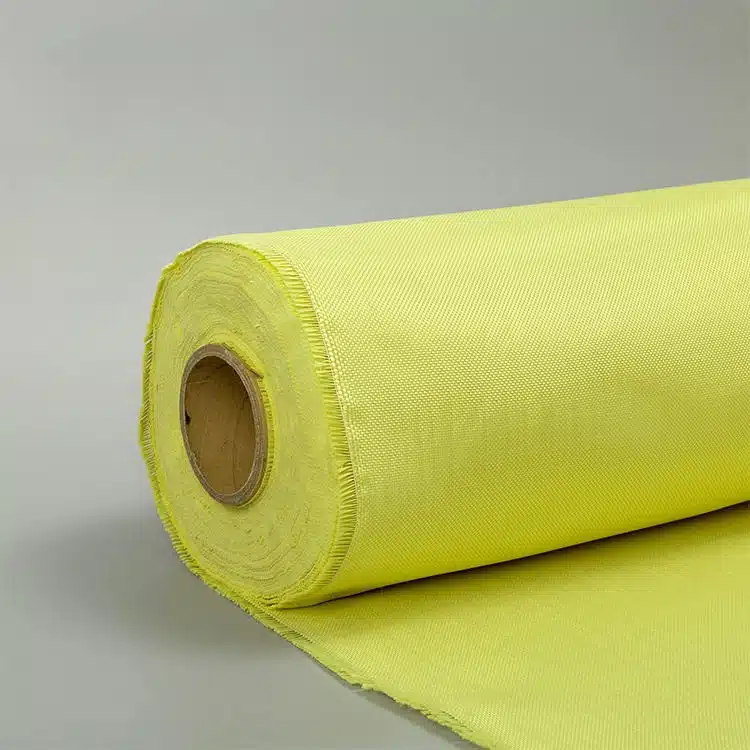
Woven para-aramid fabric made from 100 percent high tenacity para-aramid yarn, supplied in three denier weights and in plain or twill weave. The combination that defines this material is high tensile strength at low weight, with flame and heat resistance that comes from the polymer itself rather than from a treatment.
Supplied one metre wide in 50 metre rolls, in the characteristic yellow of undyed para-aramid, at approximately 200, 300 and 480 grams per square metre depending on denier.
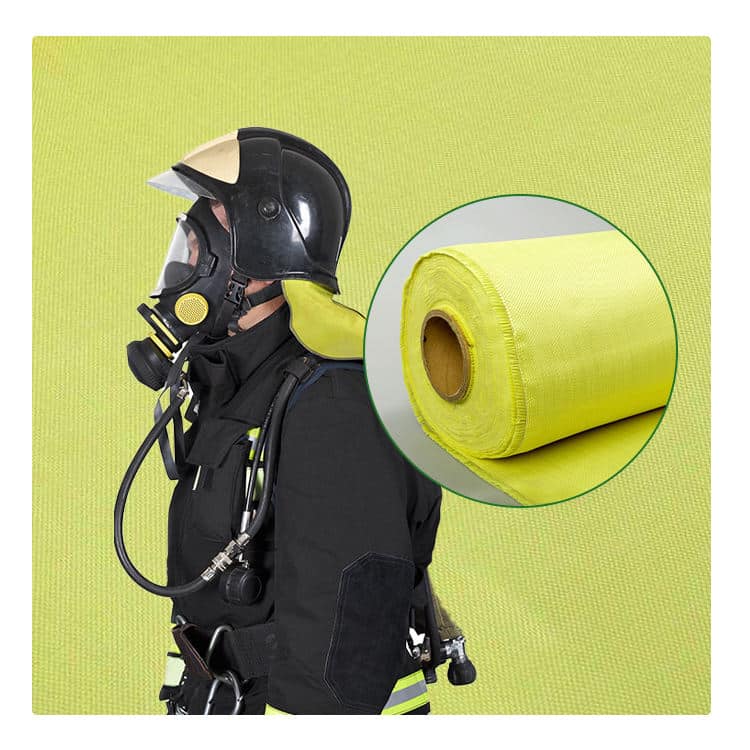
Used in cut resistant garments and gloves, firefighter and industrial protective apparel, ballistic and tactical equipment, composite reinforcement and safety materials.
Strength First, Heat Second
Almost everything else we manufacture is inorganic silica, and almost everything else is about temperature. Para-aramid is an organic polymer fibre, and it is here for a different reason: it is exceptionally strong.
High silica cloth survives 1000 degrees Celsius, which para-aramid cannot approach. But high silica has very little useful tensile strength, effectively no cut resistance, and it will not stop anything moving quickly. Para-aramid does all three, at a weight that a person can wear all day.
That difference decides which material belongs in an application. If the requirement is surviving sustained heat, silica wins and it is not close. If the requirement is stopping a blade, absorbing an impact, or reinforcing a structure that also happens to get hot, para-aramid is the answer and no amount of temperature capability substitutes for the mechanical performance.
The two materials are frequently used together rather than as alternatives. A firefighter's protective assembly may use para-aramid for the structural outer shell that must resist tearing and abrasion, with a silica based layer behind it handling the sustained thermal load.
If your application needs both mechanical strength and high temperature capability, describe the whole assembly rather than asking us to choose one material. The answer is often a combination, and we supply both sides of it.
It Does Not Melt or Drip
This is stated as a feature almost everywhere para-aramid is sold, and it is usually left unexplained. It deserves explaining, because in protective clothing it is arguably the most important property the fibre has.
Most synthetic fibres are thermoplastic. Polyester, nylon and polypropylene all soften and then melt when heated, and molten polymer in contact with skin causes a burn that is considerably worse than the flame would have produced on its own. It adheres, it continues transferring heat after the flame is gone, and it makes the injury far harder to treat.
Para-aramid does not do this. It is inherently flame retardant by molecular structure rather than by chemical treatment, and rather than melting it chars and retains its structure. A garment that chars keeps its shape and keeps acting as a barrier. A garment that melts stops being a garment and becomes part of the injury.
Because the property is structural rather than applied, it does not wash out. A chemically treated flame retardant fabric can lose performance over repeated laundering and through the life of the garment, which is why treated workwear carries wash cycle limits.
Para-aramid was never treated. The flame resistance is a property of the polymer chain, so a fabric at the end of its service life resists flame the same way it did when new. What wears is the mechanical performance and the UV exposure, not the fire behaviour.
Choosing a Denier
Denier describes yarn thickness, and it is the primary variable here. All three grades share the same fibre, the same 100 percent para-aramid composition and the same weave options. What changes is weight, thickness and what the fabric can do.
1000D
LightweightThe thinnest and most flexible of the three, with the best drape and the least bulk. Comfortable enough to be worn continuously rather than only when hazard is expected.
Specified for cut resistant garments, gloves and flexible protective clothing where mobility matters as much as protection.
1500D
Medium weightThe balanced option, and the most commonly specified. Substantially more robust than 1000D while remaining wearable in a full garment.
Used for protective apparel, firefighter gear and industrial safety fabrics where the wearer is exposed to a genuine hazard for a full shift.
3000D
HeavyweightMore than twice the weight of 1000D, with the mechanical performance that follows. Too heavy for comfortable all day wear as a single layer garment.
Specified for ballistic panels, industrial reinforcement and high impact protection, where the fabric is a structural component rather than clothing.
A note on layering. Many protective applications use multiple layers of a lighter fabric rather than a single layer of a heavier one, because layers move independently and a stack of thin fabric is considerably more flexible than one thick piece of the same total weight. If you are designing an assembly rather than a single layer product, tell us the total areal weight you are targeting and we will discuss how to reach it.
Plain or Twill Weave
Both constructions are available in every denier. The choice affects handling and appearance considerably more than it affects strength, which is the opposite of what most buyers assume.
Plain Weave
The simplest and most stable construction, with each yarn passing alternately over and under. Holds its shape well, resists distortion under load, and cuts cleanly without the edge running.
The default choice for flat applications, composite layup on simple geometry, and anything where dimensional stability matters more than drape.
Stability and flat workTwill Weave
Enhanced flexibility, better drape and a smoother surface finish, while maintaining the mechanical strength and energy dissipation of the plain construction.
The choice for garments, for anything that has to conform around a curved or complex shape, and where the fabric is against a person rather than inside a structure.
Garments and curved formsIf the fabric is going into clothing, twill is almost always the better answer. Drape and surface smoothness translate directly into whether a garment is comfortable enough to be worn correctly, and protective equipment that is uncomfortable gets adjusted, opened or left off.
Key Features
Five properties define the fabric, and they interact more than the list suggests.
- High tensile strength and modulus. Produced from high tenacity para-aramid yarn, delivering durability and resistance to mechanical stress well beyond conventional textile fibres.
- Inherent flame and heat resistance. The fibre is naturally flame retardant and heat resistant by molecular structure, maintaining integrity without melting or dripping, and without any treatment that can wash out.
- Three denier options. 1000D lightweight, 1500D medium and 3000D heavyweight, so the fabric weight is matched to the protection level rather than compromised in either direction.
- Excellent strength to weight ratio. High mechanical performance with minimal bulk, which is what makes protective clothing wearable for a full shift rather than merely protective on paper.
- Plain or twill weave. Construction chosen for stability or for drape, supporting both structural and garment applications from the same fibre and the same denier.
The strength to weight ratio is the property that ties the others together. A material can be made protective by adding mass, and plenty are. The reason para-aramid dominates personal protection is that it delivers the performance at a weight a person can carry, and protection that is actually worn outperforms protection that is theoretically better and left in a locker.
Technical Specifications
Full specification across the three deniers. Widths, roll lengths and weave constructions are produced to order where a project requires something outside the standard.
| Code | Weight (g/m²) | Material | Weave | Colour | Width (mm) | Roll (m) | Level |
|---|---|---|---|---|---|---|---|
| 1000D | approx 200 | 100% para-aramid | Plain / Twill | Yellow | 1000 | 50 | Lightweight |
| 1500D | approx 300 | 100% para-aramid | Plain / Twill | Yellow | 1000 | 50 | Medium |
| 3000D | approx 480 | 100% para-aramid | Plain / Twill | Yellow | 1000 | 50 | Heavyweight |
The yellow colour is the natural shade of undyed para-aramid rather than a pigment. Para-aramid is difficult to dye because the fibre structure that gives it strength also resists dye penetration, which is why almost all para-aramid fabric on the market is this colour. If your product needs a different appearance, that is normally handled with an outer shell fabric over the para-aramid layer rather than by dyeing the aramid itself.
Common Applications
Four application families, spanning personal protection through to structural reinforcement.
Ballistic and Tactical Equipment
Protective panel construction, helmet shells and tactical gear components, where multiple fabric layers work together to dissipate impact energy across a wide area.
The heavyweight grade is normal here, since the fabric functions as a structural component rather than as clothing.
Typically 3000DProtective Clothing and Workwear
Firefighter apparel, cut resistant garments and industrial safety clothing, where the fabric must protect without preventing the wearer from working.
Twill weave is usual for garments, and denier is chosen against how long the garment is worn and what hazard it faces.
1000D or 1500DIndustrial and Composite Reinforcement
High performance composites, structural reinforcement and technical textiles, where para-aramid contributes impact resistance and toughness that stiffer reinforcements lack.
Plain weave suits most layup work, with denier selected against the laminate schedule.
1500D or 3000DSafety and Insulation Materials
Environments requiring both thermal resistance and mechanical strength from the same layer, where a purely thermal material would not survive the handling.
Where the temperature exceeds what para-aramid tolerates, a silica based layer is normally added rather than the aramid being substituted.
Any denierBallistic performance is a property of the finished construction, not of the fabric alone. Stopping capability depends on the number of layers, the stitching or lamination pattern, any backing materials, panel geometry and total areal density. The same fabric can produce very different results in two different panel designs.
Certification to standards such as NIJ, VPAM or a national equivalent is carried out on the completed product by an accredited testing laboratory, not on the raw material. We supply the fabric. We do not and cannot certify the ballistic performance of a panel we did not design or build.
If you are developing a ballistic product, plan for independent testing of your finished construction. Any supplier who offers to certify the performance of their fabric alone is describing something that is not how ballistic certification works.
Para-Aramid Fabric From Our Supply
Material as supplied, photographed from our own stock rather than from a library.
-

Natural colourThe yellow is the undyed shade of the fibre rather than a pigment. -
Twill constructionBetter drape and surface smoothness while keeping the mechanical strength. -

Under flameThe fabric chars and holds its structure rather than melting and dripping. -

Weave detailConsistent construction across the roll, checked through production. -
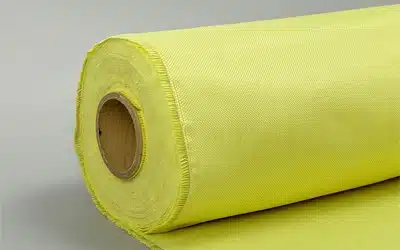
Roll supplyOne metre wide in 50 metre rolls, in all three denier weights. -

Available stockStandard specifications held for prompt dispatch.


How to Specify Para-Aramid Fabric
Five answers let us recommend a denier and weave rather than sending you the middle of the range.
- What is the fabric protecting against? Cut, abrasion, impact, flame, or a combination. Each drives the denier differently, and a fabric optimised for cut resistance is not the same specification as one optimised for impact energy dissipation.
- Is it worn or built into something? Garments need drape and comfort, which points to twill and the lighter deniers. Structural components need stability, which points to plain weave and heavier fabric.
- Single layer or multi layer construction? If you are building an assembly, tell us the total areal weight you are targeting. Several light layers often outperform one heavy one at the same total weight, because they move independently.
- What standard do you need to meet? Cut resistance, flame performance and ballistic ratings are all certified on the finished product rather than on the fabric. Knowing the target standard early lets us discuss what construction is likely to reach it.
- What volume and roll configuration? Standard is one metre wide in 50 metre rolls. If your cutting operation is set up for a different width, say so, since a mismatch wastes material on every roll.
If you are developing a new product rather than replacing a known material, expect to trial more than one specification. Protective fabric performance is difficult to predict from a datasheet, and the difference between a design that passes certification and one that fails is often a single layer or a weave change.
Wholesale and OEM Supply
SilicaPro supplies para-aramid fabric in wholesale volumes and under OEM arrangements to protective clothing manufacturers, safety equipment brands, composite fabricators and industrial distributors worldwide.
The three standard deniers cover the large majority of requirements, and non standard widths, roll lengths and weave constructions are produced to order. If your cutting operation is configured for a particular width, tell us at inquiry stage rather than accepting the standard and losing material on every roll.
We also supply para-aramid in yarn and short staple fibre form. If you are weaving or spinning rather than buying finished fabric, those pages carry the relevant specifications, and buying across the range from one supplier keeps the fibre consistent between your components.
Around 70 to 80 percent of our total output is exported, so the documentation, packing and inspection routines that international orders require are routine here rather than exceptional. Note that protective and ballistic materials face export control requirements in some jurisdictions, so tell us the destination country at inquiry stage and we will confirm what applies.
Para-Aramid Fabric Questions
The questions manufacturers, designers and procurement teams ask us most often.
Which denier should I order?
1000D at around 200 grams per square metre for cut resistant garments, gloves and flexible clothing where mobility matters. 1500D at around 300 for protective apparel, firefighter gear and industrial safety fabrics. 3000D at around 480 for ballistic panels, industrial reinforcement and high impact protection.
The practical dividing line is whether the fabric is worn or built into something. Anything worn for a full shift should be as light as the hazard allows, because comfortable protective equipment gets worn correctly and heavy equipment gets adjusted or left off.
Plain or twill weave?
Twill for anything worn or anything that must conform around a curved shape, because it drapes better and has a smoother surface. Plain for flat work, composite layup on simple geometry and applications where dimensional stability matters most.
The mechanical performance is comparable between the two. This is a handling decision rather than a strength decision, which is the opposite of what most buyers assume when they first ask.
Why is it always yellow?
That is the natural undyed colour of para-aramid fibre. It is not a pigment and not a choice we made.
Para-aramid is difficult to dye because the tightly ordered molecular structure that gives the fibre its strength also resists dye penetration. Products that need a different appearance normally use an outer shell fabric over the aramid layer rather than attempting to dye the aramid itself.
Can you certify the ballistic rating?
No, and neither can any other fabric supplier. Ballistic performance is a property of the finished panel construction, not of the raw fabric. Layer count, stitching or lamination, backing materials, panel geometry and total areal density all affect the result, and the same fabric produces very different outcomes in different designs.
Certification to NIJ, VPAM or a national equivalent is performed on the completed product by an accredited laboratory. We supply fabric suitable for use in ballistic construction. Testing your finished design is a step you have to plan for, and a supplier claiming to certify the fabric alone is describing something that is not how the process works.
How does it compare with your high silica fabrics?
They solve different problems. High silica cloth works continuously at 1000 degrees Celsius, which para-aramid cannot approach. Para-aramid has high tensile strength, cut resistance and impact energy absorption, none of which high silica offers meaningfully.
Choose on what the material has to do. Sustained heat points to silica. Mechanical protection points to para-aramid. Where both are required, the answer is usually a layered assembly using both, and we can supply either side of it.
Does the flame resistance wear off with washing?
No, and this is a meaningful advantage over chemically treated flame retardant fabrics. Para-aramid is inherently flame resistant by molecular structure, so there is no treatment present to wash out or degrade.
What does change over a garment's life is mechanical performance from abrasion and wear, and some strength loss from prolonged UV exposure. The fire behaviour at end of life is the same as when new.
What happens when it does reach its temperature limit?
It chars rather than melts. The fibre carbonises and retains its physical structure instead of turning liquid, which is the behaviour that makes it suitable for protective clothing in the first place.
The distinction is not academic. A thermoplastic fibre that melts onto skin causes an injury considerably worse than the flame alone would have, because the molten polymer adheres and continues transferring heat. A charred aramid garment keeps its shape and keeps acting as a barrier.
Should I use one heavy layer or several light ones?
For most protective applications, several light layers outperform a single heavy one at the same total weight. Layers move independently, which makes the assembly far more flexible, and in impact applications the interfaces between layers contribute to energy dissipation.
Tell us the total areal weight you are targeting rather than asking for a specific denier, and we can discuss how to reach it. This is one of the most common places where a first design gets improved.
Can you supply non standard widths?
Standard is 1000 mm wide in 50 metre rolls across all three deniers. Non standard widths and roll lengths are produced to order.
This is worth raising early if your cutting operation is configured for a particular width. A mismatch between roll width and cutting layout wastes material on every single roll, and over a production run that adds up to considerably more than the cost of a custom width.
Do you also supply aramid yarn and fibre?
Yes. We supply para-aramid yarn in fire proof grade and para-aramid short staple fibre alongside the woven fabric.
If you weave or spin your own material, or if your product uses aramid in more than one form, buying across the range from one supplier keeps the fibre consistent between components. Details are on the respective product pages.
Can I get a sample before ordering?
Yes. Samples of standard specifications are normally available, and for protective fabric we strongly recommend testing rather than relying on a specification sheet.
Tell us the application and whether you need plain or twill when you request one. Handling differs noticeably between weave constructions and between deniers, and a sample matched to your actual design tells you far more than a generic swatch.
What are your payment terms and shipping options?
Payment is normally by T/T, structured as a deposit with the balance settled before shipment. We confirm the exact split with your quotation.
EXW, FOB, CIF and DAP terms are all available. Note that protective and ballistic materials face export control requirements in some jurisdictions, so tell us the destination country at inquiry stage and we will confirm what applies before quoting.
Related Products
Other para-aramid forms, and the silica materials often layered alongside it where temperature exceeds what aramid tolerates.
Tell Us What the Fabric Has to Stop
Send the hazard, whether the fabric is worn or built in, your target areal weight and any standard you need to meet. We reply with a denier and weave recommendation, pricing and a lead time we can hold to.
Request a QuotePhone
+8613758326701
Bright Sky New Material Co Ltd.
Room 1101-11, 11/F,Youbang Building. Jiaxing Headquarters Business Garden, Nanhu District, Jiaxing, Zhejiang, 314000 - China
sales@silicapro.com
lucyhhyy@gmail.com
© 2021 SILICAPRO.COM
All Rights Reserved