
SilicaPro
Fireproof Cloth
Fireproof Cloth for Welding, Cutting and Hot Work
SilicaPro fireproof cloth is a coated technical fabric built to sit between a hot work operation and everything around it. It does not ignite on contact with open flame, it resists spark splash and molten metal spatter, and it is flexible enough to wrap around irregular equipment rather than only lying flat.
Supplied in rolls from 1000 to 1500 mm wide and 0.3 to 3.0 mm thick, with a surface coating selected to suit the exposure. The coating is what sets the temperature rating, which is why the same base product covers a range from 550 up to 1100 degrees Celsius rather than a single figure.
The buyers here are different from our other materials. This is a product for safety managers, welding contractors, facility maintenance teams and industrial distributors, rather than for design engineers specifying a composite. The questions that matter are practical: what is being cut, what is nearby, and how long the exposure lasts.

Fireproof, Flame Retardant or Non-Combustible
These three terms get used interchangeably in product listings, and they do not mean the same thing. The distinction matters because safety officers and insurers ask about it, and because specifying the wrong category can leave a site non compliant despite having bought something that looked adequate.
Flame Retardant
A material that has been chemically treated to slow the spread of flame. It will still burn if the heat source is sustained, but it resists ignition and tends to self extinguish once the flame is removed.
Common in workwear and furnishing textiles. The treatment can also degrade with washing and age.
Burns slowly, treatedNon-Combustible
A material that does not burn at all, because there is nothing in it to burn. Inorganic mineral and glass fibres fall into this category by composition rather than by treatment.
Nothing degrades over time because nothing was added. The property is structural.
Does not burn, by compositionFireproof
A commercial term rather than a technical classification. In practice it describes a product that resists fire in normal service, which is how we use it here.
Because the word carries no fixed definition, always look past it to the actual temperature rating and the base material.
Commercial term, check the specOur fireproof cloth is non-combustible by composition, not flame retardant by treatment. It is built on an inorganic base fabric that does not ignite in contact with open flame, with a surface coating added for the specific exposure it faces.
That distinction has a practical consequence worth understanding. A chemically treated flame retardant fabric can lose performance over time as the treatment wears or washes out. A non-combustible fabric cannot, because the property was never added in the first place. What can degrade is the coating, and that is a separate question we cover further down this page.
Reading the Temperature Figures Correctly
This product carries two different temperature numbers, and buyers who treat them as interchangeable end up either over specifying and overpaying, or under specifying and having a fabric fail in service. They measure different things.
| Figure | Value | What it describes |
|---|---|---|
| Continuous exposure | Up to 500 degrees Celsius | Sustained service. The fabric sits at this temperature for extended periods and keeps performing |
| Rated resistance | 550 to 1100 degrees Celsius | Short term exposure and peak resistance, varying with the coating specified |
| Flame contact | Non-combustible | The fabric does not ignite on contact with open flame, independent of either figure above |
Most hot work applications are governed by the second figure rather than the first. A welding curtain is not sitting at 900 degrees continuously. It is taking intermittent spark and spatter contact, where each event is brief but intense. For that duty, the peak rating is what matters.
Where the continuous figure becomes decisive is in equipment covers and lagging that stay in place against a hot surface. If your fabric is wrapped around something that runs at 480 degrees all day, the continuous rating is the number to check, and the peak rating is largely irrelevant.
Tell us which of the two applies to your job. A buyer who says only "I need 1000 degrees" may be describing a momentary spark that lasts a fraction of a second, or a surface that never cools. Those are different products at different prices, and we would rather ask than assume.
Main Features
Six properties define how the fabric performs on a working site rather than in a laboratory.
Non-Combustible and Flame Retardant
Does not ignite on contact with open flame. The base fabric is inorganic, so there is nothing present that can sustain combustion.
Resists Spark, Spatter and Slag
Stops spark splash, molten metal spatter and welding slag rather than allowing them to burn through. This is the single most demanding duty in hot work protection.
Scratch, Water and Alkali Resistant
The surface coating protects against physical abrasion during handling, moisture in storage or outdoor use, and alkaline contamination in industrial environments.
Compact Weave, Soft Texture
A tight weave stops spatter penetrating between the yarns, while the soft handle means the fabric is comfortable to work with rather than stiff and awkward.
Highly Flexible
Wraps around irregular shaped equipment, pipework and machinery instead of only covering flat surfaces. In practice this is what determines whether protection is actually deployed.
Non-Irritating Surface
The coated surface reduces the fibre irritation associated with bare glass fabric, which matters when people handle the material daily rather than installing it once.
The flexibility point deserves a word. Protective equipment that is difficult to deploy tends not to get deployed, and a rigid sheet that will not sit around a valve or a motor housing gets left in the store. A fabric that drapes properly is used, and used protection is the only kind that protects anything.
Technical Specifications
Standard supply specification. Sizes, coatings, colours and packaging are all customised to order, so ask rather than assume something is unavailable.
| Property | Specification |
|---|---|
| Base fabric | Inorganic non-combustible technical fabric |
| Surface treatment | Coated for improved resistance. Coating type selected against exposure |
| Temperature resistance | 550 to 1100 degrees Celsius depending on coating |
| Continuous exposure | Up to 500 degrees Celsius |
| Width | 1000 mm to 1500 mm |
| Thickness | 0.3 mm to 3.0 mm |
| Roll length | 50 m or 100 m per roll |
| Colours | White, red, silver-grey, black, beige, or custom to requirement |
| Resistance | Spark, molten spatter, welding slag, scratch, water, alkali |
| Handling | Compact weave, soft texture, high flexibility, non-irritating |
| Conversion | Supplied as roll goods or converted in house into finished covers and blankets |
| OEM and private label | Available, including custom sizes, coatings, colours and packaging |
Standard Colours
Colour is unusually flexible for this category, where most suppliers offer grey and nothing else. That matters for two reasons: colour coding by temperature rating across a site, and brand consistency for distributors selling under their own label.
The Fabric Under Actual Flame
A datasheet states a rating. These clips were filmed on our own products and show what that rating looks like when something is genuinely on fire.
Welding Blanket Fire Test
Direct flame against a welding blanket cut from this fabric. Watch the seam and the coating, because those usually give way before the base fabric does.
Fire Blanket on a Vehicle Fire
A full vehicle fire smothered with a single blanket. The most demanding real world test of this fabric family we have on film.
Applications
Fireproof cloth is a hot work product. Wherever cutting, welding or grinding generates sparks near something that should not catch fire, this is the fabric that goes between them.
Welding Curtains and Screens
Separating a welding position from adjacent work areas, containing spark splash and shielding people nearby from arc glare and heat.
Welding and Fire Blankets
Laid over or wrapped around anything that must be protected from falling slag during overhead work. Also converted into fire blankets for emergency response.
Equipment and Machinery Covers
Protecting motors, control panels, hydraulic lines and instrumentation during hot work nearby. The flexibility of the fabric is what makes this practical.
Work Area Separation
Creating enclosed, safe hot work zones inside a larger facility so that other operations can continue while cutting or welding takes place.
Light and Heat Barriers
Blocking radiant heat and arc light where personnel work close to a hot process, improving conditions as well as containing hazard.
Spark Containment on Site
Preventing accidental ignition during maintenance in occupied buildings, where a single spark reaching combustible material creates a serious incident.
Hot work in occupied buildings is where the stakes are highest. Shopping centres, supermarkets, hotels and large construction sites all require welding and cutting for maintenance, and all of them contain people and combustible material in quantity.
Fireproof cloth and fire blankets are standard equipment for that work, and the reason is straightforward. Containing sparks at the source is far more reliable than hoping nothing catches. It reduces explosion and fire risk, protects people and property, and in most jurisdictions forms part of the hot work permit process rather than being optional.
Fireproof Cloth From Our Production
Material as supplied, photographed from our own output rather than from a stock library.
-
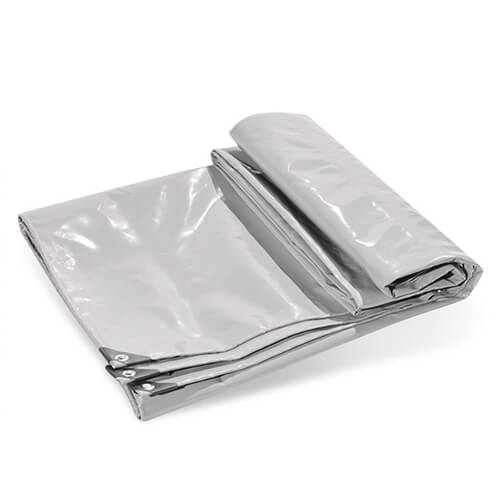
Roll goodsSupplied in 50 m and 100 m rolls, from 1000 to 1500 mm wide. -
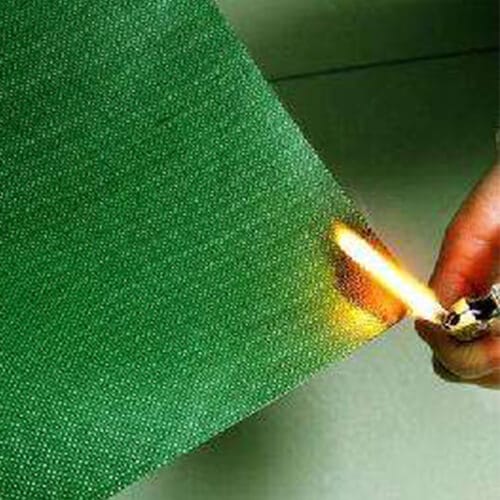
Coated surfaceThe coating determines the temperature rating and the resistance to spatter. -
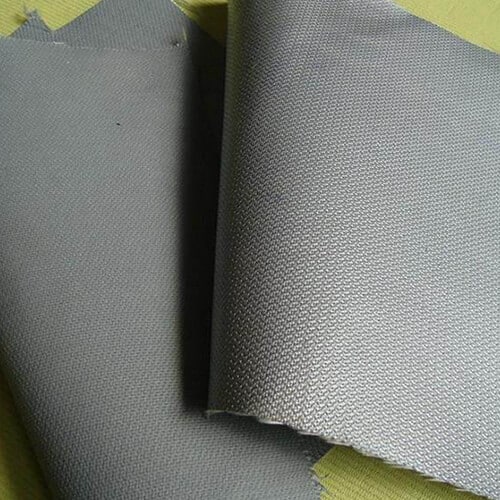
Welding gradeThe most demanding duty, taking repeated spark and slag contact. -
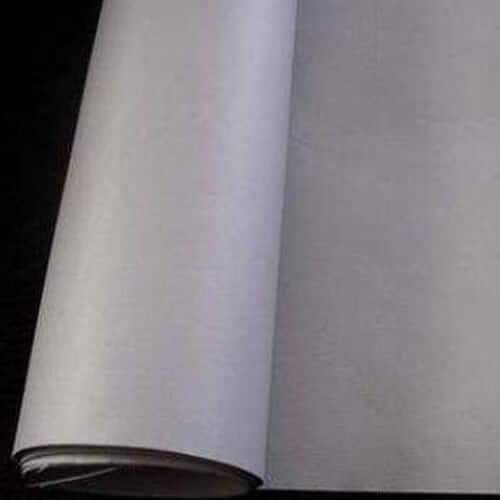
Compact weaveTight construction stops spatter finding a path between the yarns. -

Non-combustibleThe base fabric is inorganic, so there is nothing present that can burn.


How to Specify Fireproof Cloth
Five answers let us recommend a coating and thickness rather than sending you the middle of the range and hoping.
- What is generating the heat? Arc welding, gas cutting, grinding, plasma or a hot surface. Each produces a different combination of temperature, spatter and duration, and the coating is chosen against that combination rather than against a temperature alone.
- Is the exposure continuous or intermittent? A curtain taking occasional spark contact and a cover wrapped around a permanently hot surface need different specifications. This is the question that decides which of our two temperature figures applies.
- Is molten metal involved? Spatter and slag are far more destructive than radiant heat at the same temperature, because they arrive as physical particles carrying their own energy. Say so explicitly if they are present.
- How is it being used and handled? A fixed curtain, a blanket dragged into position daily, or a cover wrapped around machinery each place different demands on flexibility and abrasion resistance.
- Do you need roll goods or finished products? We supply the fabric by the roll and we also convert it in house into blankets, curtains, covers and sleeves. If you are not set up to sew high temperature fabric, buying finished is usually the better route.
If you are unsure, describe the job rather than naming a specification. A short account of what is being cut and what is nearby tells us more than a temperature figure quoted out of context.
Wholesale and OEM Supply
SilicaPro supplies fireproof cloth as wholesale roll goods and under OEM arrangements for distributors and safety product brands worldwide. Custom sizes, coatings, colours and packaging are produced to requirement rather than sold from a fixed catalogue.
The colour range is worth considering if you are building a product line. Most suppliers in this category offer grey and nothing else, which makes it difficult to differentiate a branded product or to colour code by temperature rating across a site. We produce white, red, silver-grey, black and beige as standard, with custom colours available.
We also convert the fabric in house into finished welding blankets, curtains, covers and sleeves. Because we produce the base cloth ourselves, an OEM programme can specify the fabric as well as the finished article, which is difficult to arrange when the weaving and the sewing sit at two different companies.
Around 70 to 80 percent of our total output is exported, so the documentation, packing and inspection routines that international orders require are routine here rather than exceptional.
Fireproof Cloth Questions
The questions safety managers, contractors and distributors ask us most often.
Is fireproof cloth the same as flame retardant fabric?
No, and the difference matters. Flame retardant fabric has been chemically treated to slow flame spread. It will still burn under sustained heat, and the treatment can degrade with washing and age.
Our fireproof cloth is built on a non-combustible inorganic base fabric. It does not ignite because there is nothing present that can burn, and that property cannot wear off because it was never added. If a supplier describes a product as fireproof without stating the base material, ask what it is made from before comparing prices.
Why does your temperature rating show two different numbers?
Because they measure different exposures. Up to 500 degrees Celsius is the continuous figure, meaning the fabric can sit at that temperature for extended periods and keep working. The 550 to 1100 degree range is the rated resistance for short term and peak exposure, and it varies with the coating.
Most hot work is governed by the second figure. A welding curtain takes intense but brief spark contact, not sustained heat. Equipment covers wrapped around a permanently hot surface are governed by the first. Tell us which applies and we will specify accordingly.
How do I choose between coatings?
The coating sets the temperature rating and the resistance profile, which is why the same base fabric covers a range from 550 to 1100 degrees rather than a single number.
Rather than choosing a coating yourself, describe the exposure. Tell us whether the heat is radiant or contact, whether molten spatter is involved, whether chemicals or moisture are present, and whether the fabric is handled daily or fitted once. Those answers point to a coating far more reliably than a temperature figure quoted in isolation.
What thickness should I order?
We supply 0.3 mm to 3.0 mm. Thickness governs durability and drape far more than temperature capability, since heat resistance comes from the fabric chemistry and the coating rather than from how much material is present.
Thin fabric drapes better and is easier to wrap around irregular equipment. Thick fabric survives more handling and abrasion. If your protection is dragged into position daily, favour the heavier option. If it needs to conform around complex shapes, favour the lighter one.
Will it stop molten metal spatter?
Yes, resistance to spark splash, molten spatter and welding slag is a core function of this product rather than a secondary benefit.
Be aware that spatter is the most demanding duty in this category. It arrives as physical particles carrying their own heat, and it attacks the coating directly rather than merely raising the surface temperature. If molten metal is involved, say so explicitly at inquiry stage so the coating is chosen for it.
Why do you offer so many colours?
Two practical reasons. Sites frequently colour code protective equipment by temperature rating so that the wrong blanket cannot be grabbed for the wrong job, and that only works if more than one colour is available.
The second reason is commercial. Distributors and safety brands selling under their own label want product that looks like theirs rather than like everyone else's grey roll. We produce white, red, silver-grey, black and beige as standard, with custom colours to requirement.
Can you supply finished blankets and curtains rather than roll goods?
Yes. We convert the fabric in house into welding blankets, fire blankets, curtains, covers and sleeves, with eyelets, hems and reinforcement as specified.
If you are not already set up to sew high temperature fabric, buying finished is usually the better route. Stitching this material requires a matching high temperature thread, and a blanket sewn with ordinary thread fails at the seam long before the fabric is troubled. We produce that thread too, but the simpler answer is often to let us do the conversion.
How long does it last in service?
The base fabric does not degrade, because it is non-combustible by composition. What wears is the coating, and how quickly depends entirely on the exposure.
A curtain hanging in a workshop lasts a very long time. A blanket taking direct molten spatter several times a day will show coating damage within months. Inspect for coating loss, stiffening and burn-through at the areas of heaviest exposure, and replace on condition rather than on a fixed schedule.
Is it safe to handle without gloves?
The coated surface is described as non-irritating and is considerably more comfortable to handle than bare glass fabric, which is one reason coated products dominate this category.
That said, follow your own site handling procedures. Cut edges on any technical fabric warrant more care than the face of the material, and a fabric that has taken heavy spatter damage may have exposed fibre where the coating has gone.
Can I get a sample before ordering?
Yes. Samples of standard specifications are normally available, and for a product bought on handling as much as on rating we would rather you tested it.
Tell us the application when you request one. Drape and stiffness differ noticeably between thicknesses and coatings, and a sample matched to your actual use tells you far more than a generic swatch.
What is your minimum order quantity?
Standard widths, thicknesses and colours carry a lower minimum because the material already exists. A custom colour, coating or width needs its own production run, which raises both the minimum and the lead time.
Tell us the specification and your rough volume and we will confirm the exact figure with your quotation rather than quoting a generic minimum that may not apply.
What are your payment terms and shipping options?
Payment is normally by T/T, structured as a deposit with the balance settled before shipment. We confirm the exact split with your quotation.
EXW, FOB, CIF and DAP terms are all available, so you can pick whichever fits how your freight is already arranged. If you have a nominated forwarder we will work with them directly.
Related Products
Materials most often ordered alongside fireproof cloth, and the alternatives worth considering if your temperature requirement sits higher.
Describe the Job and We Will Specify the Cloth
Tell us what is generating the heat, what is nearby, whether spatter is involved and how the fabric will be handled. We reply with a coating recommendation, pricing and a lead time we can hold to.
Request a QuotePhone
+8613758326701
Bright Sky New Material Co Ltd.
Room 1101-11, 11/F,Youbang Building. Jiaxing Headquarters Business Garden, Nanhu District, Jiaxing, Zhejiang, 314000 - China
sales@silicapro.com
lucyhhyy@gmail.com
© 2021 SILICAPRO.COM
All Rights Reserved