
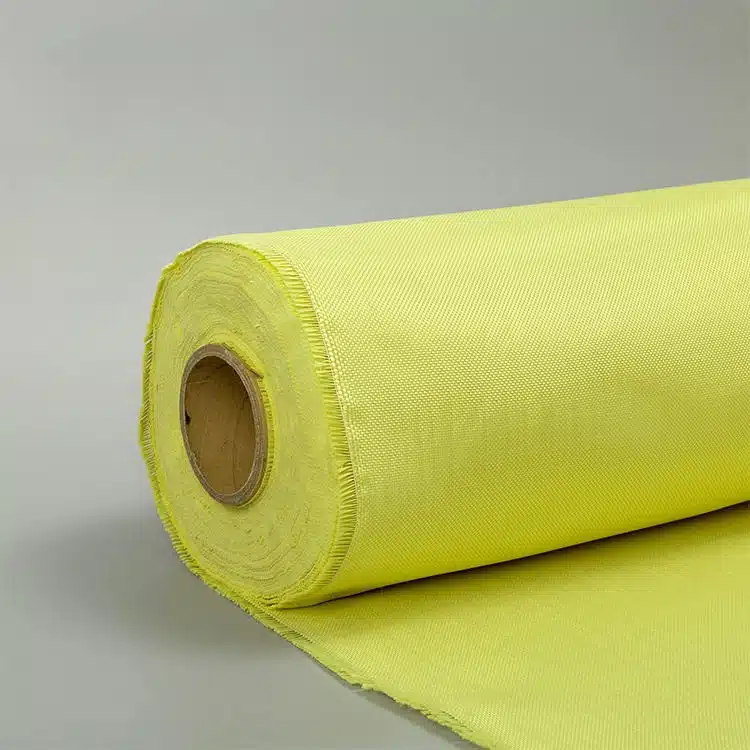
When it comes to high-performance protective textiles, few materials can match the reputation of para-aramid fabric. Known for its exceptional strength, flame resistance, and lightweight nature, this material has become a cornerstone of the safety, defense, and industrial sectors. But behind every reliable para-aramid product is a capable manufacturer. If you are sourcing this material for protective clothing, ballistic equipment, or industrial reinforcement, choosing the right para-aramid fabric manufacturer in China is one of the most important decisions you will make.
China has become one of the largest and most competitive producers of technical textiles in the world, including para-aramid fabrics. With the right partner, you can access high-quality material at competitive prices while still meeting the strict performance demands of your application. In this guide, we will explore what para-aramid fabric is, why it matters, what to look for in a manufacturer, and how to make sure the product you receive truly meets your needs.
What Is Para-Aramid Fabric?
Para-aramid fabric is a high-performance technical textile woven from para-aramid fibers. Para-aramid is a type of synthetic aromatic polyamide fiber, the same fiber family that includes well-known trademarked materials such as Kevlar. According to Composites World, aramid fibers are valued in advanced composites and protective applications precisely because of their outstanding combination of tensile strength, low weight, and thermal stability.
Unlike materials that simply resist fire through a chemical coating, para-aramid is inherently flame-resistant at the molecular level. This means its protective properties do not wash out or wear off over time. The fiber does not melt or drip when exposed to high heat, instead retaining its structure and offering reliable protection. These qualities make para-aramid fabric a preferred choice in environments where both mechanical strength and heat resistance are critical.
Para-aramid fabric is typically woven in either plain or twill weave constructions, and is available in different deniers, which is the unit that describes the thickness and weight of the yarn. The higher the denier, the heavier and stronger the fabric. This flexibility allows manufacturers to produce fabrics suited to a wide range of applications, from lightweight cut-resistant gloves to heavy ballistic panels.
Why Para-Aramid Fabric Is in High Demand
The global demand for para-aramid fabric continues to grow, driven by increasing safety regulations and the expansion of industries that rely on protective materials. There are several reasons why this fabric has become so essential.
First, it offers an outstanding strength-to-weight ratio. Para-aramid fibers are significantly stronger than steel on an equal-weight basis, yet they are light enough to be worn comfortably or integrated into mobile equipment. This balance is difficult to achieve with conventional materials. Second, the inherent flame and heat resistance makes it suitable for firefighting gear, industrial heat protection, and any setting where exposure to flame is a risk. Third, para-aramid fabric provides excellent cut and abrasion resistance, which is why it is widely used in protective gloves and workwear for industries that handle sharp tools or materials.
As these performance benefits become more widely recognised, more businesses are seeking reliable sources of para-aramid fabric. This is where partnering with an experienced manufacturer in China can provide a significant advantage in both cost and supply consistency.
Key Properties of Para-Aramid Fabric
Before selecting a manufacturer, it helps to understand the core properties that define quality para-aramid fabric. The table below summarises the most important characteristics and why they matter.
| Property | Description | Why It Matters |
|---|---|---|
| High tensile strength | Resists stretching and breaking under load | Essential for ballistic and structural reinforcement |
| Inherent flame resistance | Does not ignite, melt, or drip under heat | Critical for firefighter and industrial heat protection |
| Low weight | Light relative to its strength | Improves comfort and mobility in protective gear |
| Cut and abrasion resistance | Withstands sharp edges and surface wear | Ideal for safety gloves and workwear |
| Thermal stability | Maintains integrity at elevated temperatures | Reliable performance in extreme environments |
| Chemical resistance | Resists many solvents and chemicals | Extends service life in industrial settings |
A quality manufacturer should be able to demonstrate that their fabric delivers consistent performance across all of these properties, not just one or two. To explore the technical specifications of woven para-aramid fabric in detail, you can review our para-aramid fabric product page.
Common Denier Options and Their Applications
One of the defining features of para-aramid fabric is the availability of different denier weights. Selecting the correct denier is essential, because it directly affects the fabric’s weight, thickness, flexibility, and protective capability. Below is an overview of the most common denier options and where each is typically used.
| Denier | Approx. Weight (g/m²) | Weight Class | Recommended Applications |
|---|---|---|---|
| 1000D | ~200 | Lightweight | Cut-resistant garments, gloves, flexible protective clothing |
| 1500D | ~300 | Medium | Protective apparel, firefighter gear, industrial safety fabrics |
| 3000D | ~480 | Heavyweight | Ballistic panels, industrial reinforcement, high-impact protection |
A capable manufacturer will offer multiple denier options and help you select the most appropriate one for your specific use case. They should also offer a choice of plain or twill weave, since the twill weave provides enhanced flexibility, drape, and surface smoothness while maintaining excellent mechanical strength.
How to Choose a Para-Aramid Fabric Manufacturer in China
Choosing the right manufacturer is not simply about finding the lowest price. The quality of para-aramid fabric directly affects the safety and performance of the final product, so the selection process deserves careful attention. Here are the key factors to evaluate.
Manufacturing Experience and Specialisation
Look for a company with proven experience in high-performance technical textiles. Para-aramid fabric is a demanding material to produce consistently, and an experienced manufacturer will have the knowledge and quality control systems needed to deliver reliable results batch after batch. A manufacturer that specialises in fire-resistant and high-strength materials is generally a safer choice than a generalist textile producer.
Product Range and Customisation
A strong manufacturer should offer a complete range of para-aramid products, not just one or two items. This includes woven fabrics in various deniers and weaves, along with related products such as para-aramid yarn and para-aramid short staple fiber for further processing. A broad product range indicates deeper technical capability and allows you to source multiple materials from a single trusted supplier, simplifying your supply chain.
Quality Control and Certification
Quality assurance is non-negotiable when dealing with protective materials. Ask the manufacturer to provide documentation of their testing procedures and any relevant certifications. Consistent quality across production batches is particularly important, because a sample that performs well means little if the bulk order does not match it. Reliable manufacturers will be transparent about their quality control processes and willing to share test reports and material data sheets.
Production Capacity and Lead Time
Consider whether the manufacturer can meet your volume requirements within a reasonable timeframe. A manufacturer with adequate production capacity can handle both small and large orders without compromising on delivery schedules. Clear communication about lead times and production timelines is a sign of a professional, dependable partner.
Export Experience and Communication
If you are importing from China, the manufacturer’s export experience matters significantly. A company that regularly ships to your region will understand the documentation, packaging, and logistics involved, reducing the risk of delays or complications. Responsive communication is also essential, both before and after the sale, to ensure your specifications are understood and met.
Comparing Para-Aramid Fabric with Other Protective Materials
To understand where para-aramid fabric fits, it helps to compare it with other common protective and fire-resistant materials. Each material has its own strengths and is suited to particular applications.
| Material | Key Strength | Best Suited For |
|---|---|---|
| Para-aramid fabric | High strength, lightweight, cut and flame resistant | Ballistic gear, protective clothing, gloves |
| High-silica fiberglass cloth | Extreme heat resistance, non-combustible | Welding, foundries, industrial heat shielding |
| Treated FR cotton | Comfortable, affordable, chemically treated | General workwear, lower-heat environments |
| Fiberglass cloth | Cost-effective, good thermal insulation | Insulation, composite reinforcement |
As the comparison shows, para-aramid fabric occupies a unique position where mechanical strength, light weight, and flame resistance must all come together. For applications focused purely on extreme heat rather than impact protection, materials like high-silica fiberglass may be more appropriate. For a broader look at fire-resistant textile options, our guide on choosing the right flame retardant fabric provides helpful context.
Main Applications of Para-Aramid Fabric
Para-aramid fabric is used across a wide range of industries that demand both protection and performance. Understanding these applications can help you confirm that this material is the right choice for your project.
In the safety and defense sector, para-aramid fabric is used in ballistic panels, protective helmets, and tactical gear components, where its strength and energy-dissipating properties are critical. In protective clothing, it appears in firefighter apparel, cut-resistant garments, and industrial safety workwear, taking advantage of its inherent flame resistance and durability. In industrial and composite applications, para-aramid fabric serves as high-performance reinforcement in technical composites and structural components. It is also valued in safety and insulation materials, where reliable thermal resistance and mechanical strength are needed together.
This versatility is one of the reasons para-aramid fabric has become such a sought-after material, and why working with a manufacturer that understands these diverse applications is so valuable.
Why Silicapro Is a Trusted Para-Aramid Fabric Manufacturer in China
Silicapro, operated by Bright Sky New Material Co Ltd., is a trusted manufacturer of high-performance technical textiles based in Zhejiang, China. With more than ten years of manufacturing experience and an established presence in international markets, the company has developed a strong reputation for quality and reliability across the safety and industrial materials sector.
Silicapro produces woven para-aramid ballistic fabrics in 1000D, 1500D, and 3000D deniers, available in both plain and twill weave constructions to suit a wide range of protective and reinforcement applications. The fabrics are manufactured from high-tenacity para-aramid fibers to deliver outstanding tensile strength, inherent flame resistance, and an excellent strength-to-weight ratio. Beyond woven fabric, the company also offers para-aramid yarn and para-aramid short staple fiber, giving customers access to a complete para-aramid product line from a single source.
The company serves clients across North America, Europe, the Middle East, and Asia, and offers OEM production, wholesale supply, and customisation of fabric weight, weave, and packaging. Free consultation is available to help customers select the right specification for their application. By combining manufacturing expertise with responsive service and competitive factory-direct pricing, Silicapro aims to be a long-term partner rather than just a supplier.
Frequently Asked Questions About Para-Aramid Fabric Manufacturers
What is the difference between para-aramid and meta-aramid fabric?
Para-aramid and meta-aramid are both aramid fibers, but they have different molecular structures and performance characteristics. Para-aramid fibers, such as those used in Kevlar-type materials, have a highly aligned molecular structure that gives them exceptional tensile strength and stiffness, making them ideal for ballistic protection and high-strength applications. Meta-aramid fibers, such as those found in Nomex-type materials, prioritise thermal and flame resistance with greater flexibility but lower tensile strength. The choice between them depends on whether your priority is mechanical strength and cut resistance, in which case para-aramid is preferred, or flexible thermal protection, where meta-aramid often excels.
Is para-aramid fabric the same as Kevlar?
Kevlar is a well-known brand name for a specific type of para-aramid fiber produced by a particular manufacturer. Para-aramid is the general category of fiber, while Kevlar is one branded product within that category. Para-aramid fabrics produced by other manufacturers offer comparable properties, including high tensile strength and inherent flame resistance, based on the same underlying fiber chemistry. When sourcing para-aramid fabric, what matters most is the actual performance specifications and quality of the material, rather than the brand name attached to it.
How do I verify the quality of para-aramid fabric from a Chinese manufacturer?
The most reliable way to verify quality is to request product samples along with technical documentation before placing a bulk order. Ask for material data sheets that specify the fiber content, denier, weave type, weight, and any tested performance properties. Where relevant to your application, request third-party test reports rather than relying solely on the manufacturer’s own claims. It is also wise to confirm that the manufacturer can maintain consistent quality across production batches, since variation between the sample and the bulk order is a common concern. Testing the sample under realistic conditions for your specific application is strongly recommended.
Can para-aramid fabric be customised for specific applications?
Yes, established manufacturers typically offer customisation options for para-aramid fabric. These can include selecting the denier and weave type, adjusting the fabric weight, and customising roll width and length. Some manufacturers also offer custom packaging and labelling for distributors and resellers. Customisation usually requires meeting a minimum order quantity, so it is best to discuss your specific requirements directly with the manufacturer. Clear communication of your performance needs allows the manufacturer to recommend the most suitable specification for your application.
What is the typical minimum order quantity for para-aramid fabric?
The minimum order quantity varies between manufacturers and depends on the specific product, denier, and whether customisation is involved. For standard fabrics, some manufacturers accept relatively modest orders, while custom specifications or OEM arrangements generally require larger minimum quantities. The best approach is to contact the manufacturer directly with your specifications and intended volume, so they can provide an accurate quote and minimum order requirement. A good manufacturer will be flexible and willing to work with both smaller trial orders and large-scale production runs.
How should para-aramid fabric be stored to maintain its properties?
Para-aramid fabric should be stored in a cool, dry environment away from direct sunlight, as prolonged ultraviolet exposure can gradually degrade aramid fibers over time. The fabric should be kept clean and protected from contamination by oils, chemicals, or moisture that could affect its performance. Storing rolls flat or properly supported prevents deformation. When these basic storage conditions are maintained, para-aramid fabric retains its strength and protective properties for a long period, since its flame resistance is inherent to the fiber and does not diminish with normal storage.
Last reviewed and updated on June 15, 2026, by Lucy Huang, High-Silica Material Specialist at Bright Sky New Material Co Ltd. (SilicaPro). This article is reviewed periodically to ensure accuracy and alignment with current industry standards.