
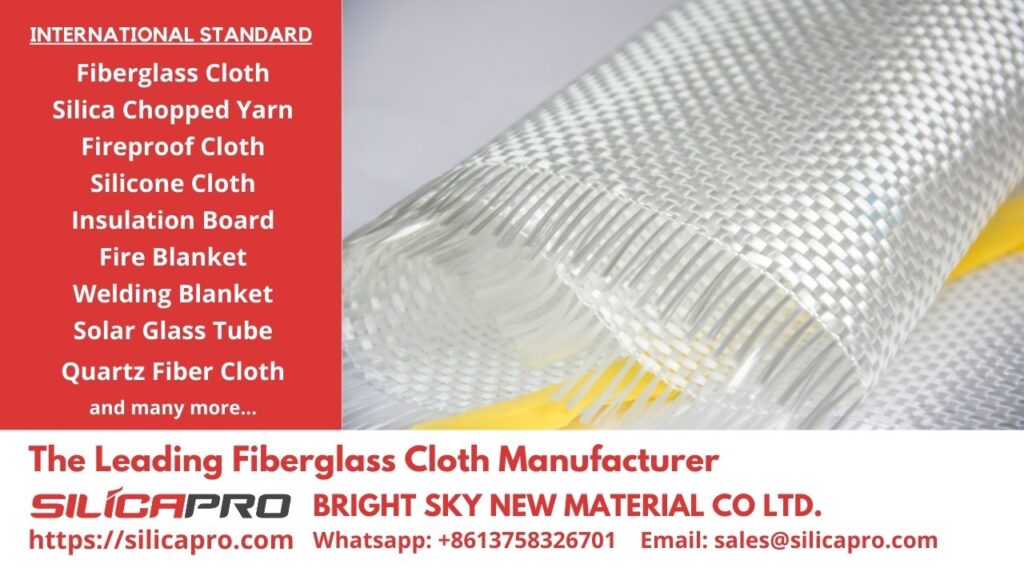
Noncombustible materials do not ignite or contribute fuel to a fire, which makes them a foundation of passive fire protection in buildings.
Fire can threaten anyone unexpectedly. Many factors influence how a fire starts and spreads, so the wisest approach is to prepare and take precautions in advance. One of the most effective preventive measures is specifying noncombustible fiberglass insulation instead of more flammable alternatives during construction or renovation. So what exactly are the advantages of using noncombustible fiberglass material, and how does it differ from materials that are merely treated to resist fire?
The distinction matters more than most buyers realise. The terms noncombustible, fire resistant, and fire retardant are often used interchangeably in marketing material, yet they describe genuinely different levels of performance. Understanding the difference is what allows you to specify materials that actually perform as expected when a fire occurs.
Building Fire-Resistant Insulation Using Fiberglass
Fire-Resistant Properties of Fiberglass
Beyond being environmentally sound, fiberglass is also highly fire resistant. Fiberglass is classified as a noncombustible material because the glass fiber itself does not ignite or sustain combustion when exposed to high temperatures. Its performance in a real installation, however, depends on several factors including the type of glass used, any coating applied, and the specific product form.
This is why fire safety blankets commonly use fiberglass as their base fabric. The material can be draped over a fire source to smother it without itself becoming fuel, and it can also shield a person briefly during evacuation from a hazardous area.
It is worth being precise about what noncombustible means in practice. It does not mean the material is indestructible under any condition. Glass fiber will eventually soften and lose structural integrity at sufficiently high temperatures. What it does mean is that the material contributes no fuel to the fire, produces no combustion gases, and does not help the fire spread. For more detail on how the material behaves under heat, our article on whether fiberglass is flammable examines melting points and thermal limits specifically.
Facings and Coatings Change the Fire Behaviour
Here is a point that catches out many specifiers. While the glass fiber core is noncombustible, the finished insulation product may not be, depending on what is attached to it.
Fiberglass insulation batts are frequently supplied with a kraft paper facing, which serves as a vapour retarder to control moisture movement through the wall assembly. That facing performs a useful building physics function, but it is important to understand that kraft paper is combustible. It does not enhance fire safety, and building codes in most jurisdictions require faced insulation to be covered by an approved thermal barrier such as gypsum board rather than left exposed.
If you specifically need insulation that remains noncombustible as installed, unfaced fiberglass or foil-faced products are the appropriate choice, and exposed applications should always be verified against local code requirements. Because fiberglass insulation is manufactured from carefully selected glass fibers, the core material is inherently far safer than many alternatives, but the finished assembly is only as fire safe as its weakest layer.

Unfaced glass fiber products remain noncombustible as installed, while paper-faced variants require a protective covering.
Noncombustible Materials Versus Fire Retardant Materials
Definitions and Differences
Specifying building materials with a strong fire resistance rating is genuinely valuable when a fire occurs. Such materials slow the spread of flame and help preserve structural integrity long enough for occupants to evacuate and for firefighting to begin. However, given the volume of fire safety claims in the market, buyers need to understand what each category actually means before making a purchase.
Noncombustible materials do not ignite and do not sustain combustion. Common examples include steel, ceramics, stone, and mineral-based insulation materials such as fiberglass and stone wool. Combustible materials, by contrast, ignite and burn readily. Paper, plastic, timber, and most textiles fall into this category.
Fire retardant treatment sits between these two states. When retardant additives are applied to a combustible material, they slow the process of ignition and combustion, but they do not convert the material into a noncombustible one. A fire retardant treated timber panel is still timber, and under sufficient heat and duration it will still burn. The treatment buys time rather than eliminating the hazard.
| Category | Behaviour in Fire | Typical Examples |
|---|---|---|
| Noncombustible | Does not ignite or add fuel to the fire | Steel, ceramics, stone, glass fiber, mineral wool |
| Limited combustibility | Contributes minimal fuel under fire conditions | Some composite boards and faced mineral products |
| Fire retardant treated | Burns more slowly, ignition delayed but not prevented | Treated timber, treated textiles, coated plywood |
| Combustible | Ignites readily and sustains burning | Paper, untreated timber, most plastics and fabrics |
The Role of Fire Retardants
Fire retardants are chemicals, coatings, or additives applied to flammable materials to slow thermal decomposition and promote charring when exposed to fire. The charred surface layer acts as an insulating barrier that reduces the rate at which heat reaches the unburned material beneath.
These treatments have a legitimate and important role. Where a combustible material must be used for structural, aesthetic, or cost reasons, fire retardant treatment meaningfully improves the safety of the assembly. The key is not to mistake improvement for elimination. Retardant treated plywood resists ignition longer than untreated plywood, but it remains a combustible product and must be specified accordingly.
One further consideration is durability. Some retardant treatments are surface applied and can degrade over time through weathering, cleaning, or abrasion, whereas noncombustible materials retain their properties permanently because the characteristic is inherent to the material rather than added to it.
How Noncombustibility Is Actually Tested
Because manufacturer claims vary in reliability, standardised testing is what separates verified performance from marketing language. Materials are assessed for their reaction to fire under recognised test methods, and the resulting classification is what building codes reference.
In North America, ASTM E136 is the standard test method used to determine whether a material behaves as noncombustible under specified furnace conditions, alongside ASTM E84 which measures flame spread and smoke development. ASTM International publishes and maintains these methods. In Europe, the Euroclass system classifies construction products from A1, the highest level of noncombustibility, down through classes that permit progressively greater contribution to fire.
When evaluating a product, ask which test standard the classification refers to and request the corresponding test report. A claim that a material is fireproof carries no technical meaning on its own. A statement that a product achieved a specific classification under a named test method is verifiable and therefore far more useful.
| What to Ask | Why It Matters |
|---|---|
| Which test standard was used? | Classifications are only meaningful relative to a named method |
| Was the tested sample the same specification? | Facings and coatings change results significantly |
| Is the report from an accredited laboratory? | Third-party testing is more reliable than internal claims |
| Does the classification cover the assembly or just the core? | A noncombustible core in a combustible assembly is not enough |
| Does it meet requirements in my jurisdiction? | Codes vary between countries and building types |
Noncombustible Materials for Safer Buildings
Addressing Technical Fire Risks
The continuing incidence of fires in residential, office, and public buildings underlines the need for properly considered fire safety measures. Technical contributing factors are well documented and include inadequate exit routes, an insufficient number of correctly rated fire extinguishers, missing or unclear signage, and the use of materials that contribute fuel and accelerate flame spread.
Different materials offer fire resistance within specific temperature limits, and some, while not fully noncombustible, slow the spread of fire sufficiently to provide valuable additional time for evacuation and suppression. In a well-designed building, these materials work together as a system rather than in isolation.
Mitigating Non-Technical Factors
Non-technical factors also contribute substantially to fire risk. These include the behaviour of building occupants, gaps in building management practice, inadequate maintenance of safety systems, and poor housekeeping such as storing combustible materials in escape routes. Identifying and controlling these factors is essential, because even the best material specification cannot compensate for a blocked fire exit or a disabled alarm system.
This is why passive fire protection through material selection and active measures such as detection and suppression are treated as complementary strategies. Noncombustible materials limit how fast and how far a fire develops, while active systems and good management determine how quickly it is detected and controlled.

High silica glass fiber withstands continuous service temperatures up to 1000°C, making it suitable for demanding fire protection applications.
Choosing the Right Materials
One of the most effective steps in building fire safety is specifying materials with inherent fire-resistant characteristics from the outset. Gypsum board, widely used in ceilings and partition walls, is a useful example because its performance is often misunderstood. The gypsum core contains chemically bound water that is released as steam when heated, which is what gives the board its fire resistance. However, the paper facing on standard gypsum board is combustible, which is why fire rated assemblies specify particular board types and installation details rather than gypsum board generically.
Noncombustible options extend well beyond gypsum. Steel, ceramics, fiberglass, and mineral or stone wool all resist ignition and do not emit combustion gases when exposed to fire or heat. Natural stone is generally noncombustible, though carbonate stones such as marble and limestone can calcine and lose strength under prolonged high temperature exposure, which is a structural consideration rather than a combustibility one.
For high-temperature industrial environments where standard building materials are insufficient, specialised products such as high silica fiberglass cloth and microporous insulation boards provide substantially greater thermal performance. Our overview of fire-resistant materials covers the full range of options available for these applications.
| Material | Fire Behaviour | Common Building Use |
|---|---|---|
| Glass fiber (unfaced) | Noncombustible, no combustion gases | Wall, roof, and ceiling insulation |
| Mineral or stone wool | Noncombustible, high melting point | Fire rated partitions, industrial insulation |
| Steel | Noncombustible but loses strength when heated | Structural frame, requires fire protection coating |
| Gypsum board | Core resists fire, paper facing is combustible | Ceilings, partitions, protective linings |
| Ceramics and stone | Noncombustible, may degrade at extreme heat | Cladding, flooring, surface finishes |
| Treated timber | Combustible but with delayed ignition | Structural and decorative elements |
Specifying noncombustible materials where practical, and applying retardant treatments where combustible materials are unavoidable, gives a building the best realistic chance of containing a fire quickly and avoiding major loss. Insulation deserves particular attention in this analysis because of the sheer volume of material involved and the fact that it is distributed continuously through walls, roofs, and floors. Our article on why you should use fiberglass insulation compares insulation options on both thermal and fire performance.
Frequently Asked Questions
Is fiberglass insulation completely fireproof?
The glass fiber itself is noncombustible, meaning it does not ignite, does not sustain a flame, and does not release combustion gases. However, the term fireproof implies indefinite resistance to any fire condition, which no practical building material achieves. Glass fiber softens and loses structural integrity at sufficiently high temperatures, and any facing material attached to the insulation may itself be combustible. The accurate description is that unfaced fiberglass insulation is a noncombustible material that will not contribute fuel to a fire, which is a meaningful safety advantage over combustible alternatives without being an absolute guarantee.
Why does faced fiberglass insulation need to be covered?
Kraft paper facing is applied to fiberglass batts to act as a vapour retarder, controlling moisture movement through the wall assembly. That facing is made of paper and is therefore combustible, even though the insulation core beneath it is not. For this reason, building codes in most jurisdictions require kraft faced insulation to be installed behind an approved thermal barrier such as gypsum board rather than left exposed in occupied spaces, attics, or crawl spaces. If your application requires insulation that remains noncombustible as installed and exposed, unfaced or foil faced products should be specified instead, subject to local code verification.
What is the difference between fire resistant and fire retardant?
Fire resistant generally describes a material or assembly that withstands fire exposure for a defined period while continuing to perform its function, which is typically expressed as a rating in minutes or hours for structural elements. Fire retardant describes a treatment applied to a combustible material to slow its ignition and burning rate. The critical distinction is that a fire retardant treated material remains fundamentally combustible, whereas a noncombustible material never ignites at all. Marketing materials frequently blur these terms, so requesting the specific test standard and classification is the only reliable way to compare products.
Does noncombustible mean the material produces no smoke?
Genuinely noncombustible materials such as glass fiber and mineral wool produce negligible smoke because there is no organic material to burn. However, the finished product may include binders, facings, or coatings that can generate smoke when heated, even if the core does not burn. This is why reaction to fire classifications assess smoke development alongside combustibility, since smoke is a major cause of harm in building fires. When smoke performance matters for your application, request test data that specifically addresses smoke development rather than relying on a noncombustibility claim alone.
Which insulation material offers the best fire performance?
Both glass fiber and mineral wool are noncombustible and perform well, with mineral wool generally offering a higher melting point and therefore better performance at extreme temperatures. For standard residential and commercial construction, both provide adequate fire performance when correctly installed. For high-temperature industrial applications where conventional building insulation is inadequate, high silica fiberglass and microporous insulation boards offer substantially higher thermal limits. The best choice depends on the maximum temperature the material will face, the required fire rating for the assembly, and the applicable code requirements in your location.
Last reviewed and updated on August 16, 2026, by Lucy Huang, High-Silica Material Specialist at Bright Sky New Material Co Ltd. (SilicaPro). This article is reviewed periodically to ensure accuracy and alignment with current industry standards.