
Environmental sustainability and long-term environmental preservation are issues that now affect how materials are designed, produced, and used in real projects. In many industries, sustainability is no longer an abstract goal, but a practical requirement driven by energy costs, regulations, and long-term operational efficiency.
The goal is to ensure that future generations can live in comfortable, safe, and sustainable environmental conditions. This concern has encouraged companies, research institutions, and industrial manufacturers to rethink conventional materials and look for solutions that perform better while reducing environmental impact.
In material science, innovation today is not only about performance figures on paper. It is also about how a material behaves in real environments, how long it lasts, and how much energy it can help save over its lifetime. In this context, the aerogel factory plays an important role as a contributor to sustainable material solutions. Through controlled production processes and continuous innovation, aerogel factories demonstrate how advanced materials can support a more sustainable future.
Aerogel Insulation from an Aerogel Factory for Supporting Sustainability
The use of environmentally friendly building materials in residential, commercial, and public buildings has become a major priority in recent years. One of the main objectives is to improve energy efficiency by reducing heat loss and heat gain inside buildings. Effective insulation is therefore a critical component in sustainable construction.
In practice, building insulation still faces several challenges. Construction projects often need to consider cultural heritage preservation, complex architectural designs, and limited installation space. Conventional insulation systems usually require thick layers to achieve acceptable thermal performance. While these materials are generally affordable, they consume valuable space and can interfere with architectural integrity.
For building owners, especially those managing heritage buildings or high-value properties, thick insulation systems can reduce usable interior space and potentially lower property value. In some cases, this can also affect tenant comfort and reduce investment returns. As a result, there is a growing demand for insulation materials that provide high performance without compromising space or design.
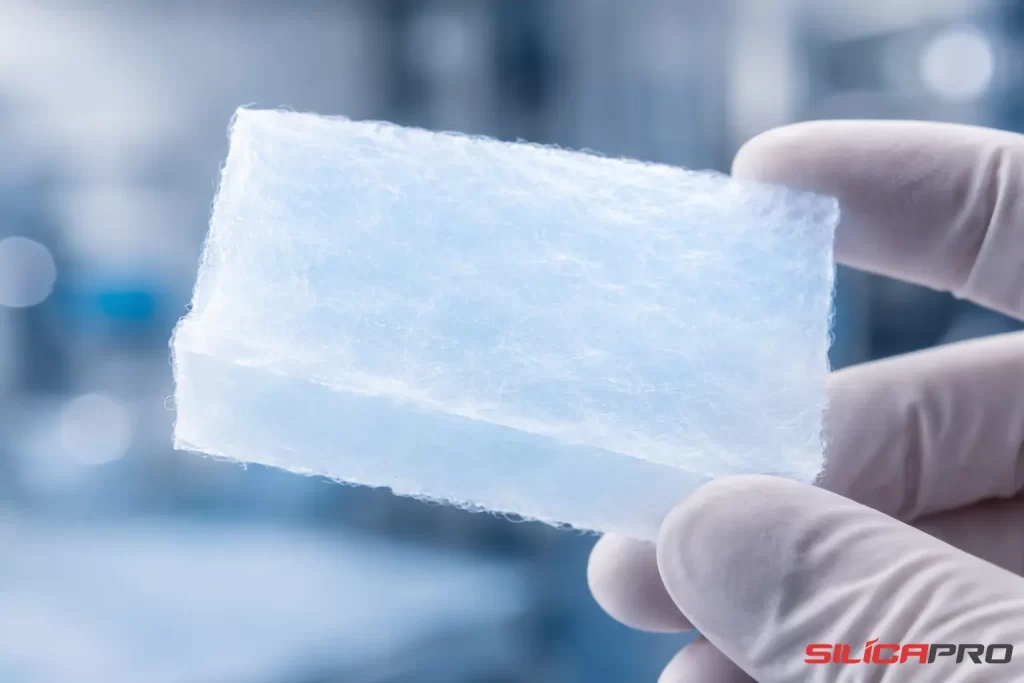
This is where aerogel insulation produced in an aerogel factory becomes highly relevant. Aerogel offers extremely low thermal conductivity while maintaining a very thin and lightweight form. This makes it suitable for both new construction and renovation projects, including buildings with strict space limitations.
Many aerogel factories continue to develop manufacturing processes not only to meet current market needs, but also to support environmental sustainability in the long term. These factories actively innovate, educate the market, and encourage wider adoption of aerogel insulation as a solution to modern insulation challenges.
Products manufactured in an aerogel factory can effectively reduce heat loss, improve indoor temperature stability, and lower overall energy consumption. This directly contributes to reduced greenhouse gas emissions and supports global sustainability goals.
Key Advantages of Aerogel Insulation
The following are several important advantages of aerogel insulation produced in an aerogel factory:
- Ultra-low thermal conductivity: Aerogel has one of the lowest thermal conductivity values among commercially available insulation materials, making it extremely effective at reducing heat transfer.
- Thin, lightweight, and flexible structure: Aerogel insulation can achieve high performance with minimal thickness, allowing easy installation in limited spaces and complex structures.
- Improved energy efficiency: By maintaining stable indoor temperatures, aerogel helps reduce heating and cooling energy demand, directly supporting environmental sustainability.
- Hydrophobic properties: Aerogel is resistant to moisture absorption, reducing the risk of damp insulation and mold growth, which contributes to healthier indoor environments.
Because of these characteristics, aerogel insulation is increasingly viewed as a long-term solution rather than a short-term alternative.
Aerogel Innovation in Aerogel Factory and Its Future
To meet growing demand from both individual users and industrial sectors, aerogel factories continue to develop new production techniques and material formulations. One notable innovation is the reinforcement of silica aerogel with polymers. In this process, a thin polymer layer is added to the internal structure of the aerogel.
The result is a tougher aerogel material that is significantly more durable than traditional silica aerogel. Studies and industrial testing show that polymer-reinforced aerogel can be up to twice as strong while maintaining the same insulating performance. In addition, this material remains translucent and lightweight, making it suitable for a wide range of applications.
Another important innovation is the development of aerogel made entirely from polymer materials. Unlike hybrid systems, this type of aerogel is fully polymer-based. It offers excellent flexibility, allowing the material to bend easily without cracking, while still providing strong thermal insulation properties.
These innovations expand the potential uses of aerogel far beyond traditional insulation. In the future, aerogel factories are expected to supply materials for construction, industrial equipment, transportation, energy systems, and even space exploration.
The base material used in aerogel production also significantly influences its performance. For example, silica-based aerogel offers superior thermal insulation because silica is a poor heat conductor. Polymer-based aerogel, meanwhile, provides similar thermal performance with enhanced mechanical flexibility. This diversity allows aerogel factories to tailor products to specific application requirements.
Comparison of Aerogel with Conventional Insulation Materials
| Insulation Material | Thermal Conductivity | Thickness Required | Weight | Moisture Resistance | Sustainability Impact |
|---|---|---|---|---|---|
| Aerogel Insulation | Very Low | Very Thin | Very Light | High (Hydrophobic) | Very High |
| Mineral Wool | Medium | Thick | Medium | Medium | Medium |
| Polyurethane Foam | Medium–Low | Medium | Light | Medium | Medium |
| Fiberglass | Medium | Thick | Light | Low | Medium |
This comparison shows why aerogel insulation from an aerogel factory is increasingly preferred for applications where space, performance, and sustainability are critical.
Applications Supported by Aerogel Factory Production
Aerogel materials are now widely used in various sectors, including:
- Building and construction insulation
- Industrial pipeline and equipment insulation
- Oil and gas facilities
- Cold storage and refrigerated transport
- Electric vehicle thermal management
- Aerospace and space missions
The versatility of aerogel continues to grow as aerogel factories refine production methods and reduce manufacturing costs.
Contribution of Aerogel Factory to Long-Term Sustainability
From an environmental perspective, the value of aerogel lies not only in its performance, but also in its long-term impact. Reduced energy consumption leads to lower carbon emissions over the lifespan of a building or industrial system. Additionally, the durability of aerogel reduces the need for frequent replacement, minimizing material waste.
Many aerogel factories are also working to improve production efficiency by reducing solvent use, recycling materials, and optimizing energy consumption during manufacturing. These efforts further strengthen the role of aerogel as a sustainable material solution.
The Future Outlook of Aerogel Factory Development
Looking ahead, aerogel factories are expected to play an increasingly important role in global sustainability efforts. Continuous research and development will likely result in stronger, more flexible, and more affordable aerogel products. As production scales up, aerogel insulation is expected to become more accessible to a wider market.
With its combination of lightweight structure, exceptional thermal insulation, and adaptability, aerogel represents a material that aligns well with future energy efficiency standards and environmental regulations. The aerogel factory, therefore, is not just a manufacturing facility, but a key contributor to the future of sustainable materials.
Practical Perspective from Industry Use
In real insulation and retrofit projects, especially in older buildings and industrial facilities, space limitations are often the main obstacle. Conventional insulation solutions frequently require compromises that affect usable space, aesthetics, or system layout. In these situations, aerogel insulation is increasingly considered because it delivers performance without forcing major structural changes.
This practical advantage is one of the reasons aerogel factories continue to expand production capacity and improve material consistency. The focus is not only on laboratory performance, but on reliability, handling, and long-term results in real operating conditions.
References and Sources
- U.S. Department of Energy – Building Insulation Materials
- International Energy Agency (IEA) – Energy Efficiency Reports
- NASA – Aerogel Applications in Space Technology
- Journal of Materials Science – Advances in Aerogel Materials
This article is based on publicly available research and practical observations from material manufacturing and insulation applications in both building and industrial environments.
Frequently Asked Questions (FAQ)
What is the main function of an aerogel factory?
An aerogel factory focuses on producing aerogel materials with controlled quality and consistent performance. The factory manages the production process, material formulation, and finishing stages to ensure that aerogel insulation meets technical and sustainability requirements for various applications.
Why is aerogel considered a sustainable insulation material?
Aerogel supports sustainability mainly by improving energy efficiency. Its very low thermal conductivity helps reduce heat loss and energy consumption in buildings and industrial systems. Over time, this reduction in energy use contributes to lower emissions and more efficient resource utilization.
Is aerogel insulation safe for long-term use in buildings?
Aerogel insulation is generally considered safe for long-term use. Its hydrophobic properties help prevent moisture absorption, which reduces the risk of mold growth. When installed correctly, aerogel can maintain stable performance for many years without significant degradation.
Can aerogel insulation be used in old or historical buildings?
Yes, aerogel insulation is often suitable for old or historical buildings. Because it is thin and lightweight, it can be installed in limited spaces without significantly altering the structure or appearance of the building. This makes it useful for renovation projects where preservation is important.
How does aerogel compare in cost to conventional insulation materials?
Aerogel insulation typically has a higher initial cost compared to conventional insulation. However, its high performance, space-saving properties, and long service life can provide long-term value through energy savings and reduced maintenance needs.
What industries commonly use products from an aerogel factory?
Products from an aerogel factory are used in construction, industrial equipment insulation, oil and gas facilities, cold storage, transportation, energy systems, and aerospace applications. The range of uses continues to expand as production technology improves.
Will aerogel factories continue to innovate in the future?
Yes, ongoing research and development are a key focus for aerogel factories. Future innovations are expected to improve material strength, reduce production costs, and expand applications, supporting broader adoption across industries.