
SilicaPro
High Silica Chopped Yarn
High Silica Chopped Yarn for Refractory and Composite Manufacture
High silica chopped yarn is an inorganic high temperature resistant fibre made from glass fibre containing 96 percent or more silicon dioxide, cut to length so that it disperses through a matrix rather than running continuously through it.
It is worth being clear about what this product is and is not. This is not a finished item for an end user. It is a raw material that goes into other things: needled felts, nano-porous insulation boards, high temperature engineering plastics and injection moulded components. Our customers here are manufacturers rather than specifiers, and they are usually buying it in volume as an input to their own production line.
With a refractoriness of not less than 1580 degrees Celsius, it qualifies as a refractory material under the standard international threshold. That single classification is why it appears throughout metallurgy, chemical processing, petroleum, machinery manufacturing, silicate and power generation.

Why 1580 Degrees Is the Number That Matters
Most product pages lead with softening point, because it is the largest number available. For chopped yarn used in refractory manufacture, the more meaningful figure is refractoriness, and understanding the difference between the two changes how you specify.
Softening point describes where the material itself begins to lose structure. It is a property of the glass, measured on the fibre.
Refractoriness describes the temperature at which a shaped sample deforms under its own weight without any applied load. It is a performance measurement, and it answers a different question: at what point does this material stop holding its shape in a furnace.
1580 degrees Celsius is the recognised international threshold for classifying a material as refractory. Below that figure a material is heat resistant. At or above it, the material belongs to the refractory class and can be specified into furnace linings, kiln components and metallurgical applications where that classification is a formal requirement.
Our high silica chopped yarn sits at not less than 1580 degrees, which places it inside that class rather than adjacent to it. For a buyer whose own product has to carry a refractory classification, this is not a marketing detail. It is the reason the material qualifies at all.
This matters commercially because refractory materials are dominated by one industry. Metallurgy alone accounts for more than half of global refractory consumption, and steel and non ferrous metal production is where the largest and most demanding volumes sit. If your business supplies that sector, the classification is usually checked before the price is.
Main Characteristics
Seven properties define how this fibre behaves both in processing and in service.
- SiO2 content of 96 percent or higher. The figure everything else follows from, achieved by chemically leaching glass fibre until almost every oxide other than silica has been removed.
- Softening point close to 1700 degrees Celsius, continuous use to 1000 degrees. The continuous rating is what governs long service. The softening point describes where the material itself gives way.
- Low thermal conductivity. The fibre resists heat transfer rather than merely surviving heat, which is what makes it valuable as the active component in an insulation product rather than just a filler.
- Outstanding chemical and corrosion resistance. Silica is stable against most aggressive media, which is why the material holds up in chemical and petroleum environments where thermal exposure arrives alongside chemical attack.
- Excellent electrical insulation properties. Relevant where the finished component must isolate electrically as well as thermally, and a factor in engineering plastics for electrical applications.
- Non-asbestos, environmentally friendly and pollution free. An increasingly decisive point as older refractory fibres face restriction in various markets.
- Good processability. Easy to mix, mould and form into composites. For a chopped fibre this is the property that determines whether it can actually be used, because a fibre that will not disperse evenly is of no practical value however good its thermal figures look.
That last point separates chopped yarn from continuous fibre in a way buyers new to the product sometimes miss. Continuous fibre is specified for strength along its length. Chopped fibre is specified for how evenly it distributes through a matrix, and cut length is the main variable controlling that.
Performance Under Attack
Heat is rarely the only thing acting on a refractory material. In a working furnace or reactor, the fibre faces several forms of attack simultaneously, and failure usually comes from the one that was not considered.
Thermal Shock Resistance
Withstands rapid temperature change without cracking or spalling. Furnaces are cycled, and the damage from heating and cooling repeatedly is often greater than from the peak temperature itself.
Slag Resistance
Resists chemical attack from molten slag, the byproduct that sits against furnace linings throughout a metallurgical process. This is the property that most often decides service life in steelmaking.
Acid and Alkali Resistance
Stable against attack from both ends of the pH range. Useful in chemical and petroleum processing, where the same lining may face acidic conditions in one phase and alkaline in another.
Hydration Stability
Does not degrade through reaction with moisture, either in storage before use or from process steam in service. A material that hydrates during storage arrives already compromised.
Oxidation Stability
Silica is already fully oxidised, so there is nothing further for oxygen to attack. This is a structural advantage over carbon based refractory materials rather than an added treatment.
CO Erosion Resistance
Resists carbon monoxide attack, a specific and destructive failure mode in blast furnace and reducing atmosphere environments where CO penetrates a lining and deposits carbon inside it.
The carbon monoxide point deserves particular attention because it is a failure mode many buyers only learn about after experiencing it. In a reducing atmosphere, CO can penetrate a porous refractory and disproportionate into carbon dioxide and solid carbon inside the material. The deposited carbon expands and cracks the lining from within, and the damage is invisible from the surface until the structure fails. A material that resists this is not merely lasting longer, it is failing differently.
Technical Specifications
Typical values for our high silica chopped yarn. Fibre length, diameter and packaging are all produced to order, so ask rather than assume something is unavailable.
| Property | Typical Value |
|---|---|
| Material | Inorganic amorphous silica glass fibre, chopped |
| SiO2 content | 96 percent minimum |
| Refractoriness | Not less than 1580 degrees Celsius |
| Softening point | Close to 1700 degrees Celsius |
| Continuous working temperature | Up to 1000 degrees Celsius |
| Fibre length | Custom cut lengths produced to order |
| Fibre diameter | Custom diameters produced to order |
| Thermal conductivity | Low, suitable as an active insulation component |
| Chemical resistance | Acid, alkali, slag and CO erosion resistant |
| Electrical insulation | Excellent |
| Stability | Hydration stable, oxidation stable, thermal shock resistant |
| Composition safety | Non-asbestos, environmentally friendly, pollution free |
| Processing | Mixes, moulds and forms readily into composite systems |
| Packaging | Custom packaging to your handling and storage requirement |
| OEM and private label | Available, including custom specification and marking |
Cut length and fibre diameter are deliberately shown as custom rather than as a fixed range. These two variables govern dispersion behaviour more than anything else, and the correct figures depend entirely on the matrix the fibre is going into. A length that disperses beautifully in an injection moulded plastic will clump in a wet formed felt. Tell us the process and we will recommend rather than supply a default.
What It Gets Made Into
Chopped yarn is an input rather than an output. These are the three product families our customers most often use it to build.
High Silica Needled Felt
Chopped fibre needled into a bulk felt structure for thermal insulation blankets, high temperature filtration and applications requiring loft rather than a woven surface.
Cut length is critical here. Too short and the needling cannot lock the fibres together, too long and the batt forms unevenly across the width.
Nano-Porous Insulation Boards
The fibre acts as the reinforcing skeleton inside a microporous board, holding a very low density structure together so that it can be handled and installed without crumbling.
Dispersion uniformity matters more than fibre strength in this application, because a board with uneven fibre distribution fails at its weakest section.
High Temperature Engineering Plastics
Reinforcement for injection moulded components that must retain dimensional stability and electrical insulation at temperatures well beyond what unfilled polymers tolerate.
Here the fibre has to survive the moulding process as well as the service temperature, and cut length is chosen against the gate and runner geometry.
Because chopped yarn sits upstream in the supply chain, the useful conversation is usually about your process rather than about the fibre. If you tell us what you are making and how you are making it, we can specify the cut length, diameter and packaging that suit that process. If you only tell us the temperature, we can supply something that meets it but may still handle badly on your line.
Industries We Supply
Six sectors account for the majority of demand, and one of them dominates.
Metallurgy
The largest by a wide margin, accounting for more than half of global refractory usage. Furnace linings, ladle insulation and hot face protection in steel and non ferrous production.
Chemical Processing
Reactor and vessel insulation where thermal exposure arrives alongside acid, alkali or aggressive process media, and the material has to resist both at once.
Petroleum
Refinery and petrochemical insulation, including reformer and cracker environments where reducing atmospheres make CO erosion resistance a genuine requirement.
Machinery Manufacturing
High temperature engineering plastics and moulded components for equipment that must hold tolerance and electrical isolation under sustained heat.
Silicate Industry
Glass, ceramic and cement production, where kilns run continuously and lining replacement carries a heavy cost in lost output as well as materials.
Power Generation
Boiler and turbine insulation, including nuclear applications where material documentation and traceability are as important as thermal performance.
Chopped Yarn From Our Production
Material as supplied, photographed from our own output rather than from a stock library.
-
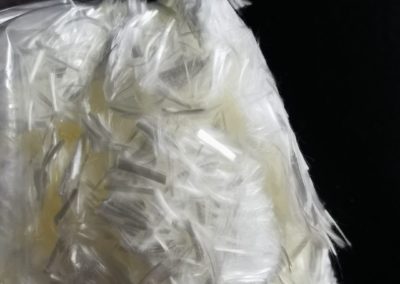
High silica chopped strandsThe core product, cut to the length specified for the customer process. -
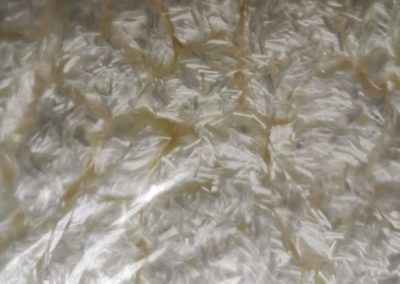
Fiberglass chopped strandsCut fibre prepared for dispersion through a matrix rather than continuous use. -
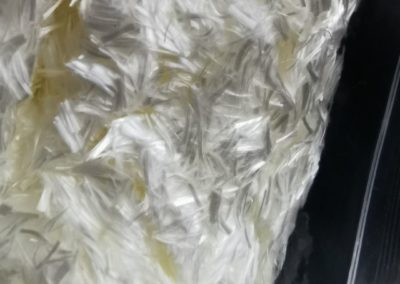
Silica glass fibersBulk fibre before cutting, showing the base material the chopped product comes from. -
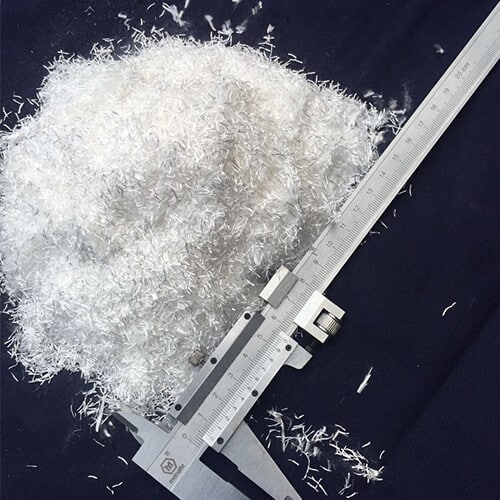
Packed chopped yarnPackaging is specified to suit customer handling and storage rather than shipped to a single default. -
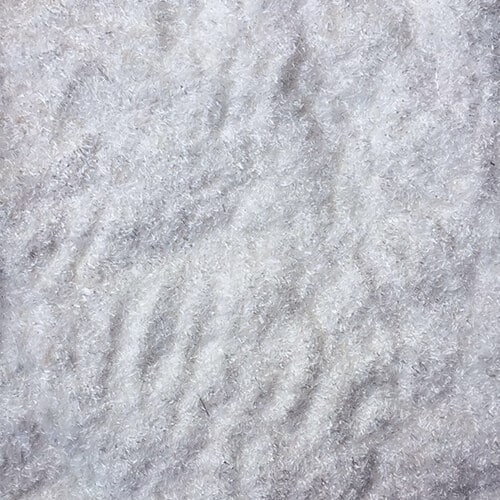
Cut fibre detailCut length governs dispersion behaviour more than any other single variable. -
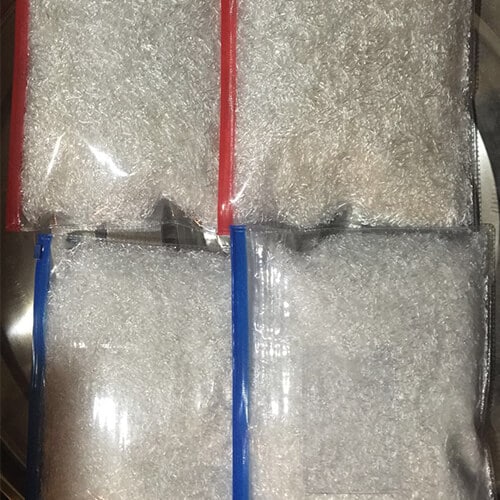
Bulk productionVolume output for manufacturers using the fibre as a production input. -

ConsistencyUniform cut length across the batch is what allows predictable dispersion downstream. -
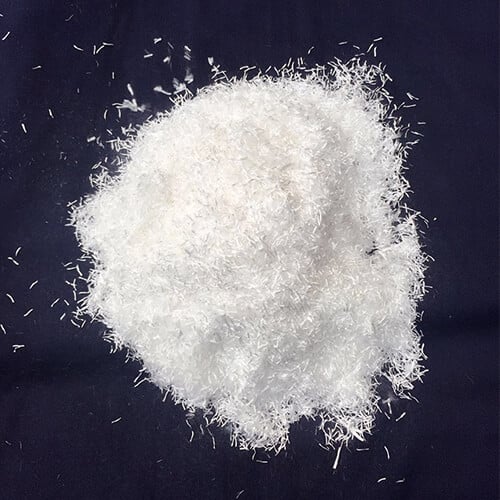
Supply volumeBulk quantities for manufacturers running continuous production.


How to Specify Chopped Yarn
Because this is a production input rather than a finished product, the useful questions are about your process rather than about the fibre.
- What are you making with it? Needled felt, insulation board, engineering plastic or something else. This single answer tells us more than any temperature figure, because the manufacturing process determines the cut length and diameter far more than the service temperature does.
- How is the fibre introduced into your process? Dry mixing, wet forming, injection moulding or needling each require different handling characteristics from the same material. A fibre that meters well in a dry blend may clump in a wet slurry.
- What is the operating temperature of the finished product? Not of the fibre, of the thing you are building. If your finished component runs at 800 degrees, we can confirm the fibre is comfortably inside its range rather than at its limit.
- Which chemical or atmospheric conditions apply? Slag contact, acid or alkali exposure, or a reducing atmosphere with carbon monoxide present. Each is a distinct failure mode and worth stating explicitly.
- What volume and packaging do you need? A manufacturer running continuous production has different packaging requirements from one buying trial quantities, and packaging affects both handling cost and storage stability.
If you are trialling the material for the first time, say so. We would rather supply a small quantity in the specification most likely to work on your line than sell you a container of something that turns out to disperse badly.
Wholesale and OEM Supply
SilicaPro supplies high silica chopped yarn in bulk to manufacturers worldwide, with OEM production and private label arrangements available. Custom fibre lengths, diameters and packaging are produced to specific industrial requirements rather than sold from a fixed catalogue.
Consistency matters more in this product than in almost anything else we make, because our customers are feeding it into a continuous production process. A batch that disperses differently from the last one does not merely underperform, it disrupts an entire production run and may require the line to be re-tuned. Our plant maintains consistent SiO2 purity and stable cut quality across batches for exactly this reason.
Around 70 to 80 percent of our total output is exported, so the documentation, packing and inspection routines that international orders require are routine here rather than exceptional. Whether you need bulk supply or private label manufacturing, tell us the process you are feeding and we will specify to it.
High Silica Chopped Yarn Questions
The questions manufacturers and procurement teams ask us most often about this material.
What is the difference between refractoriness and softening point?
They measure different things and are frequently confused. Softening point is a property of the glass itself, describing where the material begins to lose structure. Refractoriness is a performance measurement, describing the temperature at which a shaped sample deforms under its own weight with no load applied.
For refractory applications, refractoriness is the more meaningful figure because it describes behaviour rather than composition. Our chopped yarn has a refractoriness of not less than 1580 degrees Celsius, which is the recognised threshold for classifying a material as refractory rather than merely heat resistant.
What cut length should I order?
It depends on your process rather than on your temperature. Cut length is the main variable controlling how evenly the fibre disperses, and the right figure differs substantially between wet forming, dry mixing, needling and injection moulding.
A length that disperses beautifully in one process will clump or bridge in another. Tell us what you are making and how the fibre enters the process, and we will recommend a length rather than supply a default that may work against you.
Can chopped yarn replace continuous fibre?
Not usually, because they solve different problems. Continuous fibre carries load along its length and is specified where directional strength matters. Chopped fibre is specified where the reinforcement needs to distribute through a matrix in all directions.
If your application currently uses continuous fibre and you are considering chopped as a cost saving, look carefully at whether the strength is directional. If it is, the substitution will underperform regardless of how good the chopped fibre is.
Why does CO erosion resistance matter?
In reducing atmospheres, such as those inside blast furnaces and certain petrochemical reactors, carbon monoxide can penetrate a porous refractory material and deposit solid carbon inside it. That carbon expands and cracks the lining from within.
The reason this failure mode catches operators out is that it is invisible from the surface. A lining can look sound while being progressively destroyed internally, until it fails without obvious warning. If your process involves a reducing atmosphere, this resistance is not an optional extra.
Is this the same material as your high silica fiberglass cloth?
The same base fibre chemistry, at 96 percent SiO2 or above, but presented completely differently. The cloth is woven fabric for insulation and protection applications. The chopped yarn is cut fibre for dispersion through a matrix.
They are rarely alternatives to one another. If you are covering a surface or wrapping a component, you want the cloth. If you are reinforcing or bulking a material you are manufacturing yourself, you want the chopped yarn.
Can I get a sample before ordering in volume?
Yes, and for this product we strongly recommend it. Dispersion behaviour is difficult to predict from a specification sheet, and the only reliable test is running the material on your own line.
Tell us the process when you request a sample so we can supply the cut length most likely to suit it. A sample in the wrong cut length tells you very little except that the wrong cut length does not work.
How consistent is the material between batches?
Batch consistency matters more in chopped yarn than in almost anything else we produce, because our customers are feeding it into continuous production. A batch that behaves differently from the last one does not just underperform, it disrupts a production run.
We maintain consistent SiO2 purity and cut quality across batches for exactly that reason. If your quality process requires batch level documentation, request it at the quotation stage and we will supply it with the goods.
Does the fibre degrade in storage?
High silica is hydration stable, so it does not degrade through reaction with atmospheric moisture the way some refractory materials do. That is a genuine advantage for buyers holding stock rather than consuming deliveries immediately.
Packaging still matters for handling and contamination rather than for chemical stability. Tell us your storage conditions and volumes and we will specify packaging accordingly.
What is your minimum order quantity?
It depends on whether you need a standard or custom specification. A custom cut length or diameter needs its own production run, which raises both the minimum and the lead time compared with something we already produce.
Tell us the specification and your rough annual volume and we will confirm the exact figure with your quotation. If you are trialling first, say so, and we will treat the trial quantity separately from the production requirement.
Does it contain asbestos?
No. High silica chopped yarn is non-asbestos, environmentally friendly and pollution free. It is a manufactured inorganic glass fibre with the non silica oxides chemically removed.
This matters increasingly as older refractory fibres face restriction in various markets. If your customers or regulators require documentation on composition, request it at the quotation stage.
Do you supply the downstream products as well?
Some of them. We produce nano-microporous insulation board and fiberglass needle mat ourselves, alongside a full range of high silica woven and coated products.
If you are currently buying chopped yarn to make something we already produce, it is worth comparing the two routes. Sometimes manufacturing in house is the right answer and sometimes buying finished is, and we would rather have that conversation openly than quote you fibre for a product you could simply purchase.
What are your payment terms and shipping options?
Payment is normally by T/T, structured as a deposit with the balance settled before shipment. We confirm the exact split with your quotation.
EXW, FOB, CIF and DAP terms are all available, so you can pick whichever fits how your freight is already arranged. If you have a nominated forwarder we will work with them directly.
Related Products
Materials most often ordered alongside chopped yarn, and the finished products it goes into.
Tell Us What You Are Making and We Will Specify the Fibre
Send the process, the finished product operating temperature, the conditions it faces and your volume. We reply with a recommended cut length and diameter, pricing and a lead time we can hold to.
Request a QuotePhone
+8613758326701
Bright Sky New Material Co Ltd.
Room 1101-11, 11/F,Youbang Building. Jiaxing Headquarters Business Garden, Nanhu District, Jiaxing, Zhejiang, 314000 - China
sales@silicapro.com
lucyhhyy@gmail.com
© 2021 SILICAPRO.COM
All Rights Reserved