
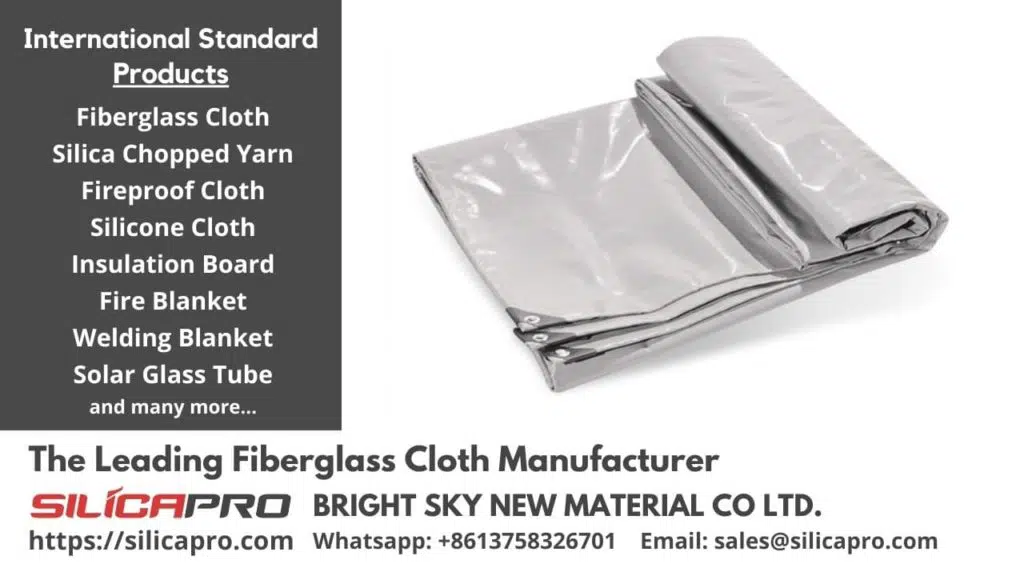
Not just anyone can cooperate with a Welding Blanket Manufacturer. They must be in a position as representatives of a company that is procuring fire-resistant safety equipment. If not, maybe they are business owners who want to buy in large quantities for their business interests. Other groups who may cooperate with welding blanket suppliers include academics for research and product development purposes.
This does not mean that a welding blanket is an exclusive product. You can buy it anywhere and anytime through online stores or other specialty stores. If you want to buy retail for specific needs, you do not have to work with a welding blanket manufacturer. Cooperation with large companies must be balanced with a large project value. Moreover, welding blankets are potentially needed by high-risk companies in large quantities for the protection of all their employees.
But what if circumstances require you to apply for a business partnership? You must know the several stages of cooperation so that the results are beneficial for both parties. The following is information about the workflow that is usually carried out with welding blanket suppliers.
What Is a Welding Blanket?
A welding blanket is a heavy-duty fire-resistant covering made from flame-retardant glass fiber fabric processed through a specialised method, resulting in a compact structure with exceptional high-temperature resistance. Depending on the grade, welding blankets can withstand temperatures ranging from 550°C up to 1100°C. Their primary function is to prevent or isolate combustion by blocking sparks, slag, and molten metal spatter from reaching flammable surfaces or personnel in the surrounding work area.
Unlike general-purpose fire blankets, welding blankets are engineered specifically for the mechanical and thermal demands of welding, cutting, and metalworking environments. They are available in multiple material types, including standard heat treatment type, silicone-coated type, and PVC-coated type, each offering a different balance of flexibility, chemical resistance, and thermal performance. According to OSHA (Occupational Safety and Health Administration), fire-resistant barriers and protective coverings are among the required safeguards for welding operations near combustible materials.
Introduction of Welding Blanket Manufacturer
You cannot suddenly apply for cooperation in the procurement of welding blankets with certain suppliers. This is very risky because who knows if the supplier you choose is trustworthy? So, instead of choosing suppliers randomly and in a hurry, you have to go through the research and recommendation stages so that the selection of welding blanket manufacturers can be made selectively. That way, the guarantee of product quality and service can be assured.
Independent Research Stage
You and your team can start with research on the internet based on appropriate keywords. Later, the search engine will recommend many official websites from many welding blanket manufacturers so that you can immediately select them. On these websites, pay attention to the completeness and transparency of the information presented.
A good website should ideally contain clear, complete, and concise information about the company’s background, product catalogs and descriptions, articles related to welding blankets, and company contacts.
Asking for Recommendations from Various Sources
Website research must also be supported by other information searches to see the company’s reputation. You can start by checking out the supplier-specific marketplace or attending various exhibitions and business bazaars. From there you will get many recommendations from credible sources. A marketplace, for example, will provide recommendations for good welding blanket shops based on a large number of transactions, comments, and customer ratings and the speed with which shop owners respond to consumer questions.
Price Negotiation
If you have chosen a welding blanket manufacturer selectively, it is time to negotiate prices so you can get products that are affordable but still guaranteed in quality. At this stage, you should not miss a consultation session before finally negotiating a reasonable price.
Optimizing Consulting Sessions
Consultation in question means that you convey clearly what you need. This could be a request for a welding blanket or other flame retardant product, what the quantity is, what the specifications are, whether there is a request for a custom shape, and the product required for your needs. Convey your needs in as much detail as possible with the marketing team from the welding blanket manufacturer either online or in person.

Negotiate Fairly and Transparently
If your needs have been conveyed properly, make sure the welding blanket manufacturer understands what you need. After that, negotiate prices fairly and transparently. A good supplier will usually offer an affordable price because of its position as a first-hand supplier. But there is nothing wrong with bidding a fair price so that a satisfactory agreement occurs.
Before starting this stage, you should do some price research first. Research can be done by checking the marketplace or comparing the product catalogs of one company to another. This way you can bid the lowest price reasonably. On the other hand, you should also consider the quality of the product if the price offered is a little more expensive.
Safe and Guaranteed Transactions
After a price agreement occurs, immediately make a transaction so that your product is immediately packaged and shipped. A good welding blanket manufacturer ideally makes a good, practical, and safe system so anyone can shop for their products online. Make sure the transaction you make is safe, and all products come with a warranty.
The workflow with the welding blanket supplier is not too complicated. Especially if you are a representative of a certain company or certain business unit, you can even get comfort in service in a practical and safe collaboration if you work with Silicapro. As a welding blanket manufacturer, we produce a variety of high-quality fire-resistant products, like fiberglass cloth and fire blankets, at the most affordable prices. For complete information about us, contact us now.
Welding Blanket Specifications
Silicapro’s welding blankets are available in a range of grades, dimensions, and surface treatments to suit different industrial requirements. Whether you need a lightweight sheet for a fabrication workshop or a heavy roll for continuous production line use, the specifications below cover the full range of options available from our factory.
| Specification | Options Available |
|---|---|
| Temperature Resistance | 550°C, 800°C, 1100°C |
| Sheet Dimensions | 100 × 100 cm, 120 × 120 cm, 180 × 180 cm, 240 × 240 cm |
| Roll Dimensions | 100 cm × 50 m |
| Thickness Options | 0.4 mm, 0.6 mm, 0.8 mm, 1.0 mm, 1.2 mm, 1.5 mm, 2 mm, 3 mm |
| Material Types | Heat treatment type, silicone-coated type, PVC-coated type |
| Format Types | Double-layer type, roll type |
| Packaging | Transparent plastic bag, red PVC bag |
Custom dimensions are also available on request, subject to minimum order quantities. If your application requires a specific thickness, coating, or sheet size outside the standard range, our team can accommodate this through OEM production. You can also browse our overview of welding blanket suppliers and selection criteria for additional guidance.
Welding Blanket Types: Which One Do You Need?
Choosing the right welding blanket type depends on the temperature range of your process, the level of chemical exposure, and how the blanket will be handled on-site. The three main types offered by Silicapro each have distinct advantages:
- Heat treatment type — The standard grade, suitable for general welding and cutting applications where temperatures do not exceed 550°C. This type offers good flexibility and is the most cost-effective option for workshops with moderate spark exposure.
- Silicone-coated type — The silicone coating adds an additional layer of heat and abrasion resistance, making this type suitable for environments with heavier spatter and slag, or where the blanket comes into frequent physical contact with hot surfaces. It also provides better resistance to moisture.
- PVC-coated type — Best suited for applications where chemical resistance or waterproofing is required alongside fire protection. Commonly used in petrochemical facilities and outdoor construction sites.
For the highest temperature environments such as steel fabrication, shipbuilding, or heavy metalworking, the 1100°C grade is recommended regardless of the coating type selected. For general workshop use, the 550°C grade is sufficient and offers the broadest range of dimensions and thicknesses.
Industries and Applications
Welding blankets are used across a wide range of industries wherever open-flame processes, high-heat equipment, or arc welding operations create fire and burn hazards. The following are the primary application areas for Silicapro welding blankets:
- Shipbuilding — Used to isolate welding zones on ship hulls and internal structures, protecting adjacent materials and personnel from spatter and radiant heat.
- Petrochemical plants — Required for hot work permits in refineries and chemical processing facilities, where any uncontrolled spark near flammable vapours poses a serious explosion risk.
- Fabrication workshops — General-purpose protection during cutting, grinding, and welding operations on metal components.
- Construction sites — Used during on-site welding of structural steel to protect surrounding materials, insulation, and finished surfaces.
- Large commercial spaces — Deployed in shopping malls, hotels, and supermarkets during maintenance or renovation welding work to comply with fire safety regulations.
- Automotive manufacturing — Used to protect vehicle bodies and painted surfaces in proximity to welding stations.
Frequently Asked Questions (FAQ)
What is the difference between a welding blanket and a fire blanket?
Although they are sometimes used interchangeably, welding blankets and fire blankets serve different primary purposes. A welding blanket is designed to withstand prolonged exposure to welding sparks, molten metal spatter, and radiant heat from arc or flame cutting processes. They are typically heavier, thicker, and rated to higher temperatures, up to 1100°C in Silicapro’s range. A fire blanket, by contrast, is primarily intended to smother small fires or wrap around a person in a fire emergency. Fire blankets are usually thinner and are intended for single or limited use. For industrial welding environments, a welding blanket is always the correct choice.
Can welding blankets be reused?
Yes, welding blankets are designed for repeated use under normal working conditions. Unlike fire blankets, which may be compromised after being deployed in a fire emergency, welding blankets are built to endure ongoing exposure to heat, sparks, and spatter across many work cycles. Their service life depends on the intensity of use and how well they are maintained. Blankets should be inspected regularly for signs of significant burn-through, fraying edges, or structural weakening. When properly stored and handled, a quality welding blanket from a reputable manufacturer can last several years in regular industrial use.
What thickness of welding blanket should I choose?
Thickness selection depends primarily on the intensity of the welding or cutting process and the level of spatter expected. For light MIG or TIG welding with minimal spatter, thicknesses of 0.4 mm to 0.8 mm are generally sufficient. For heavy-duty applications such as plasma cutting, arc gouging, or high-current MIG welding that produces significant slag and large spatter droplets, thicknesses of 1.5 mm to 3 mm are recommended. Thicker blankets also provide better protection when used as a vertical hanging curtain between work zones.
Do Silicapro welding blankets support OEM and custom orders?
Yes. Silicapro offers OEM manufacturing and wholesale supply for welding blankets with customisable dimensions, thickness, coating type, and packaging. Custom sheet sizes and roll lengths are available subject to a minimum order quantity. For buyers who require branded packaging or specific labelling for resale purposes, OEM arrangements can be discussed directly with the sales team. Factory-direct pricing and fast worldwide delivery are available for all bulk orders.
How should welding blankets be stored and maintained?
Welding blankets should be stored in a dry, clean environment away from direct sunlight and sharp objects that could damage the fabric surface. After each use, blankets should be shaken out or brushed to remove accumulated slag and spatter deposits, then inspected for any signs of damage. Avoid folding blankets tightly over areas with hardened slag, as this can crack the fibre structure. For silicone-coated types, mild cleaning with a damp cloth is acceptable. Do not machine wash or expose the blankets to strong solvents, as this may degrade the coating and reduce the blanket’s fire-resistant properties.
What certifications should I look for when sourcing welding blankets from China?
When sourcing welding blankets from a Chinese manufacturer, look for suppliers who can provide relevant product test reports confirming temperature resistance ratings, as well as factory quality management certifications such as ISO 9001. For exports to European markets, compliance with EN 1869 (fire blankets standard) may also be relevant depending on the end use. Always request product samples and MSDS documentation before placing a large order, and verify that the supplier can provide consistent quality across production batches, not only for the initial sample.
Last reviewed and updated on April 26, 2026, by Lucy Huang, High-Silica Material Specialist at Bright Sky New Material Co Ltd. (SilicaPro). This article is reviewed periodically to ensure accuracy and alignment with current industry standards.